
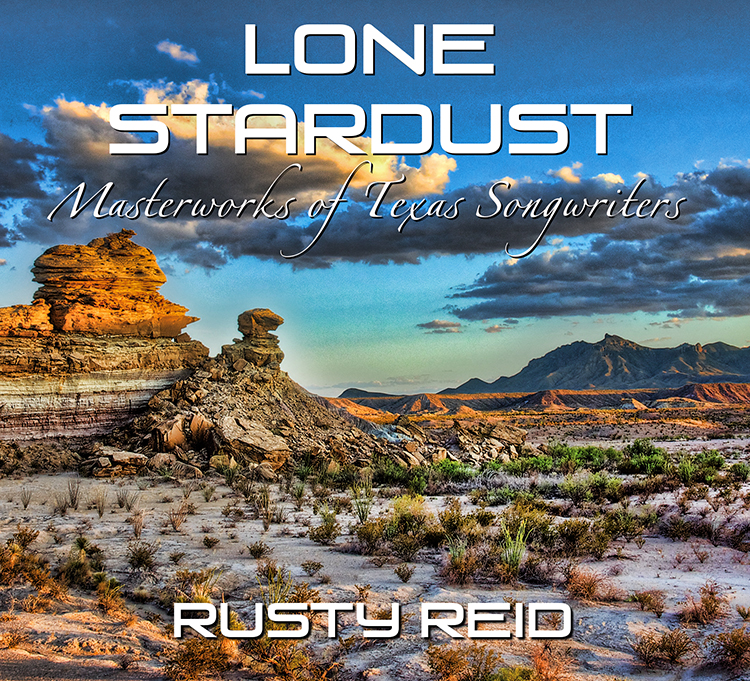
 2026: LONE STARDUST: Masterworks of Texas Songwriters Northern Latitudes Records About | Lyrics/Notes | Reviews | Articles | Interviews | Order | Stream
Songs from Texas I've loved!
Rusty's Notes: A while back, my Houston-Los Angeles pal and frequent musical collaborator, Steven Beasley, came up for a visit. Steve was looking to learn how to use Apple Logic, a music recording computer program. I volunteered to tutor. As a first practice song, I suggested we try recording "Roll On Santa Fe," a song featured by one our favorite 1970s Houston bands, Denim. The next practice song was a cover of our friend Vince Bell's "All Through My Days." And so an idea was born. As I continued writing and recording my original songs, I began toying with the idea of recording an album of songs written by Texas songwriters. With two such songs already in the bag, it was fun to think what could go on such an album. Beyond "Texas songwriter," I had not gone very far with further description. At first, I imagined the album would continue on songs, like "Santa Fe" and "My Days," from the magical Houston music scene circa 1970-1984 (totally coincidently the years I lived there). But then I thought I would want to get some West Texas writers in there who were so influential to me, like Roy Orbison and Buddy Holly. So eligiblity was opened to any song written by someone who was primarily associated with Texas. Finally, the criteria was stretched to the break-point with the inclusion of one of the most beautiful songs ever written about Texas, even if it's from an Oklahoman (see song notes below on my creative justification).
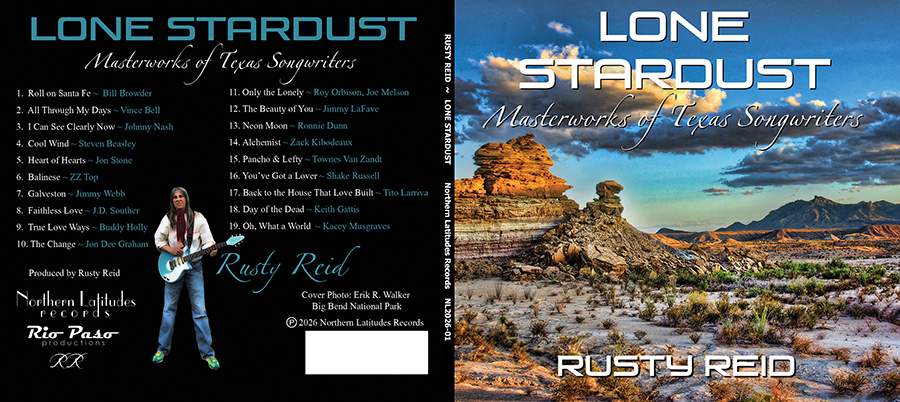
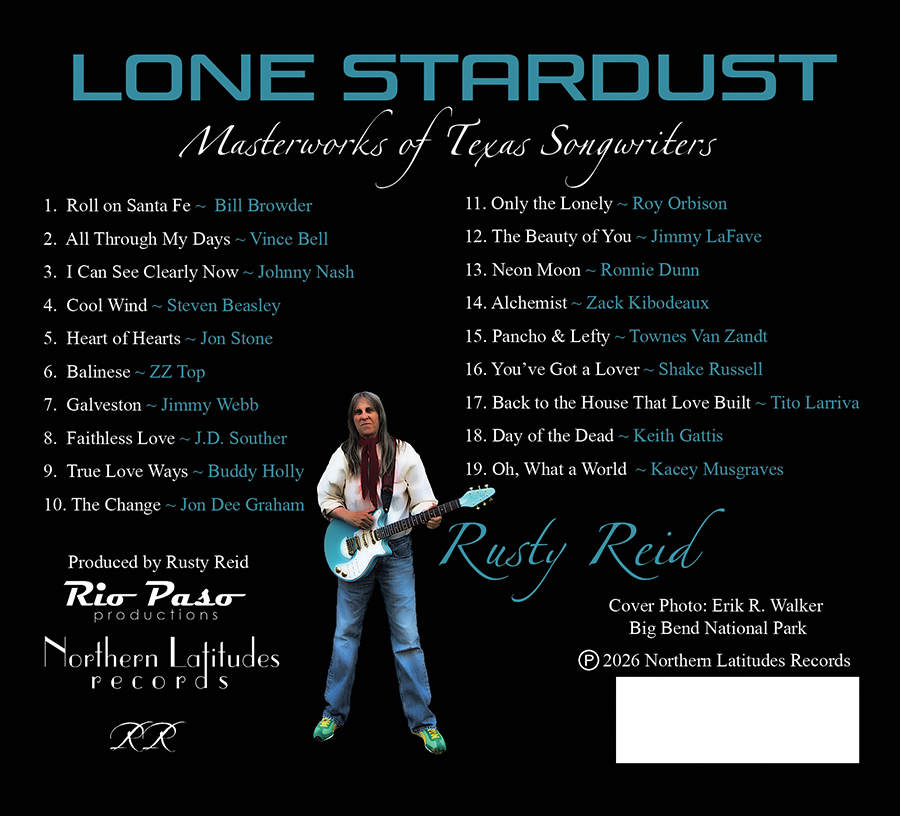
Of course, there are thousands of great songs by Texas songwriters. Texas is a veritable storytelling and songwriting civilization. I thought grabbing a dozen or so would be like plucking lowhung plums, but it turned out to be more challenging. Just as I had widened the criteria for "Texas" songwriters and realized there was an avalanche of potential song possibilities about to land on me, I knew I would need to get very selective. I needed to further ponder what kind of album this should be. I figured what I did not want was a predictable, hits-only, collection from the usual suspects of "best Texas songwriters," or a bunch that a whole lotta other artists have covered. I wanted an eclectic batch, some well-known songs, along with some surprises. Moreover, I needed the songs to hit close to home, meaningful to me, tunes I could sing with conviction and experience, maybe even find a few with a universal theme or some thoughts of wisdom. I like songs that tell a good story, have an original melody and lend themselves to soundscape interpretation. All of them needed to fit my style, vocal-wise. My tendency was toward songs with which I had a previous personal relationship, songs I have known and enjoyed for a long time, but I also wanted to be open to discovering other jewels along the way that I had never heard before or hadn't properly appreciated. Four of those would arise. This project is certainly not a smorgasbord of the flavors of Texas songs. The vast bulk of outstanding Texan-penned songs just aren't the best for me as an artist. I can't, with a straight face, do songs about drinkin', huntin' and fishin', trucks or girls in Daisy Dukes, nor am I probably the best vehicle for honky-tonk romps, most blues, funk or jazz, not to mention songs in Spanish... all genres in which Texas songwriters have long shined. Even with these increasingly restrictive requirements, the list grew... and grew. Suddenly I had dozens of songs that could work. I admit not doing an exhaustive search, nor digging very far back in time. Texas music is a motherlode. I'm sure there are gems galor I missed. I'll probably be kicking myself over some of them. It was a difficult choice to pare the candidates down to the finalists. The one that I was most disappointed to leave off was Roger Miller's "King of the Road." That was the first song I learned on guitar, still a favorite of mine, and certainly one of the best Texas songwriters and songs ever. It would have been cool to complete that circle, but it just didn't happen, for this album anyway. I decided to adhere to the strategy of my other albums, and just cram as many songs as would fit on a CD. That turned out to be nineteen. And here they are. Stylistically, there is not much of a common thread, other than they were all written by damn good songwriters who, one way or another, are associated with Texas. I'm happy, and honored, to get the chance to work with each one of these songs. Art is largely subjective, but from my perspective, they are all masterworks of songwriting. I'm hoping listeners will dig this collection of some well-known favorites and others that, more than likely, they have never heard. Special shout out to the key facilitators of this project: Steven Beasley, Jed Demlow, Austin Moorehead, Rohit Bhusan and MVP Jason Roller. Thanks, of course, to these songwriters for their amazing gifts, and also to all of my collaborators who made these songs theirs and helped make this dream of mine come true.
BUY THE CD HERE - $11.99 (includes shipping) - signed by Rusty

APPLE MUSIC BANDCAMP DEEZER I HEART RADIO PANDORA SHAZAM SPOTIFY TIDAL YOUTUBE MUSIC
Hey, the best soundbath is your fantastic Texas album, holy smokes I'm enjoying the hell out of that, thanks! Terrific licks, solid production, groovin' harmonies, and your vocals are holding up exceptionally well for an old coot-you need to give voice lessons to Bob and Paul... I guess you Texas dudes like Willie have some kind of genetic advantage... seriously some of that stuff ranks right up there with the best of Rusty Reid... I don't know much about these Buddy Holly and Townes Van Zandt fellows, but I predict a bright future for both of them... Thanks for the listen, it's in heavy rotation here in the humble Lazar household. Keep the hits comin'!
Yes! The collection of songs Rusty put together is truly a unique deep dive of some of the best tunes ever written by some of Texas' best songwriters. This amazing compilation will take you on a journey. From the cactus filled West Texas to the Gulf of Mexico, enjoy the ride!
This track ("All through My Days") radiates a sense of confidence and an irresistible charm, complemented by intricate layers of mesmerizing melodies. Every element perfectly embodies your persona, seamlessly blending together to create a powerful and unique sound.
This is every bit as heartfelt and emotive as we've come to expect from the Rusty Reid sound.
Excellent musical production, excellent mixing and mastering, and great vocal work. Congratulations on a job well done; your song ("All Through My Days") will be added to our playlist and also featured in our Instagram Stories.
Hello Again Rusty. I like this. I don't know the original but never mind, this is a nice version. I host a show called "Into the Groover" and will play this on Monday 18th May at 6pm UK time. The show will also be available on Mixcloud a day or so later. I will also add it to the playlist for "Grooves from the Groover" which is broadcast every Tuesday at 4pm as well as the Submissions which is broadcast daily on Deal Radio. Thanks for sharing.
I enjoyed the timbre of the song ("All Through My Days"). The song has a nice energy. The guitar work sounds great and the vocals have a nice character. I can certainly tell this is a quality tune ("All Through My Days"). The vocals are on point and the production is well executed and easily accessible. There is mainstream radio potential for this one. -- Unheard Indie This one hits like a fresh, vibrant track, with your creative momentum shining through every new song on my dashboard. Keep the songs coming on here and keep up the great work! -- Free 99 Radio A good track to have on my radio station, it will be on rotation for 6/8 weeks. -- Good Music Radio Beautiful composition! The singer is amazing and the instrumental is lovely. I really like the chorus. Congratulations, I have decided to approve your track for broadcast on my show. -- Glacier FM (UK) We've been listening to All Through My Days and just wanted to say how much we enjoyed it. The track has such a great sound to it, and everything feels really well crafted. It's one of those songs that keeps pulling you back in for another listen. We'd love to share your music on our socials so more people can hear what you're making. We plan our posts ahead of time, so we'll message you again closer to when your feature is due to go up. If the song is not released yet, that's totally okay, we're happy to wait until it's out. Please keep sending us your music. Your sound feels really genuine and it definitely stands out. -- The Hubb (UK) Thank you for sharing your song with us. "All Through My Days" is a quality song ;you're doing your thing as usual making making cool folksy music that is strong lyrically. I like the singer's passion, of course. It's catchy. -- ADAD Audio.
Love the new track Rusty! Classic! We will post this on the blog with bio or links! Thanks again for the new music and keep them coming!
Hey Rusty! Great new single and video! We will be adding this to the blog in our fresh weekly playlist! Looking forward to more new tunes from you! Rusty Reid steps away from originals on his fifth release, Lone Stardust, a sprawling tribute to Texas songwriters. The lead single, All Through My Days, revives a Vince Bell and Connie Mims Pinkerton composition with bright guitars, restless energy, and an unconventional urban romance atmosphere. Rusty balances respect for the source material with his own character, letting the arrangement gradually intensify. The project's mix of famous and overlooked writers highlights both his musical curiosity and deep Texas roots. -- Tunesaround (US) Rusty Reid's 'All Through My Days' is a feel good love song that comes alive in its wholesome metaphors and pleasing imagery. The artist projects his inner landscape and shows us how love sneaked in and changed it all. The riffs are bare and minimalistic. The chords are warm and uplifting. The vocals are expressive and a lilting joy around every corner. And the lyrics will make you smile. There is a classic rock twist to the track. That old school simplicity and style seeps into some of the verses and the chorus. As you grow into the song, you'll find yourself lost in its frames and feelings. Its poetry with melody essentially wrapped in a classic rock ethos. -- The Whistling Traveler (India)
Rusty Reid Turns Texas Songwriting Into A Wide-Open Road.
Rusty Reid has always sounded like a traveler, but Lone Stardust (Masterworks of Texas Songwriters) finds him mapping a far stranger route: a double-album-sized tribute built entirely from Texas songs. The first single, "All Through My Days," written by Vince Bell and Connie Mims Pinkerton, catches that mission in miniature - a bouncy, urban love song with chimey, brash guitars and a pulse that keeps shifting just enough to stay off-balance.
Reid's voice is the thread that ties it all together, moving from familiar touchstones like Buddy Holly and Townes Van Zandt to deeper cuts with the ease of a seasoned interpreter who knows when to honor the original and when to bend it. The track builds in the third verse and tag, and that lift feels like the album's larger promise: Texas music not as museum piece, but living, breathing, and still capable of surprise. Rusty Reid has established a sound that's effortless, relaxed, and balanced, and his version of the '90s All Through My Days from his latest album Lone Stardust (Masterworks of Texas Songwriters) only furthers this identity. The way Reid approaches this reimagination completely transforms the song from brisk and sprightly to something softer, more inward-looking, and this effect entirely shifts the listening experience. With a vocal delivery that holds weight and complexity balanced with maturity and directness, the track prioritises simplicity in production over something that could potentially drown the gentleness of the rest of the elements. Give the song a listen here! -- Lost in the Manor (UK) As a preview of Lone Stardust, "All Through My Days" promises an album driven not by nostalgia alone, but by artistic interpretation and genuine admiration for Texas songwriting culture. Reid's approach transforms the cover album format into something far more personal. Instead of imitation, he offers conversation between generations, regions, and musical styles and the result is both heartfelt and distinctly his own. Melody Arena (Canada)
"Alchemist" is a release that really stands out thanks to its performance and carefully crafted production in every sound detail. I like its instrumental backing and overall sound. Everything feels harmonious and balanced.
: Hi! Thank you for your song, "Alchemist." In this track, your expressive singing really stands out. There's a special sincerity in your performance that inspires warm emotions. The song sounds enchanting.
Hi, Rusty. I really enjoy a good cover song. Yours pretty much nailed it.
Thanks for sending over this lovely song! I really enjoy the guitars and the lyrics, and it gives me a chill and positive vibe, that gradually rises until the final climax.
Hey there, Rusty Reid. I loved the laid-back ambience here. The vocals were authentically emotive and profound with every line.
Thank you for sharing your song "Alchemist" with us! The interaction between the organic instruments creates a warm and authentic atmosphere, allowing the composition to develop naturally and elegantly. The music follows a direction more tied to well-established songwriting and performance traditions, with an approach that values classic references and a musical narrative rooted in its origins. This identity brings charm and personality to the track.
Your vocals really shine in this song and we like how the music supports it.
I enjoyed the creativity in this track. It has a distinct sound, and the arrangement does a nice job of keeping things interesting from start to finish.
Greetings Rusty! Hope you're doing great. We wanted to extend a heartfelt thank you for sharing "Alchemist" with our page. We must say we were deeply moved by the richness of your vocals; you have a magnificent and mature delivery that shares the philosophical poetry of the lyrics with a truly captivating authority. On top of that, the instrumental backing develops a gorgeous, majestic weight, proving that the track completely escapes predictable patterns and brings a unique identity to the table. The composition relies heavily on this grander, more epic dynamic, featuring a contrast of very quiet moments. A fantastic, cinematic atmosphere.
There's never any doubting the mood and richness of the Rusty Reid sound!
Very cool track and your voice is so genuine and relaxing to listen to. Great work! Overall the track is solidly produced.
Hi there Rusty Reid and thanks for sharing your music with us. This is quite nice, some great dynamics with those moody and introspective vibes. Love the dreamy detaills of the instrumental, with some cool percussive arrangements as well. Great job, your music is great.
Hi, Thanks for sending me your song, "Alchemist!" Beautiful voice, great folk rock, pop influences, interesting guitar instrumental, enveloping strings, keyboards, bass, and a good percussion rhythm, and emotive lyrics, but I especially love the 2:00 mark; it's my favorite part. Keep up the good work!
Hi Rusty, this is a poised, thoughtful track with dreamy mood, unusual tabla percussion and passionate vocals.
Hey! The track sounds great, super crisp mix.
The overall sound remains consistent and professionally handled, with a structure that supports a smooth listening experience.
Nice smoky vocals and lyrics.
Wow i can truly feel the emotion you've poured into this, the passion is so evident in your voice!
Hi Rusty, appreciate you submitting. Alchemist is a lovely track and the storytelling behind the Lone Stardust project is genuinely compelling. The sound sits in a warm traditional folk space.
Your mix has a clean, purposeful quality that gives the track a confident and consistent feel throughout.
Hi Rusty, thank you for your submission! Really enjoying the instrumentation on this one. Your vocal performance and tone was certainly a highlight for me as well.
Rusty has a beautiful voice that is heartfelt in feeling too.
Hi Rusty Reid, big pleasure. Fusing your raw, commanding vocal presence with a beautifully balanced foundation of acoustic and electric guitars - all tied together by a fiercely honest songwriting approach - is a spectacular structural triumph. It proudly throws out hyper-glossed commercial studio trends, instead weaponizing a magnificent, stripped-back canvas to transform an authentic country reflection into a towering, widescreen masterpiece of pure organic honesty that feels immensely comforting, grounded, and alive.
Hello, Rusty Reid. It's amazing to receive your song. Welcome to the curation of the Velvet Vibes playlist. The light and emotional rhythm of the instrumental resonates beautifully with the listener. The vocals are delivered with remarkable quality, perfectly enhancing the soundscape that the production establishes from the very beginning.
Thank you for sending "Alchemist." Your song has a gentle, emotional foundation, with a composition that puts the focus on songwriting and heartfelt performance.
There is an evocative tone to "Alchemist," almost like we were part of an unfolding drama of the kind that you'd see on the telly. Rusty Reid has that kind of kindly tear-filled approach that might just get a little too sombre at times but you can detect the heart permeating throughout. He sings as if every word has resonance and as such it is easy to be drawn into Rusty's old charm filled world.
Hi dear Rusty Reid. I just wanted to say that I genuinely enjoyed listening to your music. You clearly have talent and a really good understanding of the atmosphere you're creating. The overall vibe felt dreamy, happy and chill at the same time - it definitely had me nodding along while listening :) You really managed to capture a unique feeling with this track, and I'm sure you can go far with your music journey.
Continuing on his exploration of the best of Texan songwriting on his album Lone Stardust (Masterworks of Texas Songwriters), Rusty Reid reimagines Blue Water Highway's Alchemist. By now, Reid is known for his laid-back, soft sound that encourages reflection, and this is no different; Alchemist features delicate instrumentals wrapped tenderly around Reid's gentle vocals that stir something within you with their soulful nature. This doesn't sound like someone covering another artist's work - you can tell Reid has been careful and thoughtful in how he's chosen to approach the song, and this genuine appreciation shines through every note. Listen here! -- Lost in the Manor (UK) Hi Rusty, Your version of I Can See Clearly Now was a pleasure to hear. You kept the bright spirit and light reggae feel that made the song so loved, while adding touches of your own. It feels like a kind tribute to Johnny Nash and the original song. We would like to share your version on our social pages and help it find more listeners. The idea behind Lone Stardust sounds very interesting. Bringing together songs by writers with a link to Texas gives the album a clear story. Please keep sending us music from the project. -- The Hubb (UK) A song like this deserves to be played during these Dog Days of Summer! Thanks for sending! Keep the songs coming on here and keep up the great work! -- Free 99 (US) Overall, the track is resolute; Rusty Reid has created a track unified both by its tight production and by its catchy vocals. I enjoyed listening to it. Wish him good luck with whatever comes next. Well done! Dreamy Paradise listened to your track and loves it. They would love to offer support. -- Dreamy Paradise (US) Amazing song and the artist had put great effort in making this style of music more dedicated, this is a signature style of music from the artist, the lyrics were great lines of words and the vocals was mesmerizing with great singing level. -- Free 99 (US) Thank you for sharing your track with us. We really enjoyed the way you shaped this song and the confident production evident throughout the performance. There is a clear artistic vision here, and the track feels engaging and carefully crafted. We are delighted to support and share this release on our social media channels over the next two weeks, and we look forward to seeing how it connects with listeners. Keep up the great work, and congratulations on a strong release. -- Atlas De Musica (Spain) Excellent music production, excellent mixing and mastering, and great vocal work. Congratulations on the work you've done; your song will be added to our playlist and also featured in our Instagram stories. Best regards. -- Indie Valley Music (Agentina) Seattle should be proud of you. A city packed full with great talent and you're special. Amazing energy, I really enjoyed your musuc and performance. Congratulations, I have decided to approve your track for broadcast on my show. -- Glacer FM (US) This is a really enjoyable cover of "I Can See Clearly Now." I liked the upbeat feeling and the familiar melody throughout the track. The performance is strong, polished, and faithful to the spirit of the original song. The vocals and backing music work together nicely and give the cover a warm, positive energy. -- Buzzy Band (US) A really eclectic track with a twist on a great track. -- David, BeyondTheBridge on Raw Radio (US) The track has a bright and uplifting sound, with smooth vocals, a catchy melody, and positive energy that makes it enjoyable to hear. Well done! Songxplode listened to your track and loves it. They would love to offer support. -- Songxplode (US) "I Can See Clearly Now" immediately stood out with its familiar, uplifting sentiment and the character Rusty Reid brings to the track. I enjoyed the overall impression and would love to explore it more through a thoughtful review. I'll publish the article on my website and share the link with you as soon as it goes live. -- Foxfire Magazine (US) Liking the rich and dreamy textures here. -- Mystic Sons (India) Rusty Reid brings a warm, genuine folk-rock charm and heartfelt delivery to his rendition of "I Can See Clearly Now." The organic instrumentation and relaxed performance create an inviting, familiar atmosphere. -- Rising Artists (US) We appreciated the warm singer-songwriter character and the reggae-inflected feel of the track, with a clear sense of respect for the original. The tribute approach is thoughtfully handled, and the laid-back production gives the song an easygoing quality. -- Last Day Deaf (UK) The vocal delivery has a warm and natural quality, and the melody creates an easygoing mood that feels pleasant from the start. I enjoyed the light instrumental textures and the way the arrangement keeps the song flowing without feeling overcrowded. The production is clean and balanced, with some nice details that add personality to the overall sound. -- Cabre Music (France) Thank you for sharing your song "I Can See Clearly Now" with us. It has a great vibe and you are doing your thing making a quality cover for sure. The song has a cool vibe all the way and I enjoyed it. The singer is talented all the way. -- ADAD Music (US) We like Rusty Reid's respectful approach to "I Can See Clearly Now," preserving the character of the original while introducing his own tweaks. The combination of classic pop songwriting and reggae swagger gives the track a familiar but refreshed identity. That balance makes this tribute appealing, and we'd be glad to support and share it. Rusty Reid pays a lot of respect, history, and purpose to the song behind his newest single, "I Can See Clearly Now." It's his homage to Houston native Johnny Nash and the 1972 hit he calls "almost the perfect pop song." Reid's version isn't simply a reproduction of the original but a tribute to its creation with a few additions of his own. The balance is key to the track's identity, so the familiar foundation is still respected while the recording gets its own interpretation. Reid highlights the original melody, the simple but meaningful writing, the unique arrangement, the fun instrumentation, and the upbeat message. Those elements help explain why the song still means so much to him. "I Can See Clearly Now" shows how a song can be accessible without being shallow, with an optimistic message beneath a simple presentation. Rusty Reid honors what made the original important while also letting Reid and his collaborators add their own adornments around that foundation. This tribute is full of respect, love, and a commitment to keep a beloved song alive through another artist's eyes. -- Lyrical Odyssey (US) Rusty Reid's "I Can See Clearly Now" is a respectful tribute to Johnny Nash that keeps the recognizable spirit of the classic while allowing Reid's own musical identity to shine through. The Seattle-based singer-songwriter approaches the song with appreciation for its original pop craftsmanship and reggae-inflected swagger, while adding his own production touches. Reid's background across Texas, Nashville, Houston, Los Angeles, and the Pacific Northwest gives his interpretation an Americana-informed perspective. Rather than simply recreating the original, he treats the familiar song as a foundation for his own expression. The result feels warm, sincere, and thoughtfully performed. -- FoxFire Magazine (US)
[If you note lines that seem similar, they are drawing from the shared press release.] - "ALL THROUGH MY DAYS" REVIEWS - The song flows smoothly, retaining the essence of the original while adopting a slower tempo. This shift gives the piece an almost balladic feel. Reid's interpretation is, as usual, solid and showcases his deep understanding of music-the extended guitar solo features long, sustained notes that create an inviting atmosphere. Reid's mastery of classic rock and Americana shines through, as he successfully evokes the right emotions in his music. In crafting this rendition, Reid has made strategic choices that enhance the song's emotional breadth. The arrangement maintains a sense of familiarity while offering a fresh take. His vocal delivery is both heartfelt and warm, drawing listeners in from the first note. Reid's unique take gives the audience a chance to appreciate the lyrics in a new light. "All Through My Days" - Sound and Atmosphere: Each chord strikes with clarity, supporting the song's narrative. The slowed-down tempo works well, allowing the listener to savor each line. This allows the gravity of the song to resonate more profoundly. The emotional depth present in the lyrics is amplified by Reid's interpretation. Listeners familiar with the original will find comfort in the tribute while discovering new nuances. This balance showcases Reid's respect for the source material. He honors the essence of the song while putting his own spin on it. The blend of classic influences enriches the piece, transporting listeners momentarily. "All Through My Days" - Performance and Production: The skilled production and arrangement set a pleasing auditory landscape. The overall structure of the song feels methodical. Reid's influences are subtle yet significant, creating a musical environment that is refreshing. The balance he strikes between honoring the original and expressing his individuality is commendable. Each listen uncovers new elements that may have gone unnoticed before. Rusty Reid undoubtedly understands the principles of storytelling through music. Rusty Reid not only pays homage to the past but also paves the way for future artists to appreciate it. "All Through My Days" stands as a fine example of how reinterpretation can breathe new life into a familiar classic. His artistry elevates the original, inviting us to take a fresh listen while reflecting on the emotional weight of the song. -- Edgar Allan Poets (US) Rusty Reid channels timeless romance and Texan storytelling on poetic ode to human connection, "All Through My Days." Our obsession with Rusty Reid seems to grow with every listen. Last year, we featured the rising artist for channelling notions of playful rebellion and bold confidence in Attitude Change, so when we heard that Rusty was back with "All Through My Days," we couldn't wait to immerse ourselves in his universe once again. "All Through My Days" opens with a dimensional guitar soundscape and the lyrics, "You were ruled by the southern sky, made you trade your world for another style, the way you slipped through the streets of my city, you were a melody." We immediately connect with the feel-good energy of the track and the timeless nature of its ode to love and human connection. In essence, "All Through My Days" is about being completely taken by someone who changes the way Rusty sees life and love. The woman in the song feels mysterious, free-spirited, but emotionally hard to hold onto. That said, being around her makes everything feel easier for Rusty, and more meaningful than he expected. There's a cinematic allure that manifests and we could imagine this in a big Hollywood romantic film like The People We Meet On Vacation, Materialists, or My Oxford Year. There's a mix of romance, obsession and vulnerability running through the track and we love Rusty's emotive presence, authenticity and passion that he delivers the lyrics with. He knows the relationship might not last forever, but he's still telling her to follow love whilst it's real, because even temporary love can feel life-changing. We learn that "All Through My Days" is the first single from Rusty Reid's fifth album, Lone Stardust (Masterworks of Texas Songwriters). It was originally written by Vince Bell and Connie Mims Pinkerton during their time in Houston, Texas. The album marks a striking departure for Rusty, an American indie folk-country-rock singer-songwriter known for albums filled with his own original material, as this release is instead a carefully curated collection of nineteen covers, each penned by a songwriter with a connection to Texas. The record celebrates legendary names such as Buddy Holly, Roy Orbison, Townes Van Zandt, and Kacey Musgraves, alongside lesser-known writers Rusty brings into the spotlight. Rusty passionately says, "I'm back with something totally different. I've only released two cover tunes before, yet here comes a whole album full of them. But there's a twist. All of these songs were written by Texas songwriters, the state of my birth and development into a halfway decent singer-songwriter (some say)." Needless to say, we are in awe, and have added "All Through My Days" to our New Music Spotlight playlist, and our TIMELESS playlist, whilst we continue to stream the entirety of Lone Stardust (Masterworks of Texas Songwriters) -- KIMU (UK)
After A Close Listen To This Deeply Humane And Emotionally Resonant Single, Here Are My Thoughts. "All Through My Days," by Rusty Reid is a bouncy, slightly unconventional urban love song that balances warmth with emotional surprise. From a personal standpoint, the most striking element is Reid's vocal delivery, which feels raw, conversational, and deeply intimate, sitting naturally between folk storytelling and pop-rock crooning while carrying a weathered sincerity that makes every line feel lived rather than performed. His phrasing shifts effortlessly from near-whispered vulnerability to fuller melodic openness, giving emotional weight to lyrics like "All through my days, all over my nights. I never dreamed it could be so simple," while the central idea that "there's no good place for your heart to hide" captures the inevitability of surrender in love. Thematically, the song explores the sudden collapse of emotional barriers when unexpected romance arrives, transforming complexity into clarity and resistance into quiet acceptance. Instrumentally, it is rooted in a classic folk-rock structure driven by clean acoustic guitar strumming, a warm anchoring bassline, and restrained percussion that maintains a steady mid-tempo flow, while chime-like and occasionally brash electric guitar textures introduce a subtle edge that keeps the arrangement unpredictable. As the track progresses into the third verse and tag, the dynamics gently expand, creating a natural emotional lift that mirrors the lyrical deepening, all within a production style that remains organic, uncluttered, and intentionally live-sounding. Overall, "All Through My Days" feels like a tender yet restless meditation on love's disarming simplicity, where emotional surrender becomes not a loss of control but a quiet form of revelation. Rusty Reid steps into bold new territory with "All Through My Days," the lead single from his ambitious covers collection Lone Stardust (Masterworks of Texas Songwriters). Known for sprawling original albums packed with folk, country, and rock textures, Reid now turns his attention toward celebrating the songwriting legacy of Texas. The result is not a nostalgic retread, but a refreshing reinterpretation of overlooked and iconic material alike. Written by Vince Bell and Connie Mims Pinkerton, "All Through My Days" immediately sets the tone for a project rooted in admiration yet driven by artistic individuality. What makes the single stand out is its unusual balance of warmth and eccentricity. Built around bright, chiming guitars and a loose, upbeat rhythm, the track feels both vintage and strangely modern at the same time. Reid embraces the song's offbeat lyrical charm, delivering an urban love story that avoids cliché at every turn. One of the song's most memorable moments arrives in the heartfelt refrain, "All through my days, all over my nights. I never dreamed it could be so simple," Delivered through Reid's warm, weathered voice, the lyric feels less like a polished hook and more like an honest realization unfolding in real time, adding even greater intimacy to the song's offbeat romantic charm. There is an easy chemistry between the instrumentation and vocal phrasing that gives the recording its emotional pull. The arrangement steadily grows more dynamic as the song unfolds, particularly in the final verse and tag where the layered guitars and fuller production create a satisfying emotional lift. Reid wisely avoids overcomplicating the track, allowing the melody and atmosphere to breathe naturally. Even with a large ensemble of musicians spread across the Pacific Northwest, Los Angeles, Nashville, and Mumbai, the performance never loses its intimacy. Instead, it sounds like a group of seasoned players fully invested in honoring the spirit of the song while adding fresh personality to it. As an introduction to Lone Stardust, "All Through My Days" works beautifully because it captures the album's larger mission: celebrating Texas songwriting without simply recreating the past. Rusty Reid proves that cover songs can still surprise listeners when approached with imagination, sincerity, and genuine affection for the material. If this first release is any indication, Lone Stardust could become one of the more intriguing tribute projects to emerge from the indie Americana scene in recent years. -- Caleb, NuvaPulse (UK) You know that feeling when a grizzled road dog sits down, lights a cigarette, and tells you a story that's been rattling around in his bones for decades? That's Rusty Reid on "All Through My Days." And damn if it doesn't hit just right. Here's the deal: Rusty's a seasoned American indie folk-country-rock singer-songwriter out of Seattle, Washington. Dude just dropped his fifth album called Lone Stardust (Masterworks of Texas Songwriters) - and it's a monster. Nineteen tracks, basically a double album, but here's the twist: every single song is a cover written by a songwriter with Texas roots. We're talking Buddy Holly, Roy Orbison, Townes Van Zandt, Kacey Musgraves, the boys from ZZ Top - heavy hitters all day. But Rusty ain't just phoning in karaoke versions. About half the tracks stick close to the original, and the other half? He flips 'em on their head. "All Through My Days" is the first single and video off the album. The original was written by Vince Bell and Connie Mims Pinkerton back in the day in Houston. Rusty takes that tune and drags it through his own dusty, heartfelt filter. The result is a slower, almost balladic take that drips with warmth. Now let's talk about the guitar solo. Oh man. Extended, sustained notes that just hang in the air like smoke in a dive bar. It's not flashy shredding - it's the kind of lead that makes you close your eyes and nod your head real slow. Rusty's vocal delivery is heartfelt, warm, and honest. No auto-tuned garbage here. Just a dude who's lived some life and knows exactly how to sell a line. And he's not alone. Rusty rolls with a crack group of players scattered from the Pacific Northwest to L.A. to Nashville to Mumbai. That's right - Mumbai. These session pros lock in tight and give the track a smooth, Americana rock shine without over-polishing the grit. His distinctive voice is the glue that holds it all together. The video's out too, so go watch it. But first, crank "All Through My Days." Let that slowed-down tempo sink into your chest. Rusty Reid ain't just paying homage to Texas songwriters - he's proving he belongs in the conversation. Fire stuff. -- BuzzyBand (US) Dust, Memory, and Heartland Grace. Warmth pours out of Rusty Reid's "All Through My Days" with the kind of sincerity that can't be manufactured. The track feels lived-in from the very first note, carrying the dusty soul of Americana while wrapping it in a deeply personal emotional weight. Rather than chasing flashy production or modern trends, Rusty Reid leans into honesty, and that choice gives the song its lasting impact. What makes the single so compelling is the balance between tenderness and resilience. The arrangement unfolds gently, allowing every instrument room to breathe, yet there's a quiet strength underneath it all. Acoustic textures blend beautifully with subtle country-rock touches, creating a sound that feels timeless without slipping into nostalgia for nostalgia's sake. The musicianship is polished but never overworked, keeping the spotlight firmly on the emotional atmosphere. Rusty Reid's voice is the true anchor here. There's a rugged vulnerability in the performance that makes every phrase feel believable, as though the song is being remembered rather than simply performed. That emotional authenticity gives "All Through My Days" a rare intimacy. It invites listeners to sit with their own memories, regrets, and moments of gratitude without ever becoming overly sentimental. As the introduction to a larger project celebrating Texas-rooted songwriting, the single succeeds brilliantly. It captures a sense of place, history, and human connection while still feeling deeply universal. "All Through My Days" is reflective, comforting, and quietly powerful - the kind of song that lingers long after the music fades. -- Patricia and Kristine, Hella Fuzz (US) Put a fun spin on your week with indie rock featuring Rusty Reid, Once Great Estate and Citizen Smith. Listen to their music and follow them for more!: Rusty Reid brings country rock from a lot of places straight to one place. This is who you call 'songwriter royalty': someone who lives and breathes through their music. "All Through My Days" is a track from his album "Lone Stardust", a triple album stacked with beautiful country tunes. Composed by Connie Mims and Vince Bell, this song represents time through an elegant symphony. This entire collection has Srusti (sp) Reid admiring the work of some of the greatest songwriters of Texas. He does real justice to the song by reviving its rich melodies and breathing a lively, stirring vocal essence to it. The background in the verse section is minimal, leading to Rusty's voice shining in the spotlight. This twists the crown of time through the days: -- Audiokaradi Press (India) Texas Light and Midnight Memory: Rusty Reid Reimagines "All Through My Days." A man walks into a room full of old Texas ghosts carrying a twelve string guitar and a weathered voice. By the end of the night, none of those ghosts sound quite the same anymore. That is the strange charm behind Rusty Reid's "All Through My Days," a cover that refuses to behave like a traditional tribute. Instead of polishing the song into something overly reverent, Reid gives it movement, grit, and a pulse that feels startlingly current. Originally penned by Vince Bell and Connie Mims Pinkerton during Houston's fertile songwriting years, "All Through My Days" already carried an unconventional spirit. Reid recognizes that immediately and leans into its peculiar beauty rather than smoothing out the edges. The result is a recording that sounds both carefree and emotionally loaded at once. Bright guitars shimmer across the mix with an almost reckless energy while the rhythm section keeps the song rolling forward like late night city lights passing across a windshield. What separates this performance from the endless sea of cover recordings is Reid's instinct for atmosphere. He understands that great songs are not preserved by imitation. They survive through reinterpretation. His vocal delivery carries warmth and hard earned perspective without slipping into nostalgia for its own sake. There is an ease to the performance that makes the emotional weight land naturally. Nothing feels forced. Nothing reaches too hard for drama. As the arrangement gradually expands during the later verses, the song opens wider emotionally without abandoning its loose charm. Layers of guitar begin colliding in beautiful ways, creating a sound that feels rough cut and cinematic all at once. Reid and his musicians never overplay the moment. They let the song breathe, trusting its unusual phrasing and lyrical character to guide the experience. The single also serves as a fascinating doorway into "Lone Stardust (Masterworks of Texas Songwriters)," Reid's sprawling album dedicated entirely to writers connected to Texas. If this track is any indication, the project is less about nostalgia and more about rediscovery. Reid approaches these songs like living conversations rather than historical artifacts. "All Through My Days" ultimately feels like the kind of recording that sneaks up on listeners. At first it charms with its bounce and jangling energy. Then somewhere before the final refrain, it quietly reveals its heart. Follow Rusty Reid on Instagram, Facebook, YouTube, Spotify, and Bandcamp for new releases, live appearances, behind the scenes updates, and more from the world of "Lone Stardust." -- Miles Coleman, Pulse Hutch (US) Rusty Reid is a singer-songwriter working across Houston, Los Angeles, and Seattle. He writes melodic, guitar-based pop-country-rock that blends upbeat sound with thoughtful messages. A lot of his songwriting includes modern liberal ideas, plus philosophical, political, and spiritual themes. Rusty Reid's new single "All Through Days" begins with mellifluous, folksy riffs and beats that feel warm and natural. Then the raw, honest, and genuinely enjoyable vocal work kicks in, and the whole track instantly locks into an upbeat emotional lane. The song carries really positive, optimistic energy from start to finish. Every time the chorus hits, "All through my days, All over my nights, I never dreamed it could be this way," it's like the music is reaching for the purest version of happiness. It feels earned and heartfelt, not cheesy, just real joy. At its core, the theme is romantic enchantment, emotional vulnerability, and how love can transform you. The song tells the story of someone who becomes deeply captivated by another person, someone who feels almost magical, impossible to resist. The lyrics describe how this love changes everything for the narrator. The person they're drawn to comes across as mysterious, youthful, and emotionally powerful, someone who moves through life like "a melody." Their presence brings beauty, inspiration, and this kind of emotional awakening that makes the world feel brighter. At the same time, the song doesn't pretend love is always safe. It recognizes how fragile and uncertain it can be. Lines like "There's no good place for your heart to hide" capture the fear that comes with opening yourself up. Rather than resisting vulnerability, the song highlights the courage it takes to love even when it leaves you emotionally unguarded. -- Sinusoidal (India) Rusty Reid's "All Through My Days" Is a Warm, Wistful Ode to Enduring Love and Texas Soul. In the vast expanse of contemporary Americana, where so many tracks chase trends or lean into irony, Rusty Reid delivers something refreshingly earnest with "All Through My Days," the lead single from his 2026 album Lone Stardust (Masterworks of Texas Songwriters). A reinterpretation of a decades-old gem penned by Vince Bell and Connie Mims Pinkerton, Reid doesn't merely cover the song-he inhabits it, wrapping its timeless sentiments in a rich, lived-in production that feels like a dusty sunset drive through the Hill Country. From the first shimmering guitar notes, which dance like heat haze on a backroad, the track settles into a mid-tempo groove anchored by steady, understated drums and layered instrumentation. Reid's voice-warm, weathered, and thick with Texas drawl-carries the emotional weight of a man who's seen enough miles to value simplicity. The lyrics paint a portrait of quiet obsession and profound connection: "You were a melody," he sings, evoking how certain loves embed themselves into the very rhythm of our existence. The chorus swells with gentle conviction-"All through my days / All over my nights / I never dreamed it could be so simple"-striking that rare balance between romantic idealism and hard-won realism. It's tender without tipping into sentimentality, nostalgic yet forward-looking. What elevates this single beyond standard folk-country fare is its textural depth. Producer Steven Beasley (and the far-flung ensemble of players from Nashville to Mumbai) crafts an arrangement that blends soft-rock ease with heartfelt folk intimacy and subtle country twang. The guitars linger thoughtfully, the percussion provides a heartbeat pulse, and everything breathes with organic space. This isn't background music; it's the kind of song that unfolds new layers with each listen, revealing quiet profundity beneath its accessible surface. Reid, long a staple of the indie roots scene with releases like Head to Heart and The Unreasonables, positions Lone Stardust as a loving tribute to Texas songcraft. "All Through My Days" serves as the perfect entry point-honouring tradition while injecting fresh vitality. In an era of polished streaming fodder, Reid reminds us why these storytelling traditions endure: they capture the messy beauty of human connection with honesty and grace. Clocking in as both reflective ballad and uplifting anthem, the track carries a subtle melancholy that tempers its warmth, much like the best heartland music. It lingers long after the final notes fade, like the afterglow of a perfect evening or the echo of a cherished memory. Rusty Reid hasn't just revived a classic here; he's made it feel essential for right now. If Lone Stardust maintains this level of craft and heart, it could well stand as one of the year's most rewarding Americana releases. Highly recommended for anyone who values soul over spectacle. -- Our Sound Music (UK) The summer sun is embedded in every word that Rusty Reid has tucked into his latest release-All Through My Days. Reid's music is the unique kind that connects the spiritual to the political. This Houston-based singer-songwriter has a fun approach to his sonic design. He brings in several streams of music in order to create an ocean of a song. Most of his music tends to fall into the pop-country style of music. This new release is more pop and feel-good than most of his numbers. All Through My Days is a breeze of a song; listening to it once isn't enough. There is something so captivating when you use landscape as a metaphor for love. Reid writes his lyrics with a sense of freedom and abandon, the same way one falls in love. His soundscape also matches this feeling; it is saccharine-laced soft sounds punctuated by the guitar and the drums. The song has a little bit of everything: lightness, danceiness, and being carefree. He sings all this, and yet he acknowledges the fickle nature of love and says, "Love anyway." The song suits the love we see between Mary Anning and Charlotte Murchison in Ammonite. Between Kate Winslet and Saoirse Ronan, they tell us the most basic thing: it is easy to choose love. Whether or not it lasts isn't the question, but choosing it consistently is what counts. Rusty Reid makes his way through the dewy mist of the mountains to tell us that. If you want to listen to more of this modern-day soothsayer of love, click on the links attached here. -- Indie Music Flix (India) Rusty Reid steps into unfamiliar territory with surprising confidence on "All Through My Days," the first single from his ambitious covers collection, Lone Stardust (Masterworks of Texas Songwriters). Known for crafting deeply personal originals, the Texas-born, Pacific Northwest-based songwriter now turns his attention toward honoring the rich songwriting heritage of his home state. Rather than sounding like a nostalgic tribute act, Reid approaches the material with curiosity and personality, giving this overlooked gem by Vince Bell and Connie Mims Pinkerton a fresh spark of life. The track itself is delightfully unconventional. Built around chiming guitars, loose rhythmic swagger, and a buoyant pulse, "All Through My Days" carries the warmth of a love song while avoiding sentimentality. Reid leans into the song's quirky lyrical charm, allowing every line room to breathe naturally. There is something distinctly human about the performance - relaxed, slightly rough around the edges, but emotionally sincere. That authenticity becomes the song's greatest strength. What makes the single especially compelling is its dynamic evolution. The arrangement gradually expands as the song unfolds, with the third verse introducing a subtle emotional lift that gives the track a satisfying sense of momentum. Reid and his collaborators avoid overproduction, instead relying on texture and timing to create atmosphere. The result feels organic and lived-in, like a late-night conversation drifting through neon-lit Texas streets. "All Through My Days" succeeds brilliantly, It hints at an album driven not by imitation but by appreciation and reinterpretation. Reid's distinctive voice acts as the connective thread between eras and influences, proving that great songwriting can travel across generations without losing its soul. If this first release is any indication, Rusty Reid's Texas tribute project may become one of the year's most quietly rewarding discoveries. -- Falcodice (UK) With "All Through My Days," Rusty Reid opens the door to a bold new chapter in his career. The veteran indie folk-country-rock songwriter has built a reputation on original material, but this latest release finds him exploring the work of fellow Texas songwriters on the expansive Lone Stardust (Masterworks of Texas Songwriters). Instead of merely recreating familiar classics, Reid chooses a more adventurous route, beginning with this charmingly eccentric composition by Vince Bell and Connie Mims Pinkerton. Among the song's many charms is the beautifully understated lyric, "Dream on true in your fairy tale, it might last till tomorrow but you can tell. One love can last forever," which adds emotional depth to the track's bright, upbeat arrangement. From the opening chords, the single radiates an easygoing energy. Bright guitars shimmer against a lively rhythm section, creating a sound that feels both vintage and refreshingly loose. There's a subtle grit underneath the polish that keeps everything grounded. Reid's weathered vocal delivery suits the song perfectly, balancing tenderness with a storyteller's conversational ease. He never forces emotion; he simply lets the song unfold naturally. One of the most impressive elements is the arrangement's sense of movement. The instrumentation grows richer as the track progresses, leading into a beautifully layered final stretch that gives the song extra emotional weight. Reid clearly understands the importance of restraint. Rather than overwhelming the listener with flashy production choices, he allows the melody, lyrics, and atmosphere to carry the experience. "All Through My Days" also serves as a promising preview of the larger vision behind Lone Stardust. Reid's passion for Texas songwriting history is obvious, but so is his willingness to reshape these songs through his own artistic lens. The single feels less like a cover and more like a rediscovery - a reminder that forgotten songs can still resonate when placed in the right hands. Rusty Reid has delivered a heartfelt and refreshingly unpretentious opening statement for what could be one of his most interesting projects to date. -- MusoCasa (US) In an age where modern country and pop often lean toward glossy production and formulaic sentiment, Rusty Reid offers something refreshingly grounded with his single "All Through My Days." The Houston-rooted singer-songwriter-who splits his creative life between Houston, Los Angeles, and Seattle-has long cultivated a sound that blends melodic guitar-driven pop, country warmth, and classic rock sensibility. This latest release continues that tradition while leaning further into the emotional storytelling that defines Reid's songwriting. Originally written by Vince Bell and Connie Mims Pinkerton, the track becomes, in Reid's hands, a gentle meditation on love's transformative power. With its relaxed tempo, expressive instrumentation, and honest vocal delivery, "All Through My Days" unfolds like a quiet confession set to music-a song less concerned with spectacle than with sincerity. The track opens with a set of mellow, folksy guitar lines that immediately establish a sense of warmth and familiarity. These opening moments feel unhurried, as though the song is inviting the listener to settle into its emotional space before the narrative begins to unfold. When Reid's vocals arrive, they carry a natural ease that fits the arrangement perfectly. His voice conveys emotion through subtle phrasing and understated conviction. The melody moves gracefully through the verses, gradually building toward the chorus, where the line "All through my days, all over my nights, I never dreamed it could be this way" becomes the song's emotional centrepiece. Rather than sounding grandiose, the refrain lands with quiet authenticity, capturing the kind of happiness that feels earned through lived experience rather than idealised fantasy. Lyrically, "All Through My Days" explores the fragile magic that accompanies falling deeply in love. The narrator finds himself captivated by someone whose presence feels almost mythical-someone who seems to move through life "like a melody," leaving beauty and inspiration in their wake. Reid's interpretation of the song highlights this sense of wonder without drifting into sentimentality. There is an awareness throughout the lyrics that love carries risks as well as rewards. Lines such as "There's no good place for your heart to hide" acknowledge the vulnerability that accompanies emotional openness. Instead of portraying romance as something simple or safe, the song frames it as an act of courage-an emotional leap that transforms the lover and the world around them. Musically, Reid's arrangement leans toward a slower, more reflective tempo than one might expect from an upbeat pop-country composition. This deliberate pacing gives the song a balladic quality, allowing each lyrical phrase to breathe. The guitar work is particularly notable, especially during the extended solo passages where long, sustained notes create an inviting and atmospheric texture. These moments subtly highlight Reid's deep appreciation for classic Americana and rock traditions. The instrumentation never overwhelms the song's narrative; rather, it serves as a supportive backdrop that enhances the emotional resonance of the lyrics. Each chord progression feels purposeful, guiding the listener gently through the story while maintaining a cohesive and comforting sonic landscape. Ultimately, what makes "All Through My Days" so compelling is the balance it strikes between honouring its origins and expressing Rusty Reid's own artistic identity. Reid approaches the song with clear respect for its original writers while still shaping it into something personal and distinctive. His thoughtful arrangement choices and sincere vocal performance allow the track to reveal new emotional shades with each listen. In a musical climate often dominated by immediacy and spectacle, Reid's interpretation stands out precisely because of its restraint. It reminds us that sometimes the most powerful songs are those that speak softly yet linger long after the final note fades. Through "All Through My Days," Rusty Reid once again demonstrates his ability to translate timeless storytelling into a contemporary musical moment-one defined not by grand gestures, but by the quiet glow of genuine feeling. -- Hit Harmony Haven (UK) On All Through My Days, Rusty Reid proves that a great cover song isn't about imitation - it's about rediscovery. Serving as the first single from his ambitious double-length project Lone Stardust (Masterworks of Texas Songwriters), the track takes a lesser-known composition by Vince Bell and Connie Mims Pinkerton and reframes it through Rusty Reid's warm, road-worn storytelling lens. The result feels simultaneously nostalgic and refreshingly alive. There's an easygoing looseness to the performance that immediately pulls listeners into its world, but underneath the laid-back charm sits meticulous musical craftsmanship. Chiming guitars collide with rougher electric textures, creating a sound that feels both rootsy and strangely cinematic. It's an urban love song wrapped in folk-rock spirit, carried by dynamics that quietly build until the track blooms into something unexpectedly emotional by its closing moments. What makes the release especially compelling is the philosophy behind the larger project surrounding it. Rather than assembling a predictable collection of famous Texas songs, Rusty Reid approaches Lone Stardust like a musical historian with the instincts of a storyteller. The album honors legendary names connected to Texas songwriting culture while also pulling overlooked writers and forgotten gems back into the light. All Through My Days perfectly represents that mission. The song itself feels delightfully unusual - lyrically quirky, rhythmically buoyant, and structurally unconcerned with modern commercial formulas. Rusty Reid leans into those eccentricities rather than smoothing them out, allowing the song's personality to remain intact while subtly reshaping it with his own voice and arrangement choices. His vocal delivery becomes the emotional anchor here: weathered, conversational, and deeply human without ever trying too hard to sound profound. That authenticity gives the track its staying power. You believe him because he sounds like someone who has actually lived inside the stories he sings. As an artist who has long blended indie folk, country, rock, and Americana into his own distinctly unpolished style, Rusty Reid continues to thrive by valuing songwriting above trend-chasing. All Through My Days feels like music made by someone genuinely in love with the history and craft of songwriting itself. The collaborative musicianship spread across the project - with contributors spanning from the Pacific Northwest to Nashville to Mumbai - adds further texture without ever distracting from the emotional core. And while the track carries plenty of upbeat energy, there's still a subtle melancholy woven through it, the kind that often defines the best Americana music. For listeners drawn toward thoughtful reinterpretations, timeless songwriting, and roots music that values character over perfection, All Through My Days offers a reminder that great songs never really age - they simply wait for the right voice to bring them back into focus. -- TrackTallyUK (UK) What I find immediately interesting about Lone Stardust is the concept itself. Rather than delivering another collection of original songs, Rusty Reid takes a completely different route and builds an entire double-length project around Texas songwriters. Nineteen songs, familiar names mixed with overlooked voices, all connected by geography and musical history. That idea could have easily become a straightforward tribute album. Instead, it feels more personal than that. About half of the arrangements stay faithful to the originals while the others are completely reimagined, creating a project that respects its source material without being trapped by it. The first single, "All Through My Days," written by Vince Bell and Connie Mims Pinkerton in Houston, immediately gives a sense of that approach. It's described as an urban love song oddity, and that feels accurate. There's a playful unpredictability to it. The chime-like guitars and rougher textures create an unusual blend that feels simultaneously warm and slightly off-center. What I like most is that Rusty doesn't seem interested in polishing away the quirks. The song keeps its character intact. The guitars create movement, and the way the arrangement gradually expands during the later sections gives the track momentum without losing its intimacy. You can also hear the broader philosophy of the album underneath it. This isn't a covers album assembled for nostalgia. It feels more like an exploration of influence and identity. Texas becomes less of a location and more of a thread connecting different songwriting traditions together. That wider scope matters because Rusty's own background sits across several musical worlds. Indie, folk, country, rock, pop. Those influences don't disappear here. They become the lens through which these songs are filtered. The supporting cast also adds to that feeling. Players from the Pacific Northwest, Nashville, Los Angeles and even Mumbai contribute to the project, while Rusty's voice remains the constant thread tying everything together. For me, "All Through My Days" succeeds because it captures what seems to drive the entire project: honoring great songwriting without simply recreating it. It's nostalgic without feeling trapped in the past, familiar without feeling predictable. And that balance gives it real personality. -- Jyla Blog (UK) During a decorated career that's stretched between Houston, Los Angeles and Seattle, Rusty Reid has walked a unique path through music that's balanced thoughtful songwriting with melodic appeal. From his 2001 debut album NWXSW onwards, Rusty has built a catalogue based in Americana charm while allowing room for rock and roll energy, philosophical observation and a streak of independent flair that's remained entirely his own. Across albums, singles and remixes, Rusty Reid has always approached songwriting as both emotional communication and meaningful expression, creating records where intellect and feeling sit side by side. Last year's sprawling double album The Unreasonables stripped everything back, returning to the pure excitement that first drew him into music more than forty years ago. Built around the spirit of classic rock from the 60s and 70s, the project felt like a reminder that beneath every carefully considered lyric there's still an artist chasing the feeling that made him pick up a guitar in the first place. Now Reid returns with perhaps the most conceptually ambitious release of his career thus far; his fifth album titled Lone Stardust (Masterworks of Texas Songwriters) steps away from original material entirely and instead becomes a celebration of songwriters connected by geography, spirit and influence. Spread across nineteen tracks, the record acts like a musical map of Texas songwriting itself. Some selections are instantly recognisable while others have been rescued from relative obscurity, each reinterpreted through Rusty's own perspective and voice. The idea behind the album feels beautifully simple yet surprisingly rare, one artist paying tribute to a wide range of songwriters all tied together by Texas origins. Buddy Holly, Roy Orbison, Johnny Nash, Jimmy Webb, J.D. Souther, Townes Van Zandt, Shake Russell and Kacey Musgraves all appear within the collection, alongside songs connected to the swagger of ZZ Top. Yet rather than turning the album into an exercise in nostalgia, Rusty reshapes many of the tracks entirely, allowing familiar songs to take on unexpected textures and emotional tones. As always, he surrounds himself with an expansive cast of musicians scattered between the Pacific Northwest, Los Angeles, Nashville and even Mumbai, resulting in a superb release that reframes the music of others in an engaging way. The album's lead single comes with "All Through My Days," originally penned by Vince Bell and Connie Mims Pinkerton in Houston. In Rusty's hands, the song becomes a bright and slightly eccentric urban love story driven by jangly guitars and an infectious sense of movement. Chiming notes flicker alongside warm organ flourishes while the arrangement steadily expands, building tension and release through the later verses. Led by Rusty's delightful vocal performance, he serves up a breezy pop rock experience that breathes new life into a timeless composition. Dashed with intricate lead guitar work and carried by the mellow groove of the arrangement, with his version of "All Through My Days," Rusty Reid delivers a magical musical moment that's guaranteed to put a smile on your face. -- Plastic Magazine (UK) There is a peculiar audacity to the cover version, when done with genuine artistic intent. Not the karaoke audacity of note-for-note reproduction - that wan exercise in nostalgia which serves only to remind us how much better the original was - but the audacity of reinterpretation: of taking another writer's beloved architecture, respectfully demolishing a few load-bearing walls, and rebuilding something that illuminates both the source and the interpreter simultaneously. Rusty Reid, Seattle-based Texan by birth and temperament, has constructed his entire fifth album, *Lone Stardust: Masterworks of Texas Songwriters*, around precisely this kind of courageous creative audacity. The album's lead single, "All Through My Days," demonstrates just how deftly that gamble can pay off. The song belongs, originally, to Vince Bell and Connie Mims Pinkerton, who wrote it during the fertile, undersung years of the Houston music scene somewhere around the mid-1970s - a scene that was, for reasons of geography and critical fashion, almost entirely ignored by the gatekeepers who decided what mattered. Bell has long been a songwriter's songwriter, championed by Nanci Griffith and Lyle Lovett, and "All Through My Days" is precisely the sort of song that explains why: it is melodically graceful, lyrically elusive, alive with the romantic mystery of a person who passes through your life like weather. *You were ruled by the southern sky / Made you trade your world for another style / The way you slipped through the streets of my city / You were a melody.* That last image - a person as melody - is the kind of lyric that a lesser writer reaches for and fumbles, but here it lands perfectly. Reid's reading strips the song of whatever rhythmic jauntiness the original carried, and the effect is transformative. This is a slower, more interior version, practically a ballad, given to long thoughts and longer guitar notes. Steven Beasley's production - he plays acoustic guitar, electric guitars, organ, bass, and drums here, a one-man orchestral army of restrained good taste - creates a soundscape that breathes. The organ sighs in the spaces between Reid's guitar lines rather than asserting itself, which is precisely the right instinct. When the extended guitar solo arrives, it does so on unhurried, sustained notes that seem to hang in the air like smoke over still water. The Beatles are in here somewhere - in the tonal approach, the unhurried confidence of the arrangement - and so, faintly, is John Denver's folk-country warmth. But the result is neither pastiche nor homage: it is simply Reid's own sound, mature and assured. That voice is the crux of the matter. Reid possesses what might be called a voice of accumulated experience - not rough exactly, but lived-in, the kind of instrument that has metabolised both the influences it absorbed and the years it has weathered. He delivers the central chorus - *All through my days / All over my nights / I never dreamed it could be so simple* - with a plainspoken conviction that refuses melodrama. He is not performing heartbreak; he is reporting it, which is considerably more devastating. The simplicity he finds in the lyric is the simplicity of emotional truth, and it carries. The music video, directed with an eye for the unpretentious, opts for the kind of visual honesty that suits the song perfectly. Rather than the soft-focus, gauzy romanticism that lesser productions would reach for, it favours Reid's own presence as its focal point - a man with a guitar and something genuine to communicate. This is not negligence but wisdom. Some songs are diminished by too much visual distraction, and "All Through My Days," in Reid's rendering, is one of them. The imagery serves the music rather than competing with it, which, in the current visual landscape of music promotion, is an act of quiet radicalism. What Reid is doing across *Lone Stardust*, and what this single most vividly embodies, is an act of cultural archaeology that doubles as autobiography. These songs - Bell and Mims Pinkerton's included - are not merely songs he has chosen to cover. They are the air he breathed coming of age in Houston, the music that formed whatever it is he has since become as an artist. A covers album made from pure fandom tends to feel like a museum exhibition; a covers album made from this kind of personal excavation feels like a confession. "All Through My Days" feels like a confession. Vince Bell and Connie Mims Pinkerton wrote something lasting half a century ago, and Rusty Reid has had the good sense and the artistry to prove it. Not everyone who picks up an old song and calls it theirs earns the right. Reid earns it here, note by unhurried, heartfelt note. -- Indie Dock (UK) The single "All Through My Days", released on 21st April 2026, reimagines a written work by Vince Bell and Connie Mims Pinkerton as a bouncy, upbeat urban love song that blends folk-rock sensibilities with subtle pop brightness. At the center of the track is Rusty Reid's vocal delivery, which carries a raw, conversational intimacy that immediately draws the listener into its emotional space. His voice moves fluidly between restrained softness and more open melodic expression, creating a dynamic performance that feels both unpolished and deeply sincere. Lines such as "All through my days, all over my nights" and "I never dreamed it could be so simple" are delivered with a weathered tenderness, allowing the emotional weight of sudden romantic discovery to feel lived-in rather than performed. The vocal tone suggests reflection rather than declaration, which strengthens the song's central emotional identity. The thematic core of "All Through My Days" revolves around the unexpected arrival of love and the surrender it demands. The lyrics portray a shift from emotional guardedness to openness, where connection dismantles internal barriers and reshapes perception. The phrase "There's no good place for your heart to hide" captures this collapse of resistance, suggesting that love operates as an unavoidable force rather than a gentle invitation. Reid's interpretation emphasizes hopeful resignation, where uncertainty is accepted as part of emotional truth rather than feared. The message leans into simplicity emerging from complexity, portraying love as something that strips away confusion and replaces it with clarity. The narrative does not idealize romance but instead frames it as transformative disruption that ultimately leads to emotional grounding. Musically, the track is built on a classic folk-rock foundation, anchored by rhythmic acoustic guitar strumming that establishes its steady pulse. A warm bassline supports the harmonic movement, while subtle percussion maintains a relaxed, mid-tempo flow that never overwhelms the vocal presence. Electric guitars enter with chime-like textures and occasional sharper edges, adding tonal contrast that reflects the song's emotional duality. The arrangement is deliberately uncluttered, allowing each instrumental layer to contribute without crowding the mix. This creates an atmosphere that feels organic and reflective, while still maintaining the upbeat energy implied by its "bouncy" character. The production of "All Through My Days" enhances its storytelling by maintaining a natural, live-in-the-room feel that prioritizes authenticity over studio polish. A balanced mix ensures the vocals remain central, while instrumental elements surround them with space and clarity. In the third verse and tag, the dynamics gradually expand, introducing a subtle emotional lift that mirrors the narrative's deepening realization. This controlled build prevents the track from feeling static, instead guiding the listener through a gentle emotional arc. The overall soundscape carries a sense of warmth and nostalgia, reinforcing the song's message of love as both simple and transformative. All Through My Days Reveals Love Breaking Through Resistance, Turning Complexity Into Simplicity, Where Surrender Becomes Clarity And Unexpected Connection Reshapes The Heart Completely Forever. Rusty Reid stands as a Texas-rooted, Pacific Northwest-based indie folk-country-rock singer-songwriter whose career continues to reflect both range and reverence for songwriting tradition. With his fifth album, "Lone Stardust (Masterworks of Texas Songwriters)," he shifts from his usual originals into a carefully curated collection of covers, each tied to Texas songwriting heritage. The project spans well-known names like Townes Van Zandt, Roy Orbison, Buddy Holly, Kacey Musgraves, and ZZ Top, alongside lesser-known writers, blending familiarity with discovery in a single expansive body of work. His approach alternates between faithful reinterpretations and bold reimaginings, unified by his unmistakable voice and collaborative musicianship stretching across global contributors. This artistic breadth gives context to "All Through My Days," where his grounded vocal identity and interpretive sensitivity shine through. Ultimately, the track is best experienced within Reid's wider catalog, and listeners drawn to its sincerity should explore the full album for its rich, exploratory tribute to Texas songwriting craftsmanship. -- Dulaxi (US) Rusty Reid's "All Through My Days" feels like flipping through an old photo album while driving down a Texas highway at sunset. Warm, weathered, and deeply human, the track serves as the opening single from Lone Stardust (Masterworks of Texas Songwriters), an ambitious collection celebrating songwriters tied to the Lone Star State. Rather than filling the album with his own material, Reid takes a different road this time around, breathing new life into songs written by legendary and overlooked Texas-connected writers alike. Originally written by Vince Bell and Connie Mims Pinkerton, "All Through My Days" carries the spirit of classic Americana songwriting while still sounding fresh in Reid's hands. The song opens with rustling, glistening guitars before steady drums roll in, grounding everything with a laid-back but confident pulse. Then Reid's rich, thick voice enters, overflowing with warmth and sincerity, sounding like someone telling you a story over coffee long after midnight. The lyrics ache with tenderness and wistful devotion. "You were a melody," he sings, capturing the way certain people become woven into the soundtrack of our lives, whether we want them to or not. The chorus glides in beautifully: "All through my days / All over my nights / I never dreamed it could be so simple." It is romantic without becoming saccharine, heartfelt without trying too hard. Reid delivers every line with the emotional conviction that makes even familiar sentiments feel newly discovered. What makes the track especially compelling is its effortless blend of folk, country, and soft rock textures. There is a lived-in authenticity here, helped by the impressive lineup of musicians scattered across Nashville, Los Angeles, Mumbai, and the Pacific Northwest. The performance feels intimate and cohesive, as though everyone gathered in the same dusty room to chase the same feeling. As an introduction to Lone Stardust, "All Through My Days" works like a charm. It honors the craftsmanship of Texas songwriting while reminding listeners why Rusty Reid remains such a compelling interpreter of emotional storytelling. Easygoing on the surface yet quietly profound underneath, the song lingers like the fading glow of neon after a long summer night. -- Illustrate Magazine (US) American indie-folk-pop-country-rock artist Rusty Reid returns with a fresh and ambitious project through his new singe "All Through My Days," the first release from his latest album Lone Stardust (Masterworks of Texas Songwriters). The record stands apart from his previous work by focusing entirely on cover songs, each written by artists connected to Texas, the state where Reid was born and developed his musical identity. "All Through My Days," originally written by Vince Bell and Connie Mims Pinkerton in Houston, intoduces listeners to the spirit of the album with an energetic and distinctive sound. The track blends bright, chiming guitars with brash textures and a lively rhythm that gives the song an infectious personality. Its urban love song atmosphere feels refreshingly unconventional, while the growing dynamics in the later verses add even more emotional impact. Release as both a single and music video,the song offers a strong first glimpse into a collectoin that explores the depth and diversity of Texas songwriting. Lone Stardust features ninetten tracks, mixing beloved classics with lesser-known gems carefully selected by Reid. The album honors an impressive lineup of songwriters including Buddy Holly, Roy Orbinson, Johnny Nash, Jimmy Webb, Townes Van Zandt, Kacey Musgraves and members of ZZ Top, among others. What makes the project especially compelling is Reid's approach to interpretation. Some tracks remain faithful to their original arrangements, while others are completely reimagined through his artistic lens. Supported by musicians from the Pacific Northwest, Los Angeles, Nashville, even Mumbai, Reid ties the project together with his unmistakable voice and heartfelt delivery. With "All Through My Days," Rusty Reid opens the door to an album that feels both deeply personal and creatively adventurous, celebrating Texas songwriting traditions while giving them renewed life for modern listeners. -- Analyze My Lyrics (US) American folk-country-rock artist Rusty Reid returns with vibrant new single 'All Through My Days', the first release taken from his ambitious new project 'Lone Stardust (Masterworks of Texas Songwriters)'. Originally written by Vince Bell and Connie Mims Pinkerton, the track receives a fresh and energetic reworking from Reid, who transforms the song into a warm, guitar-driven anthem filled with charm and character. Blending jangling instrumentation with an uplifting melodic flow, 'All Through My Days' captures the adventurous spirit of classic Americana while carrying his own unmistakable vocal style and rootsy authenticity. The single introduces a larger collection dedicated entirely to songwriters connected to Texas, celebrating both iconic names and lesser-known voices from the state's rich musical history. Originally from Texas and now based in the Pacific Northwest, Rusty Reid continues to build a reputation for thoughtful songwriting and richly crafted recordings that blur the boundaries between folk, country and indie-rock. With this new release, he opens the door to a deeply personal tribute to the music and culture that shaped him as an artist. -- The Real Ding (UK) Rusty Reid delivers a quietly affecting performance in "All Through My Days," a track that leans into sincerity rather than spectacle, allowing its emotional weight to unfold with natural grace. From the opening moments, the song establishes a warm, lived-in atmosphere, one shaped by gentle acoustic textures and an unhurried tempo. There is a sense of familiarity embedded within the arrangement, as though the listener is stepping into a memory already half-remembered. This tonal approach proves essential to the song's impact, as it frames the narrative not as a dramatic confession but as a reflective recollection. Reid's interpretation of the original composition by Vince Bell and Connie Mims Pinkerton transforms it into something deeply personal, filtered through his own experiences and artistic sensibilities. Lyrically, the song explores themes of love, longing, and emotional continuity, weaving together imagery that feels intimate and universal. Rusty Reid approaches these themes with restraint, avoiding excessive sentimentality while still allowing the emotional core to resonate. Lines that reflect on fleeting moments and enduring connections are delivered with a sense of quiet conviction, giving the impression that each word carries personal significance. The recurring refrain-centred on the idea of love permeating days and nights-serves as an anchor, reinforcing the song's central message without overwhelming its subtlety. This balance between clarity and nuance is what allows the track to connect across different listening experiences. Musically, "All Through My Days" is defined by its careful interplay between simplicity and depth. Rusty Reid surrounds his vocal performance with an arrangement that prioritises space and texture, ensuring that each instrument contributes to the overall mood without competing for attention. The guitar work, in particular, stands out for its expressive quality. Rather than relying on technical complexity, the extended solo emphasises sustained notes and tonal richness, creating a moment that feels almost suspended in time. This approach aligns with the broader aesthetic of the track, where emotion is conveyed through subtle shifts rather than overt gestures. The contributions of session musicians from diverse locations further enrich the sound, adding layers of cohesion and polish while preserving the song's organic character. Ultimately, "All Through My Days" succeeds because of its unwavering commitment to authenticity. Rusty Reid does not attempt to modernise the track through trend-driven production or stylistic experimentation; instead, he trusts in the strength of the composition and the sincerity of his performance. The result is a piece that feels timeless, capable of resonating with listeners regardless of their musical preferences or backgrounds. As an introduction to a broader project rooted in Texas-inspired songwriting traditions, the single sets a compelling tone, offering a glimpse into an artist who understands the value of emotional honesty. In its quiet way, "All Through My Days" leaves a lasting impression, reminding us that the most powerful songs are often those that speak softly yet linger the longest. -- Deon, Distortion Diaries (UK) Lemme tell you something, see if you are looking for a completely fresh take on classic American songwriting, you are in the right place. I know you'll be wondering why? But that's cos this indie folk-country-rock singer-songwriter named Rusty Reid just dropped a brand-new track, and I must say it, it's a total treat for anyone who appreciates real instruments and great storytelling. Rusty Reid who was born and raised in Texas, a place where he learned how to write songs, but these days he is based up in the beautiful Pacific Northwest. The man has just put the finishing touches on his fifth studio project, and this is something that's gonna make your mouth watery. If you know Rusty, you'd know he mostly releases his own original songs, but he sat down and thought well this time around let's give listeners something unoriginal and he is giving us a whole album full of covers. Tell me that's not something worth looking at, cos to me I can't wait and that's cos I know he's gonna deliver to our taste. The project is a giant double-album called "Lone Stardust (Masterworks of Texas Songwriters)." It features nineteen different tracks, and every single one of them was written by a songwriter from the state of Texas. It is a neat way to pay tribute to his home state. He covers some huge names you have definitely heard of, like Buddy Holly, Roy Orbison, Kacey Musgraves, and even the guys from ZZ Top. But he also dug up some hidden gems that most people have never heard before. Now to kick things off, Rusty just released the very first single from the project, and it is a song called "All Through My Days," and I now understand why he chose to give us an album full of covers. The thing is this particular track was originally written back in the day in Houston by two talented songwriters named Vince Bell and Connie Mims Pinkerton. Rusty Reid describes the song as a bouncy, upbeat oddity of an urban love song, and to me that's a perfect explanation. What I love about the track is, it doesn't sound like your typical, dull love songs on the radio these days. This one has a lot of quirky personality and a really fun, driving energy. From the second the song starts, you get hit with a wonderful wash of chimey, brash guitars that feel bright and jangly. Rusty brought in a fantastic group of studio musicians scattered all the way from Los Angeles and Nashville to Mumbai to help him record, and you can hear that high-quality chemistry. The rhythm is super steady and keeps your toes tapping the whole way through. What makes the track special is how the structure evolves. The first couple of verses stay relatively calm and groovy, but once you hit the third verse and the final tag at the end, the dynamics completely build up. The guitars get louder, the drums get heavier, and Rusty's distinctive, warm voice really pushes through the mix. The lyrics are incredibly unique too, offering a fresh perspective on love that avoids all the usual corny clichés. Like you don't need to overcomplicate love, cos sometimes the simple stuffs are what make love beautiful. I love how Rusty manages to make the song completely his own while still keeping the honest spirit of the original writers intact. He also put out a brand-new music video to go along with the release if you want a cool visual companion while you listen. I don't need to tell you, but you know sometimes all you need is that love acoustic-driven rock with a bit of a country twang and a lot of soul to it. So go ahead and add "All Through My Days" to your morning playlist. It is the perfect song to put you in a good mood for a long commute. -- Swiispa (US) Rusty Reid's latest single, "All Through My Days," arrives as an unexpected but deeply rewarding turn in his already eclectic catalog. Known for crafting sprawling original collections rooted in folk, country, and rock traditions, Reid now shifts his focus toward reinterpretation with Lone Stardust (Masterworks of Texas Songwriters), a bold tribute to the songwriting heritage of his home state. Rather than simply revisiting familiar classics, Reid approaches the material with reverence and curiosity, breathing fresh life into overlooked gems while preserving the emotional heart of the originals. Written by Vince Bell and Connie Mims Pinkerton, "All Through My Days" stands out immediately for its unusual blend of urban storytelling and roots-driven instrumentation. Reid leans into the song's quirky charm with jangling guitars that shimmer and clash in equal measure, creating a textured backdrop that feels both nostalgic and refreshingly offbeat. The arrangement carries a buoyant energy throughout, but beneath its upbeat exterior lies a wistful tenderness that Reid delivers with understated conviction. His weathered, expressive voice remains the anchor, giving the song warmth and authenticity without overselling its sentiment. What makes the single especially compelling is its dynamic progression. Reid and his musicians allow the track to unfold patiently, gradually layering harmonies and instrumental flourishes until the third verse blooms into something unexpectedly cinematic. The transition feels organic rather than forced, revealing an instinctive understanding of pacing and emotional payoff. It is a reminder that Reid's strength has always been his ability to make songs feel lived-in, whether he wrote them himself or not. Everything That Texas Taught Him: Rusty Reid Honors the Lone Star Songbook on All Through My Days. There are cover albums and then there are genuine acts of artistic devotion, the kind where the choices made reveal as much about the curator as about the songs themselves, where the selection and the interpretation together constitute a creative statement that stands independently of the source material even while serving it faithfully. Lone Stardust: Masterworks of Texas Songwriters, Rusty Reid's fifth album, from which All Through My Days was released as the lead single on April 21, 2026, is this second and rarer kind of project, a nineteen-song double album organized around a single unifying geographic principle, honoring songwriters with a connection to Texas across the full spectrum of what that connection can mean, from Buddy Holly's Lubbock to Townes Van Zandt's particular Texas myth to Kacey Musgraves's contemporary redefinition of what country music can be. Reid is an American indie folk-country-rock singer-songwriter whose catalog of originals has established a reputation for the packed and generous album format, the kind of record that gives the listener genuinely more than they expected rather than the carefully curated ten-track statement that has become the dominant form in an era where every extra song is a potential streaming liability. The cover album format for Lone Stardust represents a significant departure from this established pattern not in terms of scale, the nearly double-album length is continuous with his approach, but in terms of orientation, the creative energy directed outward toward honoring other songwriters rather than inward toward the exploration of his own compositional vision. This kind of generous artistic attention toward the work of others requires a specific quality of musical intelligence, the ability to inhabit a song fully enough to illuminate it without obscuring it with your own personality. The choice of All Through My Days as the lead single is illuminating because Vince Bell and Connie Mims Pinkerton are not among the bigger names on the album's roster, which includes Buddy Holly and Roy Orbison and Townes Van Zandt and Jimmy Webb and ZZ Top alongside them. The selection of a song from relative obscurity rather than from the more celebrated names on the tracklist signals something important about Reid's curatorial philosophy, the commitment to the full project rather than to the commercially recognizable anchor points that would make the album easier to market. All Through My Days was written in Houston, and the Houston creative environment of its origin connects it to a strain of Texas songwriting that is less mythologized than the Austin or Lubbock traditions but no less genuine in its roots and its emotional directness. The broader roster of Texas songwriters that Reid has assembled across nineteen songs is itself a comprehensive survey of what Texas has contributed to American popular music across multiple generations, the geographic principle revealing connections between artists and traditions that genre categories typically keep separate. Buddy Holly's jittery rock and roll and Townes Van Zandt's devastating folk poetry and ZZ Top's Houston blues and Kacey Musgraves's progressive country sit within the same album not because they share a sound but because they share a landscape and a cultural inheritance, the Texas that shaped all of them being various enough to contain multitudes without contradiction. This is the insight that makes Lone Stardust a genuinely interesting concept rather than a novelty, the recognition that geography produces something more coherent and more interesting than genre as a way of understanding how songs are related to each other. About half the songs in the collection are relatively faithful to the original arrangements, and about half showcase completely novel interpretations, a balance that reflects Reid's dual commitment to honoring the songs as they were written and to finding what they contain that the original treatment might not have fully revealed. The cover albums that matter most are always the ones that reveal something about a song rather than simply reproducing it, that make you hear a familiar piece of music with genuinely new ears by putting it in a new sonic or emotional context. Reid's track record with originals suggests a songwriter with enough formal intelligence and emotional range to do this with the interpretive works as well, and the album's bifurcation between faithful and novel takes creates an interesting listening dynamic, the familiar comforting and the unfamiliar revealing. The musicians who join Reid on the project are scattered from the Pacific Northwest to Los Angeles to Nashville to Mumbai, a geographical spread that mirrors in some sense the project's own interest in what connects people and places across distances that might seem to argue against connection. The crack group of players that Reid has assembled across multiple releases represents a collaborative network developed over time rather than a hired-for-the-occasion session band, and this ongoing relationship between the core players gives the recordings the lived-in quality that the best ensemble music carries, the musicians genuinely hearing each other rather than executing individual parts in isolation. Reid's distinctive voice is the connecting tissue between nineteen disparate songs, which is the exact phrase used in the album's description and is entirely accurate. A voice that functions as connecting tissue is not a voice that dominates or redirects the songs but one that holds them together through its consistent character, the same quality of presence and intention being brought to Buddy Holly and Shake Russell and Jimmy Webb and Vince Bell and Connie Mims Pinkerton equally, the vocal identity creating continuity across enormous tonal and temporal range. Texas produced these songs across decades of living and loving and losing and working and traveling its enormous geography. Rusty Reid has gathered them all and given them a new home. All Through My Days is the door you walk through first. -- Apricot Magazine (US) We have already written about Rusty Reid through "Let's Just Talk" and "Piece of the Action", two releases that showed his instinct for warm songwriting, human delivery, and arrangements that feel rooted in real musicianship. With "All Through My Days," he returns in a slightly different shape, offering a cover of a Vince Bell and Connie Mims Pinkerton song as the first single from his upcoming album Lone Stardust (Masterworks of Texas Songwriters). The idea behind the project already feels interesting: a full collection of songs written by Texas songwriters, filtered through Rusty's own voice and production style. "All Through My Days" works beautifully as an introduction because it feels upbeat, open, and full of affection, while still carrying that slightly unusual character that makes the song stand apart from a straightforward love tune. A lot of the charm comes from the organic production. The track has a real live-performance feeling, especially in the way the drums are recorded and given space inside the mix. The reverb adds presence and depth, making the rhythm section feel close and alive without turning the recording messy. It sounds polished, but not artificial, which is exactly the kind of balance this song needs. The acoustic guitar plays a big role in holding everything together, with a crisp and clean tone that gives the track its rhythmic foundation alongside the drums. Around it, the brighter guitar textures add colour and movement, giving the arrangement that chimey quality mentioned in the original description while still feeling very much in Rusty's world. Rusty's voice brings an uplifting warmth to the song, matching the positive energy of the chorus as it opens up with a generous, almost communal feel. "All Through My Days" is a cover handled with real care: refined in production, natural in performance, and faithful to the musical personality Rusty Reid has been building across his recent releases. -- Loop Solitaire (UK) Hi everyone! One of my absolute favorite independent artists Rusty Reid is back with a new single, "All Through My Days" and I was excited to press play. Rusty's music has been a daily source of enjoyment for me over the last few months, so I had high hopes for this release and it did not disappoint. For me, what makes this track so interesting is its honest and catchy songwriting. Originally written by Vince Bell and Connie Mims Pinkerton, the song carries a warm upbeat spirit while still keeping so much character. The lyrics are unique, easy to remember and they stayed with me long after the song ended. The production and mixing are excellent as always. I really like how everything sits in the right place. The instrumentation adds a lot to the song and gives the chorus extra lift. The music supports Rusty's vocals perfectly. Speaking of vocals, his voice is one of my favorite things about his music. His delivery is confident and fits the mood of the song from start to finish. I also enjoyed the melodies and the way the song gradually builds as it moves along. I honestly liked every second of this track and found myself replaying it more than once. Rusty Reid never fails to remind me why I keep coming back to his music. He has a unique voice, a great style and a way of making songs enjoyable every time. This is another strong release from a talented artist whose music is always a treat. -- Cheers to the Vikings (UK) - "ALCHEMIST" REVIEWS - Rusty Reid's latest single, "Alchemist," stands as a striking addition to his evolving project, Lone Stardust: Masterworks of Texas Songwriters. The track draws from Zack Kibodeaux of Blue Water Highway, offering a contemporary Texas-rooted composition reimagined through Reid's interpretive lens. Known for his indie folk-country-rock sensibilities, Reid continues to explore material beyond his own writing, curating songs that reflect a shared geographic heritage while expanding sonic possibilities across borders and collaborators. "Alchemist" finds new dimension through the partnership with Mumbai-based collaborator Rohit Bhusan, whose production work adds layered depth and atmospheric weight to the recording. Having previously worked with Reid, Bhusan contributes keyboards, guitars, bass, drums, and percussion, shaping a detailed arrangement that stretches the song beyond its original form. The interplay between acoustic and electric elements creates a shifting sonic landscape that feels expansive yet intimate, highlighting a cross-continental exchange of ideas and craftsmanship. The composition by Zack Kibodeaux carries a strong melodic identity rooted in modern Texas songwriting traditions, blending narrative depth with accessible structure. Reid's interpretation respects the essence of the piece while introducing a refreshed perspective shaped by his curatorial vision for the album. The choice to include newer material alongside established writers reflects a commitment to discovery and artistic dialogue. This track stands alongside the broader collection as a bridge between contemporary voices and the enduring Texas songwriting lineage present. As part of the larger Lone Stardust project, this single reflects Rusty Reid's commitment to reinterpreting material from a wide spectrum of Texas-connected writers, ranging from iconic names to emerging talents. The recording stands as a meeting point of global collaboration and regional storytelling traditions, unified through Reid's presence and vision. With additional work spanning nineteen selections, the release invites deeper attention from reviewers, broadcasters, and playlist curators across diverse listening communities around the world. -- NuvaPulse (UK) Rusty Reid breathes new life into "Alchemist," transforming Zack Kibodeaux's modern Texas songwriting into an atmospheric indie-folk meditation that feels both intimate and expansive. Rather than simply recreating the original, Reid approaches the song with patience and restraint, allowing its lyrical depth to unfold naturally while surrounding it with rich, cinematic textures. Serving as the second single from his ambitious covers album Lone Stardust: Masterworks of Texas Songwriters, "Alchemist" highlights Reid's ability to interpret rather than imitate. His warm, weathered vocals carry the emotional weight of the lyrics with quiet conviction, while his acoustic and electric guitar work provides a grounded foundation for the song's evolving soundscape. A standout element is the collaboration with Mumbai-based multi-instrumentalist Rohit Bhusan, whose atmospheric keyboards, layered guitars, bass, drums, and percussion add remarkable depth. The production carefully balances folk authenticity with ambient rock influences, creating an immersive listening experience that feels contemporary without losing its roots. The result is a version that honors Blue Water Highway's original while confidently establishing its own identity. What makes "Alchemist" particularly compelling is its sense of space. Every instrument has room to breathe, allowing the emotional nuances of the songwriting to resonate. The subtle build throughout the track rewards attentive listening, revealing new textures with each revisit. As part of Lone Stardust, "Alchemist" also demonstrates Reid's thoughtful curatorial approach. Rather than selecting only familiar Texas classics, he shines a spotlight on a newer composition that deserves wider recognition, proving his appreciation for songwriting extends beyond nostalgia. With "Alchemist," Rusty Reid delivers a beautifully crafted reinterpretation that is equal parts indie folk, atmospheric rock, and Americana. It's a reflective, emotionally rich performance that showcases both the strength of Zack Kibodeaux's songwriting and Reid's talent for uncovering fresh emotional landscapes within exceptional songs. -- TrackTally (UK) Rusty Reid delivers a thoughtful, microtonal new interpretation of Blue Water Highway's Alchemist Back in May, we featured Rusty Reid as he channelled timeless romance and Texan storytelling on the poetic ode to human connection, All Through My Days, so when we heard he was back with a cover of Blue Water Highway's Alchemist, our curiosity was piqued. Alchemist opens with a high spiritual quotient and a mysterious energy, expanding with minor chord guitar arpeggios and the conceptual lyrics, "Break down the tables again, work backward, now begin, got so much closer than last time, but I broke down at the finish line." We love the cosmic energy of the track with a psychedelic edge and microtonal melodies. In essence, the song uses the metaphor of alchemy - the ancient pursuit of turning ordinary metals into gold - to explore the emotional process of trying to improve oneself and make sense of life. The message of self-realization is a great fit for the sonic energy of the track. Rusty approaches relationships and personal struggles like scientific experiments, breaking problems into equations, calculations and combinations in the hope of a solution. Despite growing wisdom and getting closer to success, he shares how he repeatedly fall short at crucial moments. It's super relatable and we could imagine it in a TV show like Nine Perfect Strangers, where trippy songs like this often find their home. The imagery of "dangerous reactions", "elixirs" and the "missing element" cleverly suggest how emotions and human connection cannot be fully controlled. At its heart, the song reflects the tension between logic and emotion and is about searching for meaning, wrestling with uncertainty, and accepting that love and happiness resist being reduced to formulas or calculations. Rusty confesses, "In curating the album, I was open to discovering new songs and songwriters I didn't know about previously. Along came Alchemist, which I think is a fantastic song. It hits all the bases: great melody, great theme, great lyrics. That's the holy trinity of a great song in my mind. And it lends itself to some fantastic soundscape interpretations. The Blue Water Highway version is sublime. For mine, I enlisted my friend Rohit Bhusan in Mumbai, who I've worked with before, to flesh it out. He really is the prime producer on this track, and I am happy with how ours came out." We love it, and have added Rusty's cover to our New Music Spotlight playlist, and our TIMELESS and TRIPPY playlists, whilst we continue to stream Rusty Reid's growing discography including the entirety of his album, Lone Stardust (Masters of Texas Songwriters). -- KIMU (UK) Rusty Reid continues his celebration of Texas songwriting with Alchemist, the second single from his ambitious album Lone Stardust: Masterworks of Texas Songwriters. Originally written by Zack Kibodeaux of Blue Water Highway, the song receives a thoughtful reinterpretation that respects the heart of the original while introducing a fresh sonic identity. Rather than simply recreating an existing recording, Rusty approaches the track with his own artistic perspective, blending indie folk, country, and atmospheric rock into a version that feels both familiar and distinctly personal. The beauty of "Alchemist" lies in its lyrical depth and understated emotional power. Built around themes of transformation, hope, and personal discovery, the song unfolds through expressive melodies and evocative storytelling that invite listeners to reflect on their own journeys. Rusty's warm vocal delivery captures the emotional core of the composition, while his acoustic and electric guitar work provides an organic foundation for the song's evolving atmosphere. The result is a cover that honors exceptional songwriting while allowing new textures and interpretations to emerge naturally. A particularly compelling aspect of this release is the collaboration between Rusty Reid and Mumbai-based musician Rohit Bhusan. Contributing keyboards, guitars, bass, drums, and percussion, Bhusan surrounds the song with rich ambient layers and cinematic production that expand its emotional landscape without overwhelming its intimate spirit. The long-distance partnership demonstrates how creative collaboration can transcend geography, resulting in a recording that feels expansive, immersive, and remarkably cohesive. Together, the pair create a sound that is both contemporary and timeless. As part of Lone Stardust, an album dedicated entirely to songs written by Texas songwriters, Alchemist reflects Rusty Reid's passion for discovering remarkable compositions and introducing them to new audiences. His willingness to spotlight both legendary and lesser-known writers speaks to his respect for the craft of songwriting itself. Rather than placing himself at the center of the project, Rusty allows the songs to shine while adding his own distinctive voice and musical vision. With Alchemist, Rusty Reid delivers a beautifully crafted interpretation that balances authenticity, tasteful musicianship, and emotional resonance. It is a reminder that great songs can continue to evolve in the hands of artists who approach them with sincerity, imagination, and genuine appreciation for the stories they tell. -- Hail Tunes (US) Rusty Reid has spent decades writing songs that prioritize feeling over flash. Born in Midland, Texas and now based near Seattle, he describes himself as a songwriter first, a singer second, and a musician somewhere further down the list. That honesty about craft is what makes his output interesting, and it is exactly the sensibility that makes him the right person to take on Alchemist, the Zack Kibodeaux composition that appears as the second single from his covers album Lone Stardust: Masterworks of Texas Songwriters. The album's premise is itself a curatorial statement. Reid is not reaching back for the obvious Texas classics. By including Kibodeaux's Alchemist, a relatively newer composition from Blue Water Highway's 2019 album Paper Airplanes, he is making the argument that great Texas songwriting is still being written right now and deserves the same attention as its predecessors. That is a genuinely interesting position for a covers record to take. Kibodeaux's original is built around the image of an alchemist trying to make gold from their own contradictions, mixing wrong and right in the dark, observing the patterns of their ups and downs, searching for the missing element. It is quietly profound songwriting, the kind that rewards attentive reading without announcing its depth. Reid's approach is patience and restraint. Rather than simply recreating what Blue Water Highway made, he allows the lyrical depth to unfold naturally while surrounding it with rich, cinematic textures. His warm, weathered vocals carry the emotional weight of the lyrics with quiet conviction, and his acoustic and electric guitar work provides a grounded foundation for the song's evolving soundscape. The collaboration with Mumbai-based multi-instrumentalist Rohit Bhusan is the production's standout element. Bhusan contributes atmospheric keyboards, layered guitars, bass, drums, and percussion that add remarkable depth without crowding the arrangement. The production carefully balances folk authenticity with ambient rock influences, creating an immersive listening experience that feels contemporary without losing its roots. What makes this version particularly compelling is its sense of space. Every instrument has room to breathe, allowing the emotional nuances of the songwriting to resonate fully. The subtle build throughout the track rewards attentive listening, revealing new textures with each revisit. This is music that does not show you everything at once, and that restraint is precisely what makes it worth returning to. The result honors Kibodeaux's original while confidently establishing its own identity. This is not imitation. It is interpretation, which is a significantly harder thing to pull off and a significantly more interesting thing to listen to. Alchemist is a beautifully crafted reinterpretation that is equal parts indie folk, atmospheric rock, and Americana. It showcases both the strength of Zack Kibodeaux's songwriting and Reid's talent for uncovering fresh emotional landscapes within exceptional songs. As part of Lone Stardust, it also demonstrates something worth noting: an artist whose appreciation for songwriting extends well beyond nostalgia. The missing element is the one you never stop looking for. Rusty Reid sounds like someone who knows that firsthand, and this cover sounds like the evidence. -- Music on the Rox (US) 'Alchemist' by Rusty Reid Review: A Warm, Immersive Journey Through Growth and Uncertainty. Released on June 12, 2026, "Alchemist" serves as the second single from Rusty Reid's upcoming album Lone Stardust: Masterworks of Texas Songwriters, and it shows a fascinating blend of songwriting, atmosphere, and musicianship. Originally written by Zack Kibodeaux of Blue Water Highway, the song takes on new life through Reid's interpretation and the textured production work of collaborator Rohit Bhusan. From the opening moments, "Alchemist" creates a mood that is easy to sink into. Dreamy guitar lines drift through the arrangement while layered vocals add depth and emotion. There is a warm groove running beneath the entire track that gives it a sense of movement without ever rushing the listener. The result is a sound that feels immersive, thoughtful, and deeply engaging. The song uses alchemy as a metaphor for personal growth, relationships, and the constant process of trial and error that defines much of human experience. Lines about working through equations, dangerous reactions, and searching for the missing element transform everyday emotional struggles into vivid imagery. The writing feels intelligent without becoming overly complicated. The chemistry between Reid and Bhusan is equally impressive. Reid's vocals and guitar work provide the emotional core, while Bhusan contributes atmospheric textures through keyboards, percussion, bass, and additional guitars. Together, they create a sonic landscape that feels expansive yet intimate. One of the song's greatest strengths is its authenticity. Nothing feels forced or overly polished. Instead, every musical choice serves the story and emotional tone of the piece. The dreamy production never overshadows the songwriting, and the songwriting never limits the production. "Alchemist" is a memorable and rewarding listen that reveals new details with each play. It is a beautifully crafted interpretation that honors its source material while establishing a distinctive identity of its own. -- KorliBlog (US) Rusty Reid's reading of "Alchemist" is a quiet triumph of patience, nuance, and emotional intelligence. For a long time, Reid has been known for his dedication to writing songs that put sincerity over spectacle, and he approaches this Zack Kibodeaux composition with a deep respect for its introspective heart. Instead of trying to make the song something overtly great, he lets its reflective quality take hold, letting its ideas about contradiction, self-examination, and personal change develop on their own time. The result is a track that feels less like a performance and more like a conversation: intimate, searching, and unguarded. "Alchemist," the second single from his covers project Lone Stardust: Masterworks of Texas Songwriters signals Reid's intent to rediscover it from within. And at the heart of the song is Kibodeaux's quietly profound lyrical notion: the image of an alchemist trying to turn life's internal conflicts into something meaningful. Reid knows that the strength of this idea is in its subtlety, and he is not tempted to overplay it. His voice is warm and weathered, with a lived-in quality that lends authenticity to every line. No theatrical strain, no effort to dramatize emotion beyond what the song requires. Instead, Reid lets the lyrics breathe. He trusts their depth. He makes it sound natural, even conversational, as if he's thinking aloud instead of performing. This subtlety proves to be one of the most compelling strengths of the song, pulling the listener inward rather than out to seek attention. The production, done in collaboration with Mumbai-based multi-instrumentalist Rohit Bhusan, pushes the track into something quietly cinematic. Bhusan's touches, from the atmospheric keyboards to the layered guitars to the carefully constructed rhythm section, add dimension without ever overwhelming the song's core. The balance of folk authenticity and ambient rock textures creates a soundscape that is expansive yet grounded. Each instrument has its room, giving a clarity that lets all the emotional nuances of the piece come through. A particular success is the interaction of acoustic and electric elements, offering warmth and depth while anchoring the song's changing mood. It's a restrained style of production where every addition feels earned, and nothing is overplayed. What ultimately sets this production of "Alchemist" apart is its space and gradual unfolding. The track unfolds with a subtle assurance, revealing new depths with each listen, not giving everything away on the first. This gradual process parallels the song's thematic exploration of transformation, suggesting that understanding, like alchemy itself, is a process rather than a destination. Reid's reading respects the original composition but also confidently asserts its own identity, demonstrating that reinterpretation is not merely a matter of technical proficiency but also of emotional insight. In the process, he stresses that great songwriting has not been confined to a single voice or arrangement but can be reshaped with love. In Reid's hands, "Alchemist" is a meditation on the search for meaning that lingers long after the final note fades, inviting the listener to come back and discover something new each time. -- Deon, Distortion Diaries (UK) There's a particular kind of American songwriting that British ears have always had a soft spot for: the dusty, plainspoken kind, the sort that sounds like it's been driving a pickup down a back road for three hundred miles and has earned the right to a little weariness in its voice. Rusty Reid's reading of "Alchemist," the second single from his sprawling new covers collection *Lone Stardust*, belongs squarely in that lineage, and he wears it well - though what he's actually pulled off here is rather more interesting than mere homage. The song itself, written five years ago by Zack Kibodeaux of the Texan outfit Blue Water Highway, arrives as the baby of the bunch on an album otherwise stacked with the ghosts of Buddy Holly, Townes Van Zandt and Roy Orbison. That it holds its own in such company says plenty about Kibodeaux's instincts as a writer, and plenty more about Reid's instincts as an interpreter. This is not a man content to simply strum through someone else's good idea and call it a tribute. He goes looking for the song's hidden chambers. And here is where the record's real masterstroke comes in: the decision to hand production duties to Rohit Bhusan, working out of Mumbai. It would have been the safe move to keep "Alchemist" tethered to its Texan roots - pedal steel, brushed snare, the works. Instead, Reid and Bhusan have built something that feels genuinely transcontinental, a song that seems to have passed through several climates on its way to your speakers. Bhusan's hand is everywhere - keyboards that shimmer rather than simply support, a rhythm section that breathes instead of merely keeping time - and the effect is alchemical in more than just title. Base metal becomes something stranger and more luminous. Reid's voice, that gravelly, lived-in instrument that has carried four albums of his own songs before this one, turns out to be the ideal vehicle for this kind of sonic reinvention. There's a temptation, when an artist reaches for a more atmospheric, layered production, to lose the human grain underneath it all. Not here. His phrasing stays unhurried, almost conversational, letting the song's melody - and by his own account, melody is non-negotiable for him, the first leg of what he calls songwriting's holy trinity - do the quiet, persuasive work it was built to do. What's most admirable, really, is the generosity of spirit behind the whole exercise. This is an artist five albums into his own catalogue choosing to step back and shine a light on a writer most listeners won't yet know, treating another man's song with the same care he'd give his own. That's not nothing. Too many cover versions feel like exercises in ego, the original merely a launching pad. "Alchemist" feels like the opposite: a genuine act of curatorship, one craftsman tipping his hat to another and, in doing so, finding something new in the process. By the time the track resolves, you're left with the sense of having heard two songs at once - the wiry, organic original that lives somewhere in Texas, and this shimmering, well-travelled cousin that Reid and Bhusan have conjured from it. That's a difficult trick to pull off without one version cannibalising the other. They've managed it. File this one under proof that the best covers aren't imitations at all, but conversations - and "Alchemist" is a particularly rich one. -- Indie Dock Music (UK) Honoring the Magic of a Great Song: Rusty Reid Covers Alchemist From Lone Stardust There is a particular kind of magic in a truly great song, the alchemy by which melody and theme and lyrics combine into something that transmutes ordinary feeling into gold. When a songwriter achieves this rare combination, hitting all the bases of what makes a song great, the result is a treasure worth honoring and sharing. Rusty Reid recognizes this magic when he hears it, and his decision to cover Alchemist reflects his appreciation for a song that achieves the holy trinity of great melody and great theme and great lyrics. The cover single Alchemist, released June 12, 2026, is the second single from Reid's ambitious album Lone Stardust, a curated collection of covers honoring Texas songwriters, and it celebrates the magic of a song that genuinely deserves it. The remarkable concept behind Lone Stardust gives Alchemist its meaningful context. Rather than a batch of originals as Reid is known for, Lone Stardust is a curated collection of covers, each one written by a songwriter with a link to Texas. This approach may well be totally unique, a single artist honoring a diverse group of songwriters with a common geographic connection. The album features nineteen songs, about half of which most listeners will know and half plucked from relative anonymity, with bigger names including Buddy Holly and Roy Orbison and Townes Van Zandt and Kacey Musgraves alongside lesser-known talents. This ambitious concept gives Alchemist its place in a larger project, the song being one of the treasures that Reid has gathered to honor the rich tradition of Texas songwriting, the cover being part of a unique celebration of a remarkable musical heritage. Reid's genuine appreciation for Alchemist gives his cover its heart. As Reid explains, in curating the album he was open to discovering new songs and songwriters he did not know previously, and along came Alchemist, which he thinks is a fantastic song. Reid praises the song for hitting all the bases, with great melody and great theme and great lyrics, what he calls the holy trinity of a great song. This genuine appreciation gives Reid's cover its purpose, the song being chosen not for its fame but for its genuine quality, Reid's enthusiasm for the song reflecting his recognition of its excellence. This appreciation is what motivates the cover, Reid wanting to honor and share a song he genuinely admires, the cover being an act of celebration of a song that achieves the rare combination that makes a song truly great. The status of Alchemist as the youngest song on Lone Stardust gives it a distinctive place. Written by Zack Kibodeaux of the Texas band Blue Water Highway just five years ago, Alchemist is the youngest song on the album, a relatively recent composition among the many classics. This status is significant, the song demonstrating that great Texas songwriting is not only a matter of the past but continues into the present, the inclusion of this recent song reflecting the ongoing vitality of the tradition. Reid's choice to include this contemporary song alongside classics by legendary names reflects his commitment to honoring Texas songwriting in all its eras, the youngest song earning its place through its genuine quality rather than its pedigree. This inclusion of a recent composition gives the album its breadth, the celebration of Texas songwriting spanning from the classics to the contemporary. The theme of alchemy that the song explores gives it conceptual richness. The title Alchemist evokes the ancient practice of alchemy, the attempt to transmute base metals into gold, the magical transformation of the ordinary into the precious. This theme is rich and evocative, the alchemist being a figure of transformation and magic, the title suggesting the transmutation of ordinary materials into something precious. There is also a fitting resonance in covering a song called Alchemist, the act of interpretation being itself a kind of alchemy, the transformation of the original into a new version. This theme gives the song its depth, the alchemy of transformation being both the subject of the song and, in a sense, the act of covering it. Reid's distinctive interpretation of Alchemist reflects his artistry. Reid notes that the song lends itself to fantastic soundscape interpretations, praising the original Blue Water Highway version as sublime while creating his own distinctive take. For his version, Reid enlisted his friend Rohit Bhusan in Mumbai, whom he has worked with before, to flesh it out, crediting Bhusan as the prime producer on the track. This collaboration reflects the international scope of Reid's work, his crack group of players scattered from the Pacific Northwest to L.A. to Nashville to Mumbai, the collaboration with Bhusan giving the cover its distinctive soundscape. Reid is happy with how his version came out, the cover reflecting his genuine artistic vision and his appreciation for the song's potential for interpretation. This distinctive interpretation gives Reid's Alchemist its own character, the cover being not a mere imitation but a genuine artistic reimagining. Reid's approach to the covers on Lone Stardust reflects his artistic balance. About half the songs on the album are fairly loyal to the original arrangements while half showcase a completely novel take, Reid balancing respect for the originals with creative reinterpretation. This balance reflects Reid's thoughtful approach to covering, the recognition that some songs are best honored faithfully while others invite novel interpretation, the Alchemist cover representing his creative reimagining of a song he admires. This artistic balance gives the album its richness, the variety of approaches keeping the collection engaging, Reid's interpretations ranging from faithful tributes to bold reimaginings. Reid's distinctive voice gives Alchemist its connecting tissue. As Reid notes, his distinctive voice is the connecting tissue between the disparate tunes on Lone Stardust, his voice unifying the diverse collection of covers. This distinctive voice gives Reid's Alchemist its character, his interpretation marked by his own vocal identity, the song becoming his own through his distinctive delivery. This voice is what makes Reid's covers genuinely his own, the personal vocal identity transforming the songs he interprets, Alchemist bearing the unmistakable stamp of Reid's distinctive sound. The international collaboration that shaped Reid's Alchemist reflects his expansive artistry. The collaboration with Rohit Bhusan in Mumbai, who Reid credits as the prime producer on the track, reflects the international scope of Reid's work, the cover benefiting from Bhusan's production expertise. This international collaboration gives the cover its distinctive soundscape, the partnership across continents reflecting Reid's willingness to draw on talent from around the world, the Mumbai production giving the song its particular character. This international dimension distinguishes Reid's approach, the cover being a genuinely collaborative, global creation. Alchemist is the sound of a great song honored and reimagined, a cover that celebrates the magic of melody and theme and lyrics combined. Rusty Reid has channeled his genuine appreciation for a fantastic song into a distinctive interpretation, the collaboration with Rohit Bhusan giving the cover its sublime soundscape. The magic of a truly great song, the alchemy that transmutes ordinary feeling into gold, Rusty Reid has honored it with his cover of Alchemist. As part of his unique tribute to Texas songwriters on Lone Stardust, the song proves that great songwriting deserves to be celebrated, and Reid's distinctive interpretation honors the alchemy of a song that genuinely hits all the bases. -- Apricot Magazine (UK) Rusty Reid delivers a captivating reinterpretation with "Alchemist," the second single from his fifth studio release, Lone Stardust (Masterworks of Texas Songwriters). The ambitious 19-track collection celebrates the rich legacy of Texas songwriters through a carefully curated selection of covers, pairing well-known compositions with deserving yet lesser-known works. Written by Zack Kibodeaux of Blue Water Highway, "Alchemist" emerges as one of the album's most striking moments, reflecting Reid's discerning artistic vision and his ability to uncover the enduring power of exceptional songwriting. His commanding vocal performance carries a quiet intensity that gives the composition renewed resonance while remaining respectful of its original spirit. Rather than relying on familiar conventions, Reid approaches the song with a refined sense of restraint and atmosphere. His acoustic and electric guitar performances establish an inviting foundation, allowing the arrangement to develop with remarkable patience and precision. The recording gradually unfolds into an expansive sonic landscape, where carefully layered instrumentation enriches every passage without distracting from the song's emotional weight. The result is a performance that feels immersive, elegant and deeply expressive from beginning to end. A defining element of the recording is Reid's continued collaboration with Mumbai-based multi-instrumentalist Rohit Bhusan, whose contributions on keyboards, guitars, bass, drums and percussion elevate the production with remarkable sophistication. Bhusan crafts evocative textures that complement Reid's vocal delivery, creating a seamless balance between intimacy and scale. Despite the geographical distance separating the two musicians, their creative partnership displays impressive cohesion, producing a recording that feels purposeful, cohesive and artistically assured. As an introduction to Lone Stardust, "Alchemist" effectively captures the album's broader vision of honoring Texas songwriting through fresh and imaginative interpretations. Reid demonstrates a genuine appreciation for the craft behind each composition while confidently presenting them through his own artistic perspective. The single stands as a testament to thoughtful collaboration, meticulous production and interpretive excellence, further establishing Rusty Reid as an accomplished performer whose ability to reimagine great songs continues to distinguish his work within the contemporary Americana and indie folk landscape. -- ElsaVibes (UK) Rusty Reid Showcases a Fresh Creative Direction with "Alchemist." Rusty Reid continues the journey through his latest album Lone Stardust: Masterworks of Texas Songwriters with the release of "Alchemist"," the project's second single. The track highlights another fascinating chapter in an album that pays tributes to songwriters connected to Texas while allowing Rusty to bring his own artistic identity to every performance. Unlike the original material that has defined much of his career, Lone Stardust is a carefuly curted collectio of nineteen cover songs celebrating both legendary and lesser known Texas songwriters. The result is an ambitious project that balances faithful interpretation with bold new arrangements, all tied together by Rusty Reid's unmistakable voice. "Alchemist," written by Zack Kibodeaux of the Texas band Blue Water Highway, stands out as the newest composition featured on the album. Rusty has described discovering the song during the album's curation process and immediately recognizing its powerful combinatino of melody, lyrical depth and meaningful theme. Those qualities inspired him to create his own interpretation while respecting the strength of the original. The single also marks an exciting international collaboration. Rusty once again teamed up iwth Mumbai based musician Rohit Bhusan, whose atmospheric production and rich instrumental textures give "Alchemist" a distinctive mood. Rusty contributes vocals alongside acoustic and electric guitars, while Bhusan handles keyboards, guitars, bas, drums and percussion, creating a beautifully layers sound that expands the emotional reach of the song. Originally from Texas and now based in the Pacific Northwest, Rusty Reid continues to demonstrate his versatility as an indie folk, country, op and rock songwriter and performer. with "Alchemist," he delivers a heartfelt tribute that feels both respectful of its roots and refreshingly original, offering listeners another compelling glimpse into the creative spirit behind Lone Stardust. -- Analyze My Lyrics (US) "Alchemist" emerges as one of the most captivating moments on Rusty Reid's ambitious album *Lone Stardust* (*Masterworks of Texas Songwriters*), a collection celebrating the rich and diverse legacy of Texas songwriters. While the project reinterprets works by both established and lesser-known artists, this track feels less like a typical cover and more like a creative reinvention. Zack Kibodeaux's composition is given new life here through a unique, international perspective. From the very first seconds, "Alchemist" establishes an atmosphere that is both intimate and cinematic. The arrangement unfolds gently, drawing listeners into a soundscape where folk roots meet ethereal ambient textures and subtle rock influences. Instead of building towards quick climaxes, the song takes its time, allowing each instrumental layer to find its place. This very patience proves to be one of its greatest strengths, creating an effect that resonates long after the track has ended. Rusty Reid's vocals form the emotional core of the recording. His distinctive, seasoned voice lends the lyrics a special authenticity, as if the thoughts expressed had grown from personal experience. His performance carries a thoughtful calm that perfectly suits the themes of change, resilience, and the ability to transform difficult experiences into something valuable. He conveys emotions with great conviction without ever sounding over the top, giving the words ample space to unfold their own power. [embed Spotify preview - song] [med pic: Rusty Gasworks - Arches] A crucial element in shaping the song's character is the collaboration with Mumbai-based musician and producer Rohit Bhusan. His contributions significantly define the track's sonic identity. Atmospheric guitars, finely tuned keyboard textures, and understated percussion complement Reid's acoustic foundation, creating a multifaceted soundscape. The production feels expansive and detailed without ever feeling cluttered. Every timbre serves a purpose, contributing to a mood that is both grounded and dreamlike. This international collaboration lends the song a special depth and powerfully demonstrates that compelling musical narratives transcend geographical boundaries. Lyrically, "Alchemist" also impresses with its vivid imagery. Instead of offering simple answers, the song employs poetic imagery that leaves room for individual interpretation. This gives the piece lasting impact and reveals new emotional facets with each listen. Within the context of Lone Stardust, "Alchemist" stands out as an outstanding example of Rusty Reid's artistic vision. The song honors the spirit of the original while simultaneously venturing into new territory. The result is a captivating, atmospheric recording brimming with creativity, sensitivity, and emotional depth-a work that feels timeless yet fresh and surprising. "Alchemist" reminds us that the best songs aren't simply played; they are transformed. -- Carl Leon, Musike Galaxies (Germany) Looking to the Pacific Northwest, we find the music of the versatile artist Rusty Reid in Seattle, who captivates us with his remarkably soulful and soothing voice. I absolutely love the narrative approach of his new single, "Alchemist"! The result is an unmistakable folk/pop masterpiece with a truly touching melody in the chorus, which not only evokes an anthemic feeling but also includes fabulous ballad moments. I particularly enjoy the passages where the song soars into higher registers, filling the room with a certain warmth. Accompanied by a mid-tempo guitar arrangement, subtle percussion, and a relaxed rhythmic pulse, the song creates an atmosphere that is both sweet and melancholic, one that you'll definitely want to experience live! Even though the style is anything but mainstream, I find myself humming a catchy tune that's instantly memorable. The songwriting is honest and handcrafted, offering direct inspiration. Stay tuned and discover more from Rusty Reid - ideally, check out his music on Spotify -- Berlin on Air (Germany) Rusty Reid turns a Texas songwriting tribute into something global, and 'Alchemist' becomes a quiet, glowing example of how a cover can feel like a reinvention rather than a repetition. Rusty Reid returns with "Alchemist," the second single from his ambitious cover album Lone Stardust: Masterworks of Texas Songwriters. This project already stands out because it does something unusual. Instead of presenting a collection of original material, Reid curates songs from Texas-connected writers and reshapes them through his own artistic lens. "Alchemist," written by Zack Kibodeaux of Blue Water Highway, fits perfectly into this idea of transformation. The song itself feels like it was chosen for its emotional depth and strong melodic core, but Reid does not simply recreate it. He rebuilds it with a softer, more atmospheric approach that highlights space, tone, and mood. From the first moments, there is a gentle shift in energy compared to his earlier work. The arrangement leans into subtle textures, and the performance feels patient and reflective rather than driven or forceful. It is a song that grows slowly, revealing its character in layers rather than immediate impact. One of the most interesting elements of this release is the collaboration behind it. Reid handles vocals and both acoustic and electric guitars, giving the track its emotional grounding. But the real shaping force comes from Mumbai-based collaborator Rohit Bhusan, who contributes keyboards, guitars, bass, drums, and percussion. His production style adds depth without overwhelming the song. The result is a sound that feels both intimate and expansive at the same time. Bhusan's work brings a slightly cinematic quality to the track, filling the background with subtle movement while leaving space for Reid's voice to stay at the center. That balance is what makes this version of "Alchemist" distinct. It does not try to outshine the original composition. Instead, it reframes it, giving it a new atmosphere that feels slightly more introspective and textured. There is a sense of distance and connection at the same time, as if the song is being passed across continents and reshaped in transit. This global collaboration gives the track a modern identity while still respecting its Texas songwriting roots. What makes "Alchemist" effective is its restraint. Nothing feels rushed or overproduced. Instead, the song builds a steady emotional current that carries the listener through its entire duration. Reid's vocal delivery remains warm and grounded, and he allows the lyrics to breathe without unnecessary embellishment. The production choices support this approach, focusing on mood rather than spectacle. As a result, the track feels like a quiet transformation rather than a dramatic reinterpretation. It reflects the core idea of the album itself, which is about honoring songwriting traditions while exploring new ways to present them. With this release, Rusty Reid continues to show that interpretation can be just as creative as composition. "Alchemist" stands as a thoughtful and carefully shaped piece of work, bridging Texas songwriting heritage with a wider, more international sound palette, and setting a strong tone for the rest of Lone Stardust. -- Musike Pool (UK) A DREAM POP ESCAPE.. Leaning further into dream pop than Americana, Rusty Reid's "Alchemist" trades familiarity for atmosphere. Ethereal instrumentation and patient songwriting transform Zack Kibodeaux's composition into a reflective listening experience that feels both intimate and expansive. Serving as the second single from Lone Stardust: Masterworks of Texas Songwriters, "Alchemist" highlights Reid's gift for interpretation rather than imitation. Instead of recreating Blue Water Highway's original, he uncovers a fresh emotional landscape, allowing the song to evolve into something distinctly his own while remaining faithful to its essence. Reid's warm, weathered vocals anchor the track with quiet sincerity, weaving effortlessly through ambient guitars and ambient textures that gradually unfold with each passing verse. The collaboration with Mumbai-based multi-instrumentalist Rohit Bhusan proves central to the song's identity, enriching the arrangement with spacious keyboards, layered guitars, and subtle rhythmic flourishes. Together, they create an immersive soundscape that balances indie folk sensibilities with dream pop and alternative rock influences, giving every instrument the space to make its presence felt. "Alchemist" beautifully embraces subtlety. Its measured pace allows the melody and emotion to resonate naturally, rewarding attentive listeners with delicate production details that reveal themselves over time, resulting in a beautifully cohesive arrangement that invites repeated listens without ever feeling overproduced. You certainly feel like uncovering a new layer with every new listen. With Rusty Reid's "Alchemist," the focus extends beyond honoring exceptional Texas songwriting. It demonstrates how a thoughtful reinterpretation can uncover new emotional dimensions within an already remarkable composition. This release is dreamy, immersive, and emotionally resonant, proving Reid's ability to transform a cover into a listening experience that feels both timeless as well as absolutely his own! -- Cherine Abulwafa, Rock Era News (Egypt) "Alchemist" opens with a remarkably atmospheric arpeggio. This gentle rhythm resonates like a heartbeat. It initiates a profound emotional journey. The listener is engaged and invited into Rusty Reid's world. His vocals, combined with the acoustic and electric guitar, create a unique ambiance. The contribution of Rohit Bhusan is significant. He adds layers with keyboards, guitars, bass, drums, and percussion. Each instrument complements Rusty's impressive vocal delivery. Together, they craft a rich musical texture that remains both intimate and expansive. The song is the creation of Zack Kibodeaux from the Texas band Blue Water Highway. This collaboration is fantastic. It showcases Rusty's capacity to embrace new influences. By integrating fresh songwriters into his repertoire, he brings a modern touch to his music. Rusty emphasizes the importance of discovery in his artistic journey. "Alchemist" perfectly exemplifies this openness to innovation. The song is not just a collection of notes; it offers a narrative. Rusty Reid describes it as a fantastic song that hits all the key elements. He praises its great melody, theme, and lyrics. All these components combine to elevate the overall experience. The emotional weight of the lyrics is felt deeply. They draw listeners into a world that reflects the essence of alchemy: transformation and magic. As listeners delve into the experience, they find the song evokes dreamy imagery. The metaphor of the alchemist's potions is beautifully portrayed. Each musical phrase feels delicate yet intense, mirroring the essence of alchemy. This creates an engaging listening experience that invites reflection. "Alchemist" floats gently over the ear, much like snow falling on fields. This imagery encapsulates the song's essence. It is enchanting and filled with layers of meaning. The gentle touch of the music makes it ideal for peaceful moments. Rusty's artistry shines through as he guides the listener on an ethereal journey. Alchemist - Performance and Production The production quality enhances its emotional impact. Every note and lyrical phrase is meticulously crafted. The balance between the instruments and vocals is harmonious. Together, they create a feeling of warmth and intimacy. It's a song that allows for interpretation and personal connection. Each time the chorus repeats, its effect intensifies. Rusty's ability to convey emotion through his voice is remarkable. The transitions in the song feel natural, guiding the listener from one section to another. Through "Alchemist," Rusty Reid proves his interpretative skills. He embodies the sentiment of the lyrics, making them resonate on a deeper level. The track's ethereal quality supports this emotional connection. It feels timeless, linking both past influences and contemporary sounds. Rusty Reid's single "Alchemist" is a significant addition to his body of work. It highlights both his musical and interpretive talents. Each element works together to create a hauntingly beautiful experience. The collaborative effort brings a refreshing narrative into his repertoire. -- Edgar Allan Poets (US) Rusty Reid Reimagines "Alchemist" as a Cross Continental Folk Reflection. What if an old song could be moved through time, carried across continents, and reshaped without losing its original pulse, yet somehow return sounding newly discovered. That question sits at the heart of Rusty Reid's latest single, Alchemist, drawn from the ambitious project Lone Stardust Masterworks of Texas Songwriters. Built from the songwriting of Zack Kibodeaux of Blue Water Highway, the track carries a thoughtful modern folk sensibility, reimagined through Reid's distinctive interpretive approach. Rather than treating the composition as something to replicate, Reid reshapes it into a reflective soundscape where tone and atmosphere matter as much as melody. The arrangement breathes with patience, allowing each layer to unfold naturally, guided by subtle dynamics rather than excess. A defining element of this version comes from the collaboration with Rohit Bhusan, whose production work, developed between the Pacific Northwest and Mumbai, adds a textured depth that feels both grounded and expansive. Instruments are not crowded into the mix but instead placed with intention, creating space for the emotional weight of the song to settle. Reid's vocal performance remains central, steady and unforced, carrying a sense of lived-in reflection that gives the lyrics renewed dimension. Within the broader album context, Alchemist reflects the guiding idea behind the project, a curated tribute to Texas connected songwriters spanning generations and styles. This single highlights the balance between reverence and reinvention, showing how a familiar composition can be reimagined without losing its core identity. The result is a release that feels quietly transformative, offering listeners a moment of stillness shaped by distance, collaboration, and interpretation. -- Pulse Hutch (UK) Rusty Reid breathes fresh life into "Alchemist." Rusty Reid's "Alchemist" is a nuanced take that celebrates the timeless force of great lyrics, while carving out its own distinct sound identity. The song is the second single and video from the album Lone Stardust, a creative expression of how willing the artist is to explore new musical territory and work with people who matter. "Alchemist", a new song on the album, was originally written by Zack Kibodeaux of the Texas band Blue Water Highway. Reid doesn't just cover a song, he views it as an opportunity to re-envision what it can be. There's already a solid framework to build from, but he adds some new textures that make this version stand out from the others. The production is essential to the character of the music. The Rohit Bhusan arrangement in Mumbai evolves into an evocative soundscape that adds to the strength of the music without overpowering it. Each musical layer appears to be meticulously fashioned, with melody, atmosphere, and instrumentation in a state of harmonious equilibrium. The result is immersive, but not overdone, bringing listeners into a fully textured listening experience. The beauty of "Alchemist" is that it doesn't shy away from venturing into new sound territory while maintaining the emotional heart of the song. Rather than attempting to dramatically recreate the work, the production plays up the existing aspects of the piece, letting its melodic strengths and thematic depth come through organically. The single's enduring quality lies in its balance between familiarity and innovative inquiry. -- Zillions Magazine (UK) Rusty Reid has always followed his own creative compass wherever it pointed and across a musical journey that's stretched between Houston, Los Angeles and Seattle. He's developed an output through thoughtful songwriting, melodic appeal and an enduring independent ethos. Based in Americana while drawing from rock and roll, his music has deftly balanced philosophical reflection with emotional accessibility, creating songs that reward both careful listening and instant connection. Since the release of his debut album NWXSW in 2001, Rusty has walked a unique musical path that's seen him explore various sides of his sonic vision. Albums, singles and remixes have all reflected his belief that songwriting should function as both communication and expression, where ideas and emotion carry equal impact through sound. Over the years, his catalogue has shown how the two can exist side by side, giving his work a recognizable voice that's remained consistent even as its musical direction has shifted. That drive to keep moving forward was especially clear on last year's double album, The Unreasonables, which captured the classic rock sounds that first inspired him more than four decades ago. The project stripped away unnecessary distractions and reconnected with the excitement that originally led him to pick up a guitar and while its songwriting retained the style that's long been associated with his work, the album also celebrated the simple pleasure of making music, allowing that original sense of discovery to shine. Now Rusty has taken another unexpected turn with what may be the most ambitious concept of his career. His fifth album, Lone Stardust (Masterworks of Texas Songwriters), steps away from original material entirely in favour of celebrating the extraordinary songwriting heritage of Texas. Familiar names including Buddy Holly, Roy Orbison, Johnny Nash, Jimmy Webb, J.D. Souther, Townes Van Zandt, Shake Russell and Kacey Musgraves appear alongside songs connected with the swagger of ZZ Top. Throughout the project, Rusty works alongside musicians spread across the Pacific Northwest, Los Angeles, Nashville and Mumbai, creating a network of creative voices that extends beyond the geographical focus of the songs themselves. The latest window into that world arrives through "Alchemist," the album's second single which was written by Zack Kibodeaux of the Texas band Blue Water Highway. For this interpretation, Rusty once again turned to longtime collaborator Rohit Bhusan in Mumbai and while Rusty performs vocals alongside acoustic and electric guitars, Rohit contributes keyboards, guitars, bass, drums and percussion. Drifting into focus with airy instrumental textures and soft piano notes, the steady pulse of the beat sets a mellow rhythm as Rusty's gentle voice glides in to cast an intimate soundscape. Gradually swelling with tapped percussive shots and intricate guitar tones, his vocals hover above to spin alluring melodies, resulting in a mesmeric musical moment that's dreamy and memorable from start to finish. Framing his sound in a downtempo setting, "Alchemist" sees Rusty Reid and Rohit Bhusan serve up a truly charming sound that's enchanting and original in equal measure. When discovering "Alchemist" during the process of curating the album, Rusty was immediately drawn to what he considers the essential ingredients of exceptional songwriting, where melody, lyrical strength and a compelling theme all coalesce in stunning fashion. Those qualities, combined with the song's openness to expansive sonic interpretation, made it a natural fit for the Lone Stardust LP. By honouring the songwriting tradition of Texas while filtering every selection through his own voice and collaborative vision, Rusty Reid has created something that celebrates both musical heritage and ongoing artistic exploration. -- Plastic Magazine (UK) "Alchemist" by Rusty Reid: A Thoughtful Reimagining That Transforms a Modern Texas Song into Something Timeless. Cover songs often balance between faithful tribute and creative reinvention. Too much imitation and they risk becoming little more than polished reproductions; too much deviation from the source and they can lose the essence that made the original compelling in the first place. Rusty Reid's reading of Alchemist strikes that balance with remarkable assurance. The track, released as the second single from his upcoming covers album Lone Stardust, is much more than a respectful nod to songwriter Zack Kibodeaux of the Texas band Blue Water Highway. Instead, it's a considered artistic dialogue between two veteran songwriters, one who appreciates the lasting merit of the other's work but lets it grow through a new musical lens. Reid makes a subtle but pointed statement by choosing to include a relatively new song from Blue Water Highway's 2019 album Paper Airplanes among tracks associated with such icons as Buddy Holly, Townes Van Zandt, and Roy Orbison: Great Texas songwriting is alive today and deserves the same kind of serious attention that has traditionally been given to its most illustrious ancestors. The curatorial vision of "Alchemist" sets it apart from the countless nostalgia-driven cover projects that dominate the genre. At the core of the song is Zack Kibodeaux's quietly profound songwriting, which is about the metaphor of an alchemist trying to make something precious out of life's contradictions. The lyrics discuss the duality of right and wrong, success and failure, and certainty and doubt and imply that personal growth often stems from the uncomfortable coexistence of opposing forces. Rather than stuffing these ideas into elaborate symbolism and over-the-top poetic flourish, Kibodeaux allows the imagery to unfold with a subdued elegance that offers rewards to those who take the time to absorb its emotional and philosophical depth. Rusty Reid wisely resists the urge to overplay these themes. Instead, his interpretation allows the lyrics to speak for themselves, their quiet wisdom emerging organically from precise pacing and nuanced delivery. His voice, weathered through years as a songwriter and performer, lends a lived-in authenticity to every line. Reid never lays the emotion on thick but sings each phrase with an easy conversational warmth that feels honest, not performed. One of the best things about the recording is this restrained vocal style, which keeps the intimacy of Kibodeaux's writing but brings the emotional perspective of an artist who obviously understands the complexities embedded in the song. Perhaps the most inspired part of this version is the production duo of Rusty Reid and Mumbai-based multi-instrumentalist Rohit Bhusan. The collaboration might be surprising on paper, a mixing of two very different musical traditions thousands of miles apart. In practice, however, it is remarkably cohesive. Bhusan brings in delicate atmospheric textures that expand its emotional range without compromising its roots. His keyboard contributions, layered guitars, bass, drums, and percussion create an expansive sonic environment that is cinematic and deeply personal. Each instrumental element has a particular emotional mission, enriching the sound without dominating the main performance. The arrangement is very patient; it breathes. There is a lot of space for quiet contemplation, and it sits well with the gradual dynamic development. This openness is essential to the emotional power of the song. There is no sense of rush, crowding, or over-polish. Instead, the production grows naturally, allowing the listener to become accustomed to its mood and discover new details each time it comes back. The collaboration itself exemplifies the central metaphor of the title, transforming familiar musical ingredients into something unexpectedly luminous through careful craftsmanship and creative trust. What differentiates this interpretation from many current cover recordings is its dedication to interpretation rather than replication. Reid interprets Blue Water Highway's original performance rather than recreating it note for note or radically reinventing it to prove his artistic independence. Instead, he occupies the much more difficult middle ground between the two, maintaining the emotional core of the song while allowing his own musical identity to develop organically. His acoustic and electric guitar work provides a grounded framework for Bhusan's atmospheric production to slowly build upon, creating a recording that's rooted in Americana tradition and refreshingly contemporary. Careful use of musical space heightens this balance. Each instrument is allowed to breathe, so subtle emotional shifts are clearly audible instead of becoming lost in unnecessary decoration. This minor detail pays off in subtle listening, revealing fragile production elements that could easily go unnoticed on a first listen. It is this quiet confidence that provides the record its enduring appeal. Reid lets the emotional resonance build slowly, trusting that listeners will connect with the song on its own pensive terms. In the end, Rusty Reid's "Alchemist" succeeds precisely because it is the very thing its title promises: transformation, patience, and the careful distillation of something already valuable into something newly meaningful. Reid's performance confidently creates its own identity through nuanced performance, imaginative production, and authentic artistic generosity, all while respecting Zack Kibodeaux's original composition. This isn't a cover done for nostalgia's sake or self-aggrandizement, but rather out of admiration for exceptional songwriting and a genuine desire to expose some worthy contemporary work to a wider audience. In a time when so many cover projects lean on well-trodden classics for instant recognition, Reid's decision to shine a light on a contemporary Texas songwriter says much about both confidence and integrity. With Rohit Bhusan's gorgeously textured production and Reid's warm, weathered vocal performance, "Alchemist" is an argument for the continued vitality of thoughtful songwriting no matter when it was written. The single is a preview of Lone Stardust, an album that promises craftsmanship over convention, discovery over nostalgia, and artistic conversation over imitation. It's a beautifully realized recording that reminds us that the best cover songs don't replace the originals but deepen our appreciation of them while revealing entirely new dimensions along the way. -- Hit Harmony Haven (US) Holy hell, Rusty Reid has done it again. The Pacific Northwest troubadour isn't messing around with his latest cut from Lone Stardust (Masterworks of Texas Songwriters), and let me tell you-"Alchemist" hits like a cargo train with a busted brake line. [embed: Spotify preview - song] Now, Reid dug deep into the Texas songwriting vault and pulled out this absolute scorcher from Zack Kibodeaux of Blue Water Highway. And while the original is pure magic, Reid and his Mumbai-based wingman Rohit Bhusan have completely flipped the script on this one. Bhusan's handling keyboards, guitars, bass, drums, AND percussion on this cut-talk about a one-man wrecking crew, while Reid's on acoustic and electric guitar duties too, weaving between strummed passages and these searing electric licks that'll make you wanna crank it to eleven. The rhythm section pounds away while those atmospheric keyboards swirl around Reid's vocals like smoke in a dive bar. The chemistry between these two is undeniable, bridging Seattle to Mumbai with pure fire. Reid described it as hitting "the holy trinity" of great songwriting, and brother, he ain't wrong. This track showcases everything that makes Lone Stardust such a killer concept-taking these Texas-connected tunes and injecting them with fresh blood. Where other covers play it safe, Reid and Bhusan went for the throat. If this is what happens when Rusty Reid dips into the Texas songbook, keep 'em coming. "Alchemist" proves that great songs transcend geography-and when you've got players this locked in, magic happens. Turn it up. Feel it in your chest. This one's a keeper. -- Buzzy Band (US) Rusty Reid's "Alchemist" is the kind of song that quietly earns its place in your thoughts long after it ends. Rather than chasing instant hooks or grand emotional outbursts, the second single from his forthcoming album Lone Stardust: Masterworks of Texas Songwriters embraces subtlety, allowing its thoughtful songwriting and understated performance to leave the strongest impression. Written by Zack Kibodeaux of Blue Water Highway, "Alchemist" is built around an inspired central metaphor. The narrator compares life's emotional journey to the work of an alchemist, endlessly combining hopes, mistakes, and hard-earned lessons in pursuit of something precious. It's a clever concept that explores the unpredictable chemistry of relationships and personal growth without becoming overly complicated. Lines like "I still work each equation through, but don't always account for you" beautifully capture the realization that even our most carefully laid plans can be transformed by the presence of another person. Reid's vocal performance perfectly complements the song's reflective nature. There is no unnecessary theatricality here-just an honest, measured delivery that allows every lyric to resonate. His voice carries the quiet wisdom of someone looking back at life's successes and failures with acceptance rather than regret, making the song feel deeply authentic. The production is equally effective. Reid's acoustic guitar provides a warm, intimate foundation, while collaborator Rohit Bhusan enriches the arrangement with atmospheric keyboards, guitars, bass, percussion, and drums. The result is a spacious soundscape that enhances the emotional weight of the lyrics without ever overshadowing them. Every instrument feels carefully placed, giving the song a natural flow that mirrors its introspective themes. What ultimately makes "Alchemist" so compelling is its emotional honesty. It acknowledges that growth is rarely straightforward and that life's most valuable lessons often emerge through uncertainty, failure, and perseverance. Rusty Reid delivers a beautifully restrained interpretation that honors the strength of the songwriting while making it unmistakably his own. Thoughtful, mature, and emotionally resonant, "Alchemist" is a standout release that leaves listeners eager to hear the rest of Lone Stardust: Masterworks of Texas Songwriters. -- Spinex Music (Nigeria) There is something quietly magical about discovering a song that feels as though it has always existed, waiting patiently for the right person to uncover it. And on his latest single 'Alchemist', Rusty Reid does exactly that, taking an already beautifully written piece and transforming it into something expansive, atmospheric and entirely his own. Originally penned by Zack Kibodeaux of Texas outfit Blue Water Highway, 'Alchemist' occupies a fascinating space between folk storytelling and widescreen Americana. Here, he approaches it as an act of interpretation, searching for new colours and textures hidden within the song's already rich foundations. Reid's distinctive voice sits at the centre of the arrangement like a trusted narrator, guiding us through lyrics that feel simultaneously intimate and universal. There is warmth in his delivery, but also a quiet sense of wonder that perfectly complements the song's themes of transformation and discovery. Musically, 'Alchemist' slowly unfolds into something far larger than its origins might suggest. Layers of shimmering guitars, subtle percussion and sweeping keyboard textures create a dreamlike landscape that feels both grounded and otherworldly. The production never rushes, allowing the song to breathe and reveal itself gradually with each passing minute. A major part of that success comes from collaborator Rohit Bhusan, whose contributions add depth and dimension throughout the track. The partnership results in an arrangement that feels cinematic without becoming overblown, giving the song room to drift, swell and soar while always remaining connected to its emotional core. But what makes Reid's version particularly effective is its confidence in restraint. Rather than simply overpowering the original composition, he trusts the strength of the melody and the writing itself. Every musical decision feels designed to illuminate the song rather than compete with it. For an artist already five albums into his career, 'Alchemist' demonstrates an admirable willingness to continue exploring new creative territory. It's thoughtful, beautifully realised and deeply atmospheric, serving as both a tribute to exceptional songwriting and a reminder of Rusty Reid's own considerable interpretive gifts. -- The Indie Grid (UK) When you look at a most tribute albums, you realize how they somehow end up sounding exactly the same. Like an artist decides to pay respect to their favorite legends, so they get a giant budget, copy the original tracks note-for-note, and call it a day. I mean ain't that a bit boring? It leaves you in a place where you just wishing you were listening to the original vinyl records instead. But hey, worry not, for if you wanna hear a cover song that actually takes a massive risk and spans multiple continents, you need to turn your attention to Rusty Reid. He just dropped a brilliant new single called "Alchemist", and it's a total reinvention of a modern Texas classic. Rusty Reid is a fantastic indie-folk, country-rock singer and songwriter. He grew up in Texas but now runs his musical operation out of the beautiful Pacific Northwest. He is known for putting out massive packages of original music, but his new album, Lone Stardust: Masterworks of Texas Songwriters, is a completely different beast. It's a nineteen-song collection honoring incredible songwriters who all share a deep connection to the Lone Star State. He covers major legends like Buddy Holly, Roy Orbison, and ZZ Top, but he also digs deep into the underground to find hidden gems. Well this song "Alchemist" is the second single from this massive project. The song was originally written just five years ago by a super talented guy named Zack Kibodeaux from the Texas band Blue Water Highway. While the original version is totally sublime, Rusty wanted to flip the script. He didn't just stay in his comfort zone. Instead, he teamed up with his longtime musical collaborator, Rohit Bhusan, who lives all the way across the globe in Mumbai, India! Talk about a long-distance relationship that actually works. Rusty handled the main vocals and the acoustic and electric guitars, while Rohit stayed busy in Mumbai playing the keyboards, bass, drums, percussion, and extra guitars. Now, this version of "Alchemist" gives you an entirely fresh, moody experience. It trades the traditional country-rock vibe for a deeply atmospheric, textured layout. The track pairs Rusty's distinctive, warm vocal delivery with Rohit's lush keyboard layers and a steady, grounding drum beat. It builds a beautiful space that makes you want to close your eyes and just float away. The core message of the song is deeply poetic and philosophical. An alchemist is historically someone who tries to turn ordinary, cheap metals into pure gold. In this track, the lyrics use that idea as a metaphor for life, love, and human resilience. I really love the way the song looks at our ability to take the regular, mundane, and sometimes painful parts of everyday life and transform them into something beautiful and precious. It's a track about hope, magic, and finding deeper meaning when things feel ordinary or broken. Rusty fell in love with the song because it hits what he calls the holy trinity of music, and thus a great melody, a great theme, and great lyrics. By injecting a global indie-pop flavor into a Texas folk story, Rusty and Rohit prove that a great message can travel across any border and still hit you right in the chest. It's the absolute perfect track to put on during a rainy afternoon, a long solo road trip, or when you just need to relax after a stressful day at work. Rusty Reid proves that honoring a classic doesn't mean copying it. Instead, he breathes fresh life into "Alchemist," transforming it into something uniquely his own while still respecting the spirit of the original. With Rohit Bhusan's rich instrumentation adding a global touch, the song becomes a beautiful reminder that great music knows no borders. Whether you're a fan of folk, country-rock, or thoughtful songwriting, this is a track worth spending time with. "Alchemist" is now streaming on all major platforms, so give it a listen and discover how one Texas song found a new voice across the world. -- Swiispa (US) Our gaze turns to Seattle, where we encounter the music of the talented singer-songwriter Rusty Reid. With 'Alchemist,' he gifts us a truly soulful and moving indie pop track, whose melodies and lyrics resonate deeply. We not only enjoy the unhurried and melancholic approach, but are also touched by the narrative vocals, which create a pleasant, sweet texture that also embodies something reflective and contemplative. Underpinned by fabulous atmospheric elements and a harmonious interplay of piano and guitars, a very grounded, rhythmically relaxed, and slightly dreamy mood emerges. The chorus is guaranteed to give you goosebumps and shines with a subtly anthemic quality. The high notes, in particular, create a captivating effect, and we certainly don't want to overlook the multi-part harmonies. What emerges is an excellent indie production with depth, which we hope to hear soon on Berlin radio stations as well. Stream 'Alchemist' and stay up-to-date with other new releases from Rusty Reid on Spotify. -- New Indie Radar (Germany) Rusty Reid's "Alchemist" is the kind of song that quietly works its way into your thoughts, revealing new shades with every listen. Rather than relying on flashy moments or overwhelming production, the track embraces patience, allowing its emotional core to unfold naturally. It feels reflective without becoming heavy, offering a listening experience that is both intimate and expansive. One of the song's greatest strengths is its beautifully balanced arrangement. Gentle acoustic textures blend seamlessly with rich layers of instrumentation, creating an immersive soundscape that feels cinematic while remaining deeply personal. Every instrument has room to breathe, and the production enhances the atmosphere without ever overshadowing the heartfelt performance at the center. The result is a piece that feels polished yet wonderfully organic. Rusty Reid's vocal delivery is particularly compelling. There's an understated confidence in the performance, carrying genuine warmth and sincerity that makes every moment believable. Instead of chasing dramatic highs, the song thrives on emotional authenticity, drawing listeners into its reflective mood through subtle expression and carefully crafted melodies. What makes "Alchemist" especially memorable is its ability to transform a simple listening session into something more contemplative. It invites quiet reflection while maintaining a melodic charm that lingers long after the music fades. The balance between folk, country, and atmospheric rock influences gives the track a timeless quality, making it feel equally suited for solitary evenings or long scenic drives. With "Alchemist," Rusty Reid delivers a thoughtful, beautifully realized recording that showcases the enduring power of heartfelt songwriting and tasteful musical craftsmanship. It is a graceful reminder that some songs leave their deepest impression not through spectacle, but through sincerity. -- Hella Fuzz (UK) Rusty Reid is one of those genuine treasures of the American indie music scene. Reid, a fifth-generation West Texan, first found musical inspiration in local legends like Buddy Holly and Roy Orbison. His career has taken him through major music centers such as Nashville, Los Angeles and Houston, and he now calls the lovely Pacific Northwest near Seattle home. This geographical richness has produced his own unique style that merges indie rock, alt-country, folk, pop and blues. Over the years Reid has built up a broad and outstanding discography. From his 2001 debut album NWXSW to his sprawling 2019 "revolutionary manifesto" Head to Heart, his Houston-centric retrospective Bayou Line (2023), to the 2025 release of his long-shelved garage rock project, The Unreasonables, Reid has never been confined down to one genre. He is known for his guitar-driven style, warm seasoned vocals and his courageous investigation of profound intellectual, political and spiritual subjects. Now Rusty Reid is back again with his gorgeous new single, "Alchemist", one of the outstanding tracks off his current album, Lone Stardust: Masterworks of Texas Songwriters. "Alchemist" was written by Zack Kibodeaux of Blue Water Highway, and it is the youngest song on the album, written just five years ago. Reid fell in love with it straight away when he was putting it together because he knew that the composition is the perfect example of the "holy trinity" of songwriting: a wonderful melody, a profound theme and brilliant lyrics. Reid doesn't just reproduce the exquisite original version, he pours a whole new cinematic life into this composition. The musical arrangement of "Alchemist" is built on a remarkable combination of restraint and free space. The tune opens out with a delicate strum on the acoustic guitar and soft piano notes, shortly followed by a steady down-tempo rhythm that works as the heart beat of the track. Reid worked with his Mumbai-based friend Rohit Bhusan, the main producer, to create this distinctive and ambient soundscape. Bhusan added electric guitars and soft piano sounds that flow into the mix like morning mist. The music develops naturally, avoiding histrionics and letting the emotions build naturally. Reid's warm, weathered voice is the emotional backbone of the song. He sings with the gentle confidence of a weathered storyteller who has lived through the hardships of the human heart. His voice are backed by soft and subtle harmonies that surround the lead melody in a warm embrace, keeping the focus on the deep meaning of the song. "Alchemist" is all about the complicated chemistry of day to day life and relationships. In our everyday lives we tend to function as emotional scientists. We attempt desperately to blend the dark and good periods of our lives and make our own bliss. We evaluate our past mistakes in hopes of creating a perfect formula of living, that safeguards us from getting injured. This bitter self-sufficiency is our armor against a whimsical world. Now Rusty Reid is back again with his gorgeous new single, "Alchemist", one of the outstanding tracks off his current album, Lone Stardust: Masterworks of Texas Songwriters. "Alchemist" was written by Zack Kibodeaux of Blue Water Highway, and it is the youngest song on the album, written just five years ago. Reid fell in love with it straight away when he was putting it together because he knew that the composition is the perfect example of the "holy trinity" of songwriting: a wonderful melody, a profound theme and brilliant lyrics. Reid doesn't just reproduce the exquisite original version, he pours a whole new cinematic life into this composition. The musical arrangement of "Alchemist" is built on a remarkable combination of restraint and free space. The tune opens out with a delicate strum on the acoustic guitar and soft piano notes, shortly followed by a steady down-tempo rhythm that works as the heart beat of the track. Reid worked with his Mumbai-based friend Rohit Bhusan, the main producer, to create this distinctive and ambient soundscape. Bhusan added electric guitars and soft piano sounds that flow into the mix like morning mist. The music develops naturally, avoiding histrionics and letting the emotions build naturally. Reid's warm, weathered voice is the emotional backbone of the song. He sings with the gentle confidence of a weathered storyteller who has lived through the hardships of the human heart. His voice are backed by soft and subtle harmonies that surround the lead melody in a warm embrace, keeping the focus on the deep meaning of the song. "Alchemist" is all about the complicated chemistry of day to day life and relationships. In our everyday lives we tend to function as emotional scientists. We attempt desperately to blend the dark and good periods of our lives and make our own bliss. We evaluate our past mistakes in hopes of creating a perfect formula of living, that safeguards us from getting injured. This bitter self-sufficiency is our armor against a whimsical world. -- Plus One Reviews (UK) It is always great when an artist that you are familiar with surprises you. Isn't that what you want them to do? Well, that's what I want, at least. And, if I have largely encountered Rusty Reid in the guise of the foot-on-the-monitor rock and roller, I'm worldly wise enough to understand that an artist doesn't get to this stage in their career without mastering many sounds and styles. His latest album, Lone Stardust (Masterworks of Texas Songwriters), gives him the perfect opportunity to display those other sounds, styles, subtleties, and sonics as he pays tribute, as the title suggests, to the classic songs and the people behind them, from that great state that he originally hails from. This second single from this masterful compilation, "Alchemist" originally by Blue Water Highway, sees him exploring a sort of pan-global, dream-state roots sound. Reid might bring the classic singer-songwriter sound to the piece, but it is his Mumbai-based multi-instrumentalist collaborator, Rohit Bhusan, who adds an array of eastern sonic spice and meditative mood, perfect for the transformative metaphor at the song's heart. The result is a song that has one foot in Western tradition and the other in Eastern exoticism, a meeting of Occident and Orient, and a song that encompasses a better idea of the term world music, as in music made across cultural traditions, genres and geographies, music truly of the world. -- The Big Takeover (US) A well-chosen cover can reveal as much about the interpreter as it does about the original writer. And with 'Alchemist', Rusty Reid takes a relatively recent composition by Zack Kibodeaux of Blue Water Highway and places it inside a broader, more atmospheric setting, finding fresh emotional space without losing sight of the songwriting beneath it. The track appears on Reid's fifth album 'Lone Stardust (Masterworks of Texas Songwriters)', a nineteen-song survey of writers connected to the Lone Star State. That project reaches across generations, from widely recognised figures to names that may be less familiar beyond regional and roots-music circles. As the youngest composition included, 'Alchemist' plays an important role. It prevents the collection from becoming overly backward-looking, reminding us that the Texas songwriting tradition remains active rather than preserved behind glass. His version is shaped by his collaboration with Mumbai-based musician and producer Rohit Bhusan, who contributes keyboards, guitars, bass, drums and percussion. Together, they move beyond a straightforward folk-country treatment and build a more expansive environment around the melody. Acoustic and electric guitars retain the song's organic centre, while the additional instrumentation introduces depth, movement and a subtly cinematic scale. The production is detailed, but it remains disciplined. Bhusan's multi-instrumental contribution gives the recording considerable breadth, yet the song never disappears beneath its surroundings. Each layer seems intended to extend the mood rather than demonstrate technical range, and that balance is crucial to the track's success. As a single, 'Alchemist' offers an effective introduction to the album's broader ambitions. It connects Texas songwriting with musicians working thousands of miles apart and shows how a composition can travel without losing its identity. Rusty Reid has not attempted to claim the song as his own. Instead, he has given it another landscape in which to live; and in doing so, demonstrated the generosity and imagination that make thoughtful interpretation worthwhile. -- Flex (UK) American indie folk-country-rock singer-songwriter Rusty Reid takes a different path on his fifth studio album, Lone Stardust (Masterworks of Texas Songwriters). Instead of filling the record with his own compositions, Reid pays tribute to an eclectic lineup of Texas songwriters, pairing beloved classics with lesser-known gems. Among the album's standout moments is "Alchemist," originally written by Zack Kibodeaux of Blue Water Highway. While it's one of the newest songs in the collection, Reid reshapes it with enough warmth and imagination that it sits naturally alongside decades of songwriting history. "Alchemist" unfolds patiently, never rushing to make its point. Gentle acoustic strumming and glistening guitar plucks establish a calm, immersive atmosphere, while soft percussion taps and measured beats keep the song steadily moving forward. Layers of keyboards and understated instrumentation, crafted with producer and multi-instrumentalist Rohit Bhusan, enrich the soundscape without crowding it. Everything feels organic, giving the melody plenty of room to breathe. At the heart of the track is Reid's unmistakable vocal delivery. His husky yet tender voice carries a quiet emotional weight, soaring gently rather than dramatically. There's an honesty in his performance that draws listeners into the reflective lyrics. Singing of being "an alchemist," he transforms personal calculations, ambitions, and even dangerous reactions into metaphors for growth and self-discovery. Elsewhere, he reflects on having once been a different person while continuing to wrestle with life's equations, before revealing that the cornerstone of his philosophy is "the faithless search for joy unseen." The imagery feels poetic without becoming abstract, inviting multiple interpretations while remaining emotionally grounded. What's particularly compelling is how Reid makes the song unmistakably his own. Rather than simply recreating Blue Water Highway's version, he expands its emotional palette through lush production and restrained musicianship. That balance between reverence and reinvention reflects the broader spirit of Lone Stardust, where familiar and overlooked Texas songwriters alike receive thoughtful new interpretations. Ultimately, "Alchemist" shines through subtlety. It reminds that sometimes the most powerful musical transformations happen through sincerity, patience, and an artist willing to uncover fresh meaning within someone else's words. -- Naomi Joan, Illustrate Magazine (US) Rusty Reid continues to unveil the vision behind Lone Stardust: Masterworks of Texas Songwriters with "Alchemist," a cover that feels less like a recreation and more like a thoughtful reimagining. Rather than simply revisiting Zack Kibodeaux's composition, Reid approaches the song with quiet confidence, uncovering new emotional shades through subtle arrangement and measured pacing. The result is a performance that honors the heart of the original while establishing its own identity, proving that a well-crafted interpretation can be every bit as expressive as an original composition. The strength of "Alchemist" lies in its ability to create atmosphere without sacrificing intimacy. Reid's vocal performance is warm, understated, and emotionally sincere, allowing every lyric to resonate naturally. His acoustic and electric guitar work provides a gentle foundation, while the arrangement unfolds gradually, inviting listeners into a reflective space instead of demanding immediate attention. This patient approach gives the song an organic flow, revealing its emotional depth one layer at a time and rewarding those willing to listen closely. A defining feature of the track is the collaboration with Mumbai-based producer and multi-instrumentalist Rohit Bhusan, whose contributions add remarkable texture without overshadowing Reid's performance. The keyboards, bass, percussion, and additional guitar work create a rich sonic landscape that feels expansive yet remarkably personal. There is a subtle cinematic quality woven throughout the production, enhancing the emotional atmosphere while preserving the song's delicate character. The partnership bridges geographical distance in a way that feels seamless, blending Texas songwriting traditions with a broader musical perspective. What ultimately makes "Alchemist" so compelling is its remarkable sense of restraint. Every musical decision serves the song rather than competing for attention, allowing emotion to emerge through nuance instead of dramatic flourish. Reid demonstrates that reinterpretation is an art form in itself, breathing fresh life into an already powerful composition without losing sight of its essence. As another glimpse into Lone Stardust, "Alchemist" reinforces the album's thoughtful concept, offering a beautifully crafted listening experience that celebrates timeless songwriting while embracing fresh creative possibilities. -- Patrick, Melody Lens Blog (US) Rusty Reid Gives "Alchemist" a Warm Classic-Rock Glow. After writing about Rusty Reid through "Piece of the Action", "Let's Just Talk", and "All Through My Days", we now find him returning with "Alchemist," the second single from Lone Stardust (Masterworks of Texas Songwriters). The album is a wide-ranging collection of songs written by artists with a Texas connection, and "Alchemist," originally by Zack Kibodeaux of Blue Water Highway, gives Reid a strong canvas for his own warm and expansive interpretation. The production is very solid throughout, giving the track a classic-rock glow while still leaving enough space for its more atmospheric details to come through. There is an analogue-feeling warmth in the sound that suits Rusty Reid's voice beautifully, helping the song feel lived-in, sincere, and connected to the wider folk-country-rock world he has been building across his recent releases. Reid's vocals are heartfelt, soothing, and quietly inspiring. His delivery does not need to push too hard to make the song feel meaningful; instead, it carries a natural emotional presence that allows the melody and lyrics to settle with real ease. That quality is especially important here, because "Alchemist" works best when it feels reflective, warm, and open rather than overly dramatic. The arrangement also benefits from some very tasteful sound design. The drum section adds subtle rhythmic elements that make the track feel more groovy, and at times there is a slightly psychedelic movement underneath the surface. Those details give the song extra depth, making the production feel richer without taking away from its classic songwriting core. The guitars are equally well placed, soothing and melodic, supporting the vocal line while adding colour around it. Together with Rohit Bhusan's production contribution and instrumental layers, they help turn "Alchemist" into a full, carefully shaped listening experience. Rusty Reid's version of "Alchemist" is a beautifully produced single, full of warmth, strong vocals, gentle psychedelic touches, and classic-rock character. It feels respectful to the song's roots while still carrying Reid's own emotional identity -- Loop Solitaire (UK) The indie scene should be proud to have Rusty Reid. He is already one of my favorite singer-songwriters and listening to his music is never an everyday experience. You can hear years of experience in the way he approaches every song and I enjoy every second of what he creates. Whenever I see his name, I smile because I know something special is about to play and this time was no different. His new version of "Alchemist" caught me by surprise for another reason. Blue Water Highway has been one of my favorite bands in Texas for years. So seeing Rusty cover one of their songs was the last thing I expected. Instead of copying the original, he gives it his own identity while still respecting what made the song worth hearing in the first place. His singing carries real emotion and that is what kept me listening until the end. The instrumentation is great and supports his vocals. The guitars and moody touches fit together well and give the song a raw sound with so much soul and melody. I do think the mix could have been a little more balanced in places, but it never distracted me enough to take away from the performance. This is another reminder of why Rusty Reid has earned my respect over the past couple of years. He knows how to make a song his own while keeping its heart alive. I'll keep this version alongside the original and I'm already looking forward to hearing the rest of the album. -- Scott, Cheers to the Vikings (US) Rusty Reid's latest piece "Alchemist," offers a new view of the Americana environment. The song highlights the peaceful enchantment of transformation. This piece is a bridge between the known and the unknown, based on the concept that real growth takes place in the unpredictable ways we interact with each other. It's an artistic investigation of the ties we make, and how they shape us, evolution as a conscious and beautiful science. At its root, the work is a meditation on two disparate forces that can be combined to create something altogether new. Organic sounds provide the foundation of the song, with warm acoustic guitar providing a steady pulse. It is a doorway for more intricate layers to grow slowly, producing a room that feels both conventional and spacious. Every sound is carefully positioned so that there's room for the melody and meaning of the words to expand and breathe. His voice is a kind of soft wisdom of observation. Rusty lets the story unfold at his own pace, letting the melody waft in gently. The lead vocal is backed by harmonic layers which add weight and depth to the message. This method emphasizes that the way to self development is not always a straight path and it often takes a lot of patience and the ability to move on in spite of the difficulties. This song expresses the concept that change is something that happens within us, not simply outside. Developing the self, like the ancient art of converting base metal into gold, requires heat and time, a type of endurance. It is a mirror of everyday life when we have to let our guard down, so true connection can happen. Vulnerability, letting someone else into our lives, is the friction that encourages us to change and ultimately to become more resilient. The sensation of living is a perpetual cycle of stillness, intensity and adjustment. We are continually being shaped by the people around us and this piece acknowledge that it is in such exchanges that the most precious self is made. It illustrates how the invisible elements of our lives together gradually become the bones of our everyday explorations, altering the way we see the world and our own position in it. Ultimately, this work is a reminder that to be is a matter of how much we allow ourselves to be transformed. The greatest discoveries are not at the finish line but in the process of iteration for improving who we are. One of the most important things about being human is that we learn to embrace the uncertainty that accompanies progress. We take the chaos of day-to-day life and we make a story out of it, a story that is rich and meaningful. -- Allen Peterseon Reviews (UK) - "I CAN SEE CLEARLY NOW" REVIEWS - There are some songs that are so deeply embedded in popular culture that covering them can feel like a risky move. Rusty Reid's version of "I Can See Clearly Now" works because he isn't trying to erase the magic of Johnny Nash's original. Instead, he gives the classic a fresh voice while keeping its central sense of optimism intact. Originally written and recorded by Houston-born singer-songwriter Johnny Nash, "I Can See Clearly Now" has endured because its message remains remarkably simple: difficult seasons don't last forever. The disappearing rain and clearing clouds become a picture of obstacles finally lifting, leaving space for hope, confidence and a brighter outlook. Reid's interpretation brings that message into his own musical world. His vocals sit naturally alongside his acoustic and electric guitar work, giving the performance a warm, organic quality. Jed Demlow handles keyboards, bass and drums, filling out the arrangement without taking attention away from the song's central melody. What makes the recording especially interesting is Reid's intention to preserve the character of the original while allowing his own musicianship to come through. Rather than turning the song into a completely different composition, he approaches it with respect and personality. [med pic: Rusty w/Dusey 59er - shed] The track is part of Lone Stardust (Masterworks of Texas Songwriters), a 19-song collection celebrating writers with connections to Texas. That context gives the tribute an added sense of place, particularly because Nash himself was born in Houston. Reid, an American indie-folk-pop-country-rock singer-songwriter originally from Texas and now based in the Pacific Northwest, brings those influences naturally into the performance. The result is a familiar song viewed through a different musical lens, warm, uplifting and easy to settle into. In 2026, "I Can See Clearly Now" still has plenty to say, and Rusty Reid gives it another worthwhile moment in the spotlight. -- Vera, KorliBlog (UK) Rusty Reid takes his indie-folk-pop-country-rock sensibilities for a spin on a cover of Johnny Nash's beloved 1972 hit, "I Can See Clearly Now." The Texas-born, now Pacific Northwest-based singer-songwriter knows the standard and does his own rendition with obvious affection, using his voice and guitar work to make the track his own. Reid's approach is less about recreating the magic of Nash's version and more about making the song feel personal. His version retains the timeless soul of the original while adding the character of his own musical identity. The guitar work lends an organic quality, and his vocal presence offers a fresh perspective on the classic. Reid understands that songs with staying power don't always require a radical reinvention, sometimes they need an artist who is willing to be honest in their connection to them. "I Can See Clearly Now" becomes a crossroads between a beloved pop classic and Reid's roots in folk, country, rock, and pop. The result is respectful, sincere, and of course, his own. -- HypeHub Magazine (US) The American musician has released a new version of "I Can See Clearly Now," the unforgettable hit originally released by Johnny Nash in 1972-a song that topped the charts. It is featured on the recent album Lone Stardust (Masterworks of Texas Songwriters)*, a collection of 19 songs by great songwriters with ties to Texas. A classic that retains its essence! For Rusty Reid, "I Can See Clearly Now" comes very close to being "the perfect pop song." With its original melody, simple yet profound lyrics, cheerful arrangement, and optimistic message, it is a classic that remains just as appealing today as ever. "I tried to preserve the magic of the original while blending it with my own voice and guitar work to make it my own," the artist explains. A faithful arrangement with a unique identity: To recreate the essence of the classic, Rusty enlisted Nashville-based producer and musician Jed Demlow, asking for an arrangement that stayed close to the original. The singer was particularly impressed by the result. One of the most interesting moments occurs in the bridge, where Reid took a more personal approach, opting for a more direct vocal delivery. More than 50 years after its original release, "I Can See Clearly Now" has found a new, unforgettable interpretation. Classics never go out of style. It is available on all digital platforms-check it out on your favorite service. -- Revista Soundloop (Argentina) There's this feeling that comes and you're like, whoa now that's good. Especially after a week of bad news, you wake up one morning, stepped outside, and felt the sun hit your face just right. Not many get it, but sometimes life gets messy, confusing, and totally overwhelming. In moments like that, you don't need a depressing ballad, instead you need a song that lifts your spirits and reminds you that dark clouds do not stick around forever. Pacific Northwest artist Rusty Reid gives us that boost of joy with his new cover single, "I Can See Clearly Now". The song was originally written and made famous by Houston legend Johnny Nash back in 1972, and now it gets a fresh, honest spin that stays true to the original feel-good energy. What cuts it for me on this version of "I Can See Clearly Now" is how it respects the classic arrangement while still adding a personal touch to it. I love those sweet jaunty, bounce-along rhythm held down by Nashville musician Jed Demlow, that opens the track. Same guy also handled the keyboards, bass, drums, and percussion. The crisp beat retains that light reggae-pop swing that made the 1972 original hit so hard. Rusty comes in with his own signature touch using a acoustic guitar and a vintage 1966 Gibson ES 330 electric guitar. As the song progresses into the third verse and final chorus, you get these twangy guitar melodies jumping in and giving the arrangement a warm, rootsy rock edge. The vocal delivery feels raw and real, skipping the heavy auto-tune and fake studio gloss. Rusty uses a simple double-tracked lead vocal that sounds completely natural, capturing the authentic joy of a live performance. "I Can See Clearly Now" carries one of the most timeless and uplifting themes in pop history. It's all about making it through tough times, watching the rain clear away, and seeing a bright, sunny day ahead. It's crazy how life can take sooo much from us even when we do all the right things, but the thing is, so far as we don't give up and wait for that clear day or moment, we will smile again. The lyrics use simple, everyday language to talk about real hope, emotional clarity, and leaving past pain behind you. And this is something that we all need, sometimes you've to let go off the pain of the past, focus on what's in front of you and see what the future has to offer. I can say Rusty has delivered a warm, conversational song that brims with confidence. The does well in reminding us that no matter how heavy the obstacles in front of us may seem right now, things will eventually turn around if you keep going and never give up. Rusty Reid breathes fresh life into an absolute classic with his take on "I Can See Clearly Now". It's cheerful, beautifully played, and full of genuine heart. Put this track on repeat, enjoy it bright, feel-good energy and clear away the foggy vibes on your morning drive. -- Swiispa (US) Reid isn't trying to recreate what made Nash's original work. Instead, he runs the song through his own indie folk, country, and rock sensibilities, and the result feels less like a cover and more like a genuine reinterpretation, one artist finding himself inside a song he clearly has real affection for. His guitar work gives the track an organic, unpolished quality, and his vocal, warm with a bit of wear built into it, brings a different kind of honesty to a song most people already know by heart. The pacing matters here too. Reid isn't chasing the buoyant, radio-ready energy of the original. He settles the song into a steadier, more acoustic-leaning groove that never strains for effect, letting the arrangement breathe rather than pushing for a big moment. That restraint ends up being the whole point. Nothing about this version is over-produced or trying too hard, and that ease is exactly what lets the song's underlying warmth come through clean. What Reid seems to understand is that a song this well-known doesn't need reinvention to feel fresh again, it just needs someone willing to sit inside it honestly. "I Can See Clearly Now" becomes a genuine meeting point between a beloved pop standard and Reid's own roots in folk, country, and rock, and the result reads as sincere rather than a mere tribute. Final Thoughts: Rusty Reid's take on "I Can See Clearly Now" is a respectful, well-crafted reinterpretation that finds real personal ground inside a familiar classic, and it's a strong showcase for an artist who clearly knows exactly what he's doing with a song like this. -- Music on the Rox (US) Seattle-based singer-songwriter Rusty Reid returns with his vibrant cover of Johnny Nash's 1972 classic, "I Can See Clearly Now". This new song features on his album, "Lone Stardust (Masterworks of Texas Songwriters)", and for me, it is one of the cornerstone tracks of the 19-song-strong release. A warm, soul-soothing reinvention of a 1970's classic delivered with West-Coast charm. It honours the original track in high regard, and yet it still has his smooth male vocals caressing a rather delicate guitar track. It is a strong blend of easy-listening pop sensibilities with reeds, uplifting vocals, and soft rock tones that helps bring life into an all-time classic. Because of this incredibly strong cover, I actually found myself heading back to the original. I have to say this is probably one of the best covers of this song that I have heard, and I have been in the game for quite a while. The best thing is, if you like this song and everything Rusty Reid does, then be sure to check out his latest album, where there are 18 more tracks for you to get stuck into. -- It's All Indie (UK) Rusty Reid brings warmth, optimism and Texas soul to his respectful take on Johnny Nash's I Can See Clearly Now Following our previous feature on Rusty Reid, who impressed us with his thoughtful, microtonal interpretation of Blue Water Highway's Alchemist, the Texas-born singer-songwriter is back with a new take on another iconic song: Johnny Nash's 1972 classic, I Can See Clearly Now. I Can See Clearly Now opens with textured drums and a glistening guitar soundscape. It immediately gives the song a warm, cinematic quality. We love the way Rusty approaches such a familiar classic. Instead of trying to completely reinvent it, he keeps the joy and simplicity of the OG version, whilst bringing his own voice and guitar work into the arrangement. For some background, Johnny Nash's version became a No. 1 hit in 1972 and remains one of those songs that feels super familiar. Its message is simple but long lasting. It's optimistic and metaphorical showing us that the clouds have cleared, the difficult days are behind us, and there is a sense of freedom ahead. Rusty clearly understands what makes the song work and avoids overcomplicating it. We learn that this was also a conscious decision on his part. After listening to numerous covers, Rusty felt that versions which tried to make the song edgier, heavier or more dramatic often lost the authentic optimism of Nash's original. Instead, he asked Nashville musician Jed Demlow to create an arrangement that stayed close to the spirit of the 1972 recording. We particularly enjoy the vocals, which feel natural and unforced, as well as the guitar work that becomes more prominent towards the third verse and outro. His 1966 Gibson ES-330 adds a distinctive Rusty touch to the track, helping it feel like an interpretation rather than simply another cover. There is also something obviously cinematic about I Can See Clearly Now. Johnny Nash's original has appeared in films like Thelma & Louise and Grosse Pointe Blank, whilst Jimmy Cliff's later version became closely associated with Cool Runnings. Rusty's version has the same quality. As part of Lone Stardust (Masterworks of Texas Songwriters), the song also feels right at home. Nash was born in Houston, giving Rusty another connection to the Texas songwriting tradition that shapes the album. Needless to say, we are very happy to welcome Rusty Reid back. I Can See Clearly Now is a respectful, warm and genuinely enjoyable interpretation that keeps the magic of Johnny Nash's original while making room for Rusty's own sound. We have added it to our New Music Spotlight playlist and will be keeping an eye on Lone Stardust. -- KIMU (UK) Rusty Reid brings a warm, personal perspective to Johnny Nash's beloved classic "I Can See Clearly Now," revisiting the 1972 hit with genuine respect for its enduring charm. Rather than attempting to radically reinvent the song, Reid preserves the optimism and easygoing character that made the original so memorable while introducing the unmistakable character of his own artistry. His acoustic guitar work and relaxed presence give the cover an inviting quality, making it feel familiar without becoming a simple reproduction of the original. A major strength of Reid's interpretation is its commitment to the song's spirit. He recognizes that the simplicity of "I Can See Clearly Now" is part of its enduring appeal, and his version resists the temptation to make the arrangement unnecessarily dramatic, heavy, or stylistically distant. The bright rhythmic foundation, memorable melody, and positive message remain intact, allowing the song's natural joy to shine. His vocal approach feels unforced and sincere, creating a performance that connects through warmth rather than excess. The arrangement, shaped by Jed Demlow on keyboards, bass, drums, and percussion, provides a polished foundation while leaving room for Reid's individual character to emerge. Particularly effective is the decision to approach the bridge without attempting to replicate every aspect of Nash's original performance. Reid's simpler double-tracked treatment gives the section a more intimate quality, while the later appearance of his 1966 Gibson ES-330 adds a distinctly personal touch. The guitar becomes an important marker of identity as the song moves toward its closing moments. "I Can See Clearly Now" forms part of Reid's "Lone Stardust," a collection celebrating songs connected to Texas songwriters and their musical heritage. As an American indie folk-pop-country-rock artist originally from Texas and now based in the Pacific Northwest, Reid brings a sense of place and personal history to this reinterpretation. His version succeeds because it understands when to preserve a classic and when to make subtle changes. The result is a respectful, spirited cover that keeps the timeless optimism of Nash's composition alive while giving it a fresh signature for 2026. -- NuvaPulse (UK) Although the best-known version of 'I Can See Clearly Now' is by Jimmy Cliff, its appearance on Rusty Reid's tribute to the songwriters of Texas, Lone Stardust, reminds us that the original was written by a man from Houston, that great state's great singer-songwriter Johnny Nash. In keeping with an album focused on celebrating the iconic artists of that part of the world, Reid stays fairly faithful to the original, even down to the slight reggae vibe running through it, which Nash had picked up from recently working with Bob Marley and the Wailers. And so we head down territory which is both familiar yet fresh. Familiar through the way Reid doesn't stray too far from the original path, even down to the buoyant brass that always helped drive the song from its soulful and gentle opening to its eventual anthemic sonic heights. Fresh, not least because of the modern production but also because of the new indie-folk spin that now runs through the song and of course his excellent vocal delivery. Any pop song this fantastic gets to live on well beyond its original potential lifespan, and 'I Can See Clearly' has been covered by the great and good of the music world. Rusty Reid is not only following in a rich tradition, he also understands that all he needs to do is shine a spotlight on the original artist and merely celebrate the song. (Not something ever artist approaching such iconic songs bears in mind.) As such, his ability not to play with perfection (give me a pop song from the seventies that is better than this one) and to deviate too far from the sound we all know and love makes for the perfect tribute. -- Dave Franklin, The Big Takeover (US) Rusty Reid - I Can See Clearly Now. Whimsy, vibrancy, and shimmer woven into every note of its arrangement, 'I Can See Clearly Now' by Rusty Reid has the charm of the 70s - the kind that makes you believe everything will be okay. The song has that tropical vibe going for it, making you remind of bright, sunny days, which is also what the song talks about. The song's slow, relaxed quality despite the amalgamation of instruments is quite surprising. The song might remind you of The Carpenters' discography, considering the kind of musical arrangement and tone that it has going on. Filling you with hope and optimism, this song will substitute for all the whimsy might be lacking in your life. -- Lost in the Manor (UK) Some songs tend to transcend generations and keep their power. Rusty Reid covers one of those longtime favorites with "I Can See Clearly Now," adding his own voice and guitar skills to a tune that has been cemented in pop music history. The song is from Reid's release Lone Stardust (Masterworks of Texas composers), a selection of 19 songs by outstanding composers with ties to the Lone Star State. In this release, Reid takes on the 1972 classic made famous by Johnny Nash. The song is especially relevant within the larger context of the album given Reid's Houston connection. Rather than trying to reinvent such a famous piece from scratch, Reid tackles the track with a respect for what made the original exceptional. His version is an attempt to keep that familiar charm alive while letting his own musical individuality surface in his vocals and guitar playing. That is what makes the release fascinating. There's a unique concern in covering a song so familiar to listeners, modify it too much, and you risk losing its essence, change it too little, and the cover risks being redundant. Reid's approach is kind of in the middle of those two alternatives, honoring the source material while making it personal. -- Zillions Magazine (UK) What do you get when a song already knows exactly where it wants to go, yet still leaves enough room for another voice to make the journey its own? Sometimes the answer is not reinvention. Sometimes it is simply knowing what should remain untouched. Rusty Reid understands that distinction on "I Can See Clearly Now," his latest selection from Lone Stardust (Masterworks of Texas Songwriters). Taking on Johnny Nash's enduring 1972 classic, Reid approaches the song with admiration rather than a need to reshape it beyond recognition. The result feels familiar from the first notes, yet unmistakably belongs to him. The appeal here lies in restraint. Reid keeps the buoyant character and rhythmic charm that made Nash's recording so memorable, allowing the melody and optimistic spirit to breathe naturally. His vocal delivery brings a warmer, more grounded personality to the material, while the acoustic guitar keeps the performance connected to his indie folk and country roots. Jed Demlow's arrangement provides an especially strong foundation. Keyboards, bass, drums and percussion give the recording its forward motion without crowding Reid's voice. The production respects the architecture of the original while leaving enough space for Reid to step into the song rather than simply reproduce it. A particularly telling choice arrives in the bridge, where Reid resists the temptation to chase the vocal flourishes associated with earlier interpretations. Instead, his simpler double tracked approach feels intimate and confident. Later, the appearance of his 1966 Gibson ES 330 adds another shade of personality, bringing a distinctly Reid touch into the closing stretch. "I Can See Clearly Now" ultimately succeeds because Reid recognises what makes the composition special. He preserves its sense of joy, sincerity and momentum, then lets his own musicianship quietly colour the edges. It is a respectful cover, but never a facsimile, and another convincing glimpse into the songwriter's Lone Stardust project. -- Miles Coleman, Pulse Hutch (US) Breathing fresh life into a beloved, universally recognized pop masterpiece without diluting its original magic requires an extraordinary level of artistic taste and respect. When a song has already topped global charts and become embedded in the collective cultural consciousness, attempting a modern rendition can easily backfire if an artist tries too hard to overhaul the arrangement. American indie folk-country-rock singer-songwriter Rusty Reid completely avoids that common trap on his radiant rendition of Johnny Nash's timeless classic I Can See Clearly Now. Featured as a standout single off his album Lone Stardust Masterworks of Texas Songwriters, the track originally arrived in late April, followed by a vibrant music video release in late August. The result is a heartwarming, sunshine-filled celebration of Texas songwriting heritage that honors the original's joy while infusing a distinctly authentic indie rock spirit. The historical significance of the original composition runs deep through American music lore. When Houston native Johnny Nash unleashed his iconic anthem back in 1972, it soared to the top of the charts, serving as the very first introduction to reggae rhythms for millions of listeners across the United States. Over two decades later, reggae legend Jimmy Cliff scored another massive global hit with his own faithful rendition, cementing the song's reputation as a timeless pop treasure. For Reid, selecting the track for his tribute project was an absolute no-brainer, viewing it as the epitome of perfect pop craftsmanship. It possesses a jaunty, highly original arrangement, simple yet surprisingly deep lyrics, an unforgettable melody, and a wise, uplifting message that continues to offer comfort across generations. Before stepping into the recording booth, the veteran songwriter carefully studied dozens of previous cover versions spanning folk, rock, slow ballads, and lush orchestral arrangements. He quickly realized that whenever artists tried to make the song overly edgy or dramatic, they accidentally killed the most essential element of the original recording: its honest, infectious joy. Recognizing that Nash's bouncy, original arrangement was fundamental to its charm, Reid made the conscious decision to stay true to that classic template while allowing his own natural voice and instrumental style to shine through naturally. To construct the backing track, Reid enlisted the talents of Nashville arranger and multi-instrumentalist Jed Demlow, who delivered an instrumental track that blew the singer away with its vibrant accuracy and kinetic energy. When it came time to cut the lead vocals, Reid chose a delightfully unpretentious, human approach. Steering completely clear of modern auto-tune or heavy digital pitch correction, he relied on a clean double-tracked vocal performance that preserves every subtle nuance and natural texture of his natural timbre. During the famous bridge section, where Nash originally held soaring, extended notes, Reid offers a simpler, unforced delivery that feels grounded, intimate, and deeply sincere. What truly seals the track as a signature Rusty Reid performance arrives during the third verse and soaring outro section. Reaching for his trusted 1966 Gibson ES 330 electric guitar, the Texas artist injects warm, vintage tube-driven licks directly into the arrangement. The iconic hollow-body guitar tone weaves around the bouncy reggae rhythm section, adding a subtle touch of roots-rock grit that bridges the gap between classic seventies pop and timeless Americana. It creates a delightful sonic contrast, demonstrating how a subtle personal touch can rejuvenate a classic composition without distracting from its timeless core. The release of the accompanying music video in late August added another visual dimension to the track's sunny optimism, arriving right when listeners needed a refreshing boost of positivity. The visual treatment mirrors the unpretentious, feel-good nature of the audio recording, showcasing an artist who simply loves the craft of making music and honoring the songwriters who paved the way. In a modern music landscape often dominated by cynical themes or hyper-processed electronic beats, Reid's straightforward, joyful tribute arrives like a bright ray of sunshine clearing away heavy storm clouds. Preserving such an authentic, organic feel in a contemporary recording speaks volumes about the artist's dedication to genuine musicianship. The master mix leaves plenty of breathing room around the percussive shakers, warm basslines, and crisp guitar strumming, ensuring every element hits with natural warmth and clarity. Listeners can feel the physical movement of the rhythm section, making the playback feel like a private, live living room performance staged by a master storyteller. This transparent technical balance highlights a musician who understands that true production magic comes from human chemistry and passion rather than studio tricks. As part of the broader Lone Stardust project, the single serves as a heartwarming reminder of the profound songwriting legacy emerging from the Lone Star State. By shining a bright light on Johnny Nash's genius while delivering a relaxed, infectious performance, Reid celebrates the enduring power of classic American music. His thoughtful, unhurried approach offers a refreshing sanctuary for music lovers who appreciate timeless melodies, honest vocals, and unvarnished optimism. Surrendering to the final decaying Gibson guitar notes leaves a warm, comforting glow lingering softly in the quiet room. The bouncy rhythm section slowly fades away into a peaceful silence that compels you to smile and take a deep, optimistic breath. I Can See Clearly Now succeeds in its noble artistic mission, delivering a heartwarming, unforgettable cover version that proves when an artist approaches a classic song with love, respect, and absolute honesty, the bright sun will always shine through. -- Apricot Magazine (US) Rusty Reid brings fresh clarity with latest release "I Can See Clearly Now." Rusty Reid's latest release, "I Can See Clearly Now", is a respectful nod to a song that has already had decades of listeners but gives the familiar material a personal indie-folk-pop-country-rock identity. This new take keeps the classic's optimistic feel, originally made famous by Johnny Nash in 1972, but shifts the spotlight to Reid's voice and guitar playing. The arrangement has a warm, straight-ahead band feel, with cool bass and drums underpinning the guitar-led performance. The instrumentation lets the track move easily without taking away from its core message of renewal. Reid's voice gives the song a feeling of a modern reimagining of a beloved classic, rather than a museum piece. It gives the performance a unique feel. But the song's emotional thrust is still about getting through trouble and looking ahead. The mood is one of relief and renewed confidence, with its images of rain passing, obstacles coming into view, and a bright day ahead. That message still resonates in 2026 because it isn't tied to a specific time. It captures the simple experience of moving from uncertainty to clarity. -- Honk Magazine (US) Rusty Reid has always followed his own creative compass and across a musical journey stretching between Houston, Los Angeles and Seattle, the songwriter has developed an independent creative identity built around thoughtful songwriting, melodic appeal and genuine musical talent. Based in Americana but drawing from rock n' roll energy, his work balances philosophical reflection with an accessibility that allows an idea to land just as naturally as a melody. Since releasing his debut album NWXSW back in 2001, Rusty has continued to explore different sides of his musical personality. Albums, singles and remixes have all become part of a catalogue informed by the belief that songwriting should communicate as much as it expresses and his music gives ideas and emotion equal emphasis, creating a recognisable voice even as his musical direction continues to shift. His adventurous creative spirit was particularly clear on last year's double album, The Unreasonables, which saw him revisiting the classic rock sounds that first inspired him more than four decades ago, while stripping away unnecessary distractions and returning to the simple excitement of making music. The songwriting remained recognisably Rusty but there was also something more fundamental at play, distilling the pleasure of rediscovering why he picked up a guitar in the first place. His latest project takes that context somewhere entirely different and by not filling his fifth album, Lone Stardust (Masterworks of Texas Songwriters), with original compositions, Rusty has turned his attention towards the extraordinary songwriting heritage of Texas. The record brings together familiar names including Buddy Holly, Roy Orbison, Johnny Nash, Jimmy Webb, J.D. Souther, Townes Van Zandt, Shake Russell and Kacey Musgraves, alongside songs connected with the swagger of ZZ Top. Among them is Johnny Nash's "I Can See Clearly Now," the Houston songwriter's beloved 1972 hit and Rusty approaches the song with obvious affection but also with a clear understanding of what makes the original work. For him, it's almost the perfect pop song, an original melody, memorable lyrics, a distinctive arrangement, playful instrumentation and an upbeat message with more depth beneath its surface. That admiration has shaped the cover itself, with Rusty listening to numerous versions before deciding that attempts to make the song edgy, rock-oriented, folk-driven, slower or more elaborate often removed something essential from it: its "honest, authentic joy." He wanted to preserve the spirit and fun of Johnny Nash's arrangement while finding a way to make the track his own and to help achieve that balance, Rusty asked Nashville musician Jed Demlow to create something close to the original arrangement. The resulting interpretation gives Rusty a framework that respects the source without turning the cover into a simple recreation. The differences arise through Rusty's own performance; his vocal treatment keeps things mellow and engaging, carrying the instantly familiar melodies and lyrics with a charming delivery as the intricate groove of the drums and blend of guitars and brass instrumentation combines to form a delightful listening experience. It's a superb showcase of Rusty Reid's performance flair as well as his ability to pay respectful tribute to classic music while reframing it in his own compelling way. Lone Stardust may represent an unexpected turn, but it feels connected to everything that came before and from his independent songwriting journey to The Unreasonables' return to the joy of classic rock, Rusty Reid has consistently followed his artistic path wherever it may lead. We caught up with Rusty Reid to find out more about his musical journey so far, his cover of "I Can See Clearly Now" and what he's got lined up for the future. Check out our interview with Rusty Reid below. -- Plastic Magazine (UK) Rusty Reid approaches 'I Can See Clearly Now' with the confidence to leave its heart untouched. Instead of forcing Johnny Nash's classic into a drastically different shape, he preserves the song's natural optimism and builds around it with a rootsier, more personal touch. The arrangement, shaped with Nashville musician Jed Demlow, keeps the track buoyant and uncluttered, with keyboards, bass, drums and percussion creating a light rhythmic bed for Reid's vocals and guitars. There's a clear respect for the original structure, but enough subtle adjustment to stop the version feeling merely imitative. His heartfelt voice gives the song an earthier edge, and the lack of excessive studio polish helps keep the interpretation direct. The bridge is especially effective in that regard, with a simpler vocal treatment allowing the melody to carry the emotion without unnecessary embellishment. The final section adds the most distinctive change, as he brings in his 1966 Gibson ES-330, giving the track a slightly grittier finish and nudging the song towards the folk-country-rock language that defines much of his own work. As part of 'Lone Stardust (Masterworks of Texas Songwriters)', the single feels like both tribute and interpretation. Rusty Reid honours one of pop's most enduring songs while finding just enough room inside it for his own voice. Easy-going, heartfelt and full of light, this is a respectful reworking that proves sometimes the strongest artistic choice is knowing exactly where not to interfere. -- Flex (UK) A Warm, Faithful Take On "I Can See Clearly Now" With Texas Roots And Pacific Northwest Grit. Rusty Reid has a way of treating songs like living things. He doesn't pin them under glass; he lets them breathe, then listens closely enough to hear what still matters. On I Can See Clearly Now, he turns to one of the most enduring pop songs of the 20th century and reshapes it with his own touch without disturbing the warmth and optimism at its core. Taken from Lone Stardust (Masterworks of Texas Songwriters), the track fits neatly into Reid's larger project: a collection of songs by writers tied to Texas, the state that shaped his own musical instincts before he headed north to the Pacific Northwest. That geographical split seems to live inside his voice. There's a dry, plainspoken steadiness to the way he sings, but also a softness around the edges, a little room for wind and memory. Reid calls Johnny Nash's original almost the perfect pop song, and it's easy to hear why. I Can See Clearly Now has always carried itself with an unforced grace: the melody bright as sun on water, the lyrics simple enough to hum on first listen, yet sturdy enough to keep revealing themselves over time. Nash's version arrived with reggae's easy sway and a message of release that felt immediate without ever sounding forced. Reid understands that balance. He doesn't try to modernize the song by roughing it up or slowing it down into something mournful. Instead, he keeps the buoyant shape intact and lets his own fingerprints settle in naturally. That choice gives the cover its charm. The arrangement moves with a familiar lilt, but there's a subtle shift in texture, a little more road dust in the guitar tone, a little more room around the vocal. Reid's acoustic strumming keeps the song grounded, while the electric guitar enters like a flash of chrome in the rearview mirror. Jed Demlow's keyboards, bass, drums, and percussion help preserve the song's bounce, giving it the kind of pulse that makes optimism feel earned rather than naive. The bridge is where Reid makes the clearest mark. Rather than chasing the vocal acrobatics of earlier versions, he leans into a simpler double-track that gives the passage a human, close-up quality. It's a smart move. The song doesn't need fireworks; it needs conviction. Reid delivers that with a calm hand, and the result feels respectful without becoming stiff. There's a particular pleasure in hearing a veteran songwriter approach a classic with this much care. Reid knows the danger of overworking a beloved tune, and he sidesteps it by trusting the material. His version doesn't compete with Nash's; it sits beside it, a sturdy companion with its own dust, warmth, and weathered charm. In a catalogue full of Texas songcraft, this one stands out for its restraint. It honours the original's joy, then lets Reid's voice and guitar nudge the song into his own lane. The message still lands cleanly: the clouds are parting, and the view ahead feels worth the walk. -- Songplode (Canada) There are some songs that seem almost impossible to remake. They become so closely connected to a particular voice, arrangement, era and feeling that any new version risks sounding unnecessary. Johnny Nash's "I can see clearly now" happens to be one of those songs. The song which was first released in 1972 became a Number 1 Hit and went on to become one of those rare recordings that continued to find new listeners across generations. Now, American songwriter RUSTY REID takes on the classic with his own recording of "I Can See Clearly Now" released as a new single from his album LONE STARDUST (Masterworks of Texas Songwriters) He honors the original while adding his personal touch to the song. [med pic: Rusty w/Brian May baby blue -smiley face] Rusty Reid had made an observation; Every artist who tried to make the song edgy, rocky or slow took away it's real joy. Instead of changing what already works, Reid worked with Nashville Musician Jed Demlow to build the music. Demlow played the keyboards, bass, drums and percussion, creating this fun and lively background that feels like the Original version without just being a copy. Reid describes "I Can See Clearly Now" as almost the perfect song and it is easy to see why. The song has a melody that is easy to remember, and the lyric describes what it feels like to come through a difficult time and finally begin to see life in a different way. The Rain is gone. The obstacles can now be seen. The darkness has lifted. The pain has passed. It really is a simple idea but the simplicity it carries is part of what makes the song so strong. The idea isn't to completely rebuild the song into something else but to approach the song with respect. The familiar arrangement is still much intact, but the voice and guitar give it a new identity. "I Can See Clearly Now" is a joyful song and it's optimism is simple and honest. It doesn't need to be slowed down dramatically to show that the lyrics have emotional depth. Reid understands that. His version keeps the song's positive spirit and forward movement while giving it this warm, straightforward quality connected to his indie-folk-country-rock sound. Reid's version is not an imitation; The difference is important to note. The instrument brings what Reid calls the Rusty Sound into the song, and he uses his guitar to give the song his own mark. It's a tiny but effective choice. [med pic: Video thumbnail] Another interesting choice comes in the bridge. Reid points out that the long series of notes Johnny Nash holds in the original is often left out by other artists who have covered the song. The harmonies used by Nash and Jimmy are also an important part of their versions. Reid had originally planned to include those harmonies in his recording. However, after listening again, he decided to keep his vocal approach simpler by using a double track instead of trying to reproduce every vocal detail from the earlier versions. It is important to note that there is no auto tune which adds to the natural feel of this recording. Reid and Demlow created magic with this version, and the result is quite impressive. Their partnership works because the arrangement understands what needs to stay and what can be changed. The song still has the bounce and movement that helped make the original so memorable, but the combination of Reid's vocals and guitar gives the recording a more modern country rock feel. The message of the song still matters. It's images are simple: Dark clouds clearing, obstacles becoming visible, blue skies appearing and a rainbow finally appearing. These images carry a deeper emotional meaning. The song captures the moment when pain no longer controls the way we see the world. It is not neccessarily saying that life will never become difficult again. It describes the moment a person realizes that they've survived whatever was weighing them down. That is why the song can still feel relevant more than five decades after it's original release. "I Can See Clearly Now" is a classic song being performed by a musician who genuinely enjoys the material rather than an artist trying to prove that he can completely reinvent it. For listeners who already love Johnny Nash's version, Reid's recording offers a respectful new way to hear a familiar favorite. For those discovering the song for the very first time, it works on it's own, a warm, melodic and uplifting piece of Indie folk pop with a timeless message at it's center. -- CocoMyrrh (US) It's been almost three years since I first heard Rusty Reid, and somehow I've started thinking of him as one of my best musical friends, even though we've never actually met. His covers and original singles have a way of keeping that connection going. I was still surprised by his take on "Alchemist" and now he's back with "I Can See Clearly Now" Johnny Nash's amazing classic. I'll say it plainly, Rusty nailed this one. There's a warmth in his voice that suits the song really well and his delivery gives the familiar melody a fresh character. I really like the guitar work here. The arrangement keeps the upbeat spirit of the original while leaving enough room for Rusty's unique tone and sound to come through. The whole performance has a relaxed quality that makes the song easy to listen to. And of course, the song is more than just a catchy classic. It carries that simple message of getting past the dark days and finally seeing things with a clearer outlook. That optimism is a big part of why the song has lasted this long and Rusty treats it with the right amount of care. That matters to me with covers, especially when an artist takes on a song people already know by heart. Rusty pays so much attention to the details. I think that's why I trust his music every time I see a new release. He has never disappointed me and I love the passion he puts into what he does. I'm already curious about what he'll release next. -- Cheers to the Vikings (US) A cover version can so easily become an exhumation - reverent, embalmed, drained of the pulse that made the original worth stealing in the first place. Rusty Reid's take on "I Can See Clearly Now" commits no such crime. What he's done, cannily, is resist the urge to reinvent, and in doing so he's pulled off something far harder than reinvention: he's made an over-familiar song feel newly inhabited. Johnny Nash's 1972 original was a Trojan horse of a hit, smuggling reggae into American ears who didn't know that's what they were hearing. Jimmy Cliff's version, eleven years on, honoured that groove rather than fighting it. Reid, evidently a student of both, understands that the song's genius lives in its bounce - that unkillable optimism baked into the chord changes - and he builds his version around preserving it rather than performing surgery on it. Wisely, he's enlisted Nashville arranger Jed Demlow, whose keyboards, bass, and drums do the unglamorous but essential work of keeping the architecture intact while letting Reid's voice do something quietly radical: sound unvarnished. No auto-tune, no vocal armour. Reid opts for a plain double-tracked vocal where a lesser artist might have reached for harmony stacks in imitation of Nash and Cliff's own gorgeous layering. It's a gamble that pays off - the simplicity reads as confidence rather than caution, an admission that the song doesn't need dressing up to land. A cover version can so easily become an exhumation - reverent, embalmed, drained of the pulse that made the original worth stealing in the first place. Rusty Reid's take on "I Can See Clearly Now" commits no such crime. What he's done, cannily, is resist the urge to reinvent, and in doing so he's pulled off something far harder than reinvention: he's made an over-familiar song feel newly inhabited. Johnny Nash's 1972 original was a Trojan horse of a hit, smuggling reggae into American ears who didn't know that's what they were hearing. Jimmy Cliff's version, eleven years on, honoured that groove rather than fighting it. Reid, evidently a student of both, understands that the song's genius lives in its bounce - that unkillable optimism baked into the chord changes - and he builds his version around preserving it rather than performing surgery on it. Wisely, he's enlisted Nashville arranger Jed Demlow, whose keyboards, bass, and drums do the unglamorous but essential work of keeping the architecture intact while letting Reid's voice do something quietly radical: sound unvarnished. No auto-tune, no vocal armour. Reid opts for a plain double-tracked vocal where a lesser artist might have reached for harmony stacks in imitation of Nash and Cliff's own gorgeous layering. It's a gamble that pays off - the simplicity reads as confidence rather than caution, an admission that the song doesn't need dressing up to land. The real character enters in the third verse, when Reid's 1966 Gibson ES-330 slides into the arrangement and gives the track its one unmistakably personal signature. It's a small intervention, but it's the difference between a cover version and a Rusty Reid recording - a guitar tone with enough history in it to earn its place inside someone else's classic. None of this should work as well as it does. Folk-country-rock singer-songwriters reaching for reggae-pop standards can so easily produce something well-meaning and inert, the sonic equivalent of a tribute band photograph. Reid avoids that trap by refusing to treat the source material as sacred text requiring embellishment. He treats it, instead, as a great song that simply needs to be sung honestly - which sounds like faint praise until you consider how rarely that restraint gets exercised. otted into his *Lone Stardust* album of Texas songwriter masterworks, this single functions less as a curiosity and more as a statement of purpose: Reid trusts songs to do their own work. Given a tune this durable, that trust is rewarded. The result is warm without being sentimental, faithful without being timid, and - that rarest thing in the cover-version economy - genuinely joyful to hear. -- Indie Dock Music BLOG (UK) Rusty Reid returns with another carefully considered release from Lone Stardust (Masterworks of Texas Songwriters), his ambitious collection celebrating 19 songs connected to Texas songwriters. This time, Reid turns his attention to Johnny Nash's timeless 1972 classic "I Can See Clearly Now," approaching the song with an obvious respect for its history while still giving it enough of his own personality to make the performance feel fresh. Rather than dramatically reinventing such a familiar piece, Reid understands that some songs work because of their simplicity, optimism and natural sense of joy. His interpretation keeps that spirit intact, allowing the melody and uplifting message to remain at the centre while his distinctive vocal character and guitar work gradually make the recording his own. The arrangement, shaped with Nashville musician Jed Demlow, stays close to the familiar feel of the original while giving Reid space to add his own musical fingerprints. Vocals, acoustic guitar and electric guitar provide the foundation, with Demlow contributing keyboards, bass, drums and percussion to create a lively backdrop. One of the most interesting moments arrives in the bridge, where Reid chooses a more stripped-back approach instead of attempting to reproduce every detail of Nash's vocal performance. That decision gives the track a personal, human quality, particularly with Reid's natural double-tracked vocal and the absence of Auto-Tune. As the song moves into the third verse and final stretch, his 1966 Gibson ES-330 adds another layer of character, bringing a gentle electric-guitar presence that firmly places the song within Reid's own musical world. "I Can See Clearly Now" also fits naturally into the larger concept behind Lone Stardust, where Reid explores the work of songwriters with a shared Texas connection while moving between familiar classics and lesser-known compositions. His version of Nash's song succeeds by recognizing what made the original endure: the memorable melody, straightforward lyrics, infectious arrangement and unmistakable sense of hope. Reid does not try to compete with the past; instead, he lets the song breathe through his own voice and musicianship. The result is a warm, easygoing cover that feels suited to a sunny drive, a relaxed afternoon or simply a moment when a little optimism is needed. With Lone Stardust continuing to unfold one song at a time, "I Can See Clearly Now" offers another glimpse into Reid's affection for great songwriting and his ability to revisit familiar material without losing its heart. -- TrackTally (UK) Rusty Reid Brings a Warm, Vintage Glow to "I Can See Clearly Now." Rusty Reid's take on "I Can See Clearly Now" works because it understands how much of the song's appeal comes from its simplicity. Rather than trying to completely reshape Johnny Nash's 1972 classic, Reid keeps the buoyant spirit and unmistakably positive message intact, while introducing enough of his own character to make the interpretation feel personal. The production has a warm, organic quality that fits the song particularly well, with a distinctly vintage character running through the guitars, keyboards and rhythm section. Some of the tonal choices bring to mind the softer side of classic rock and 60s guitar pop, with shades of The Beatles and even a little Velvet Underground-like rawness in the way the instrumentation is allowed to breathe. It never feels excessively polished, which makes the performance more immediate and human. Reid's vocal delivery remains relaxed and natural, letting the melody do most of the work rather than forcing extra drama into a composition that already carries such a strong emotional lift. Both the verses and chorus are instantly memorable, and that catchiness still feels effortless more than fifty years after the original release. The message is probably the biggest reason the song continues to resonate. The image of stepping outside, seeing the sky clearly and feeling a renewed sense of possibility is extremely simple, but it still lands with genuine warmth. Reid leans into that feeling without making the track overly sentimental, allowing the arrangement to stay light, cheerful and easy to enjoy. His version of "I Can See Clearly Now" feels respectful without becoming overly reverent, preserving the joy of the original while adding a warm, slightly rootsier personality of its own. If you enjoyed this take on "I Can See Clearly Now" and want to hear more from Rusty Reid, we also recommend revisiting "Alchemist", "All Through My Days", "Let's Just Talk", and "Piece of the Action", all of which we have previously covered on Loop Solitaire. -- Loop Solitaire (UK) Johnny Nash's Classic, I Can See Clearly Now, Gets the Rusty Reid Treatment. Seattle-based singer/songwriter Rusty Reid and I have crossed paths plenty of times over the years, and it's always a pleasure to welcome him back to our pages. In fact, it actually wasn't long ago that Rusty and I were chatting about his latest album, Lone Stardust (Masterworks of Texas Songwriters). A nineteen-track collection of cover songs - each written by a songwriter with a link to Texas - Lone Stardust is a record that really deserves your time and attention. And so, today, I'd like to introduce you to track three: Rusty's take on Johnny Nash's 1972 classic, I Can See Clearly Now. Now, don't get me wrong.I love a good cover song. But as I've said before, there's always an inherent risk in pulling one off successfully. Rusty's approach? Don't mess too much with a classic. "I tried to keep the magic of the original and blend in my own voice and guitar work to make it my own," he says. Mission accomplished! Keeping the song's honest, authentic joy firmly front and centre, it's clear that Rusty understands what made the tune so appealing in the first place. Sure, he's made some subtle changes to the bridge and injected the track with his 1966 Gibson ES-330, but what Rusty just gets that few others do is that putting your own stamp on a song doesn't always mean reinventing it. -- Jeremy Bregman, Savoy Truffle Tunes (South Africa) Rusty Reid Makes a Timeless Classic Shine Again with "I Can See Clearly Now." Rusty Reid's rendition of Johnny Nash's "I Can See Clearly Now" approaches a beloved classic with something increasingly rare in cover versions: restraint. Rather than attempting to dramatically reinvent a song that already has an unmistakable identity, Reid recognises what made the original so enduring and allows its natural optimism to remain at the forefront. His description of the track as an almost perfect pop song is reflected in the performance, where its memorable melody, straightforward lyrics and buoyant spirit remain intact. There is an appealing sincerity to the interpretation, particularly because the song's message of emerging from difficult times into brighter days does not feel overstated. Instead, Reid lets the positivity speak for itself, preserving the warmth and uncomplicated joy that have made "I Can See Clearly Now" such a lasting favourite. The arrangement, shaped by Nashville musician Jed Demlow, stays close to the familiar character of the original while giving Reid room to establish his own identity. Keyboards, bass, drums and percussion create the rhythmic foundation, while acoustic guitar helps retain the roots-oriented character associated with Reid's indie folk-country-rock approach. One of the most interesting choices comes in the bridge, where Reid deliberately avoids trying to reproduce Johnny Nash's famously sustained vocal notes. His simpler double-tracked vocal gives the passage a more intimate quality, and the decision to leave the performance free of auto-tune adds to its natural character. Rather than competing with the original, Reid sounds comfortable allowing his own voice and interpretation to carry the song forward, demonstrating that a respectful cover can still have personality. The defining touch arrives in the third verse and outro, when Reid introduces his 1966 Gibson ES-330. The electric guitar brings a subtle shift in texture and injects the "Rusty sound" he was determined to preserve, creating a bridge between the classic material and his own musical world. It is a thoughtful way to distinguish the recording without disrupting its essential spirit. "I Can See Clearly Now" ultimately succeeds because Reid understands that sometimes the best way to honour a great song is not to overhaul it, but to perform it with genuine appreciation and conviction. His version celebrates the optimism, rhythmic charm and enduring simplicity of Nash's composition while adding just enough of his own character to make the journey feel worthwhile. -- Splendiferous Pioneer (US) Taking on a classic as huge as Johnny Nash's hit takes serious guts. You risk either messing with perfection or handing over a completely forgettable carbon copy. Fortunately, Texas musician Rusty Reid hits a sweet spot on his new single, and he captures the bright, upbeat optimism that made the 1972 original special while bringing enough of his own rootsy vibe to make it feel fresh. Working with Nashville multi-instrumentalist Jed Demlow, Rusty keeps the core groove intact and the rhythm bounces along with great energy, backed by crisp percussion and steady acoustic strumming. When the bridge hits, Rusty opts for a simpler double-tracked vocal that feels completely natural and unpolished. He skips heavy production or auto-tune, letting genuine personality lead the melody. Toward the end, Rusty plugs in his trusty 1966 Gibson ES-330 electric guitar, bringing in a warm tone that shifts the track into his signature folk-rock territory, and the electric licks fit right in with the existing arrangement, adding a ice personal touch without taking away from the joyful feel. It feels like a genuine, heartfelt nod from an artist who really gets why this track resonated with people in the first place. Give it a listen today if you need something to brighten your mood, and be sure to follow along for future music. -- Lily Clark, Little Chief (US)
Your music blends folk, country, rock, and philosophical commentary so naturally. How would you personally define the "Rusty Reid sound?" Hi, and thanks for the interview. Well, I would say that my music is mainly guitar-based, usually features an original melody and some interesting chord changes, compelling themes and evocative lyrics, straightforward message (you don't have to guess at what I'm trying to say). In my mind, I have a few somewhat different "sounds," based mostly on the instrumentation. There's the electric guitar Rusty, which is probably the majority of my work, and the new album, Lone Stardust, including the first single, "All Through My Days." Then there's the acoustic guitar Rusty; you'll hear that sound on "The Change," "Pancho and Lefty" and "You've Got a Lover," primarily. Then there's a more eclectic sound, guitars less featured or maybe absent altogether. On the new album, "I Can See Clearly Now," "Heart of Hearts," "Alchemist" and "Oh, What a World" are along those lines. My voice, which is somewhat unique (I'm told; seems normal to me) is the connective tissue between these different instrumentation approaches. Head to Heart feels deeply introspective and socially aware at the same time. What inspired the emotional direction of that record? Yeah, that album is my "opus," so to speak. I poured all my "wisdom" into it. I refer to it as "A Revolutionary Manifesto in Song." It's a "concept album" -- or, really, double-album -- that explains, song by song, my philosophy and worldview. The first half of the album addresses the good, the true, the beautiful (and even answers the age-old question of the Meaning of Life), then the second half delves into each of the maladies which continue to plague our human family and prevent us from brotherly love. The very last song brings us back to hope and goodness. The overriding emotion is love... for the ALL. Love is the highest state of life, and love for the ALL is the highest state of love: loving literally everything, all living things, the world, the Universe. The album addresses what we have to embrace, and what we have to give up, to create that state within and amongst ourselves, and thus to reach our true potential as a species. So, of course, it's going to piss just about everyone off, because it's pretty clear we don't want that. You've spoken about maintaining the idealism of the 1960s. Do you think modern music still has the power to inspire cultural change? Ah, you've hit on a sore spot. If ever there was an experiment to test whether popular music can inspire cultural change, it was in the latter half of the 1960s, where almost every song was about love, peace, kindness, the goodness of people, the goodness of nature, fairness, sharing, equality, inclusion. There were strong messages against war, against bigotry, against sexism, against rote conformity, against rigged capitalism. I soaked it all in like a sponge, and never let it go. When I listen to those old songs, I'm delighted that I'm still onboard with their message. For awhile there, we thought we had turned a corner and made some nice advances in moral progress, and surely we did to some extent. But it turns out those of us who were so idealistic and hopeful were actually a distinct minority. That generation turned out to be as rotten and crass and greedy and selfish as any other, perhaps more so. And when you think how in culture, it's not just popular music and a bunch of hippies with guitars spreading this essential message, it's in virtually every movie, every television program where the hero is defending truth and justice and goodness, while the villain always is taken down. Add in all the books dissecting these issues. And still, millions upon millions of people believe and behave (and vote) as if these ideas are too "woke" and they are going to gather into a mob and stamp them out. They can't discern good from evil, hero from villain. It's very depressing, really. What it all comes down to is selfishness. Today, we have major political parties that cheer on selfishness, and are determined to roll back any and all of that moral progress so as to benefit a tiny few. That's what conservatism does. Your songwriting often feels cinematic and literary. Which writers, musicians, or thinkers have influenced you most? Ha. Apparently you didn't listen to "The Unreasonables," my purely carnal rock and roll album. But yeah, thanks, I'd like to believe that sometimes I achieve cinematic and literary. I do take on grand themes, so that lends impetus to striving for some profundity and musical passages that might support. I read insatiably, so there's no particular writer who really stands out. For the past few decades I've tried to synthesize a worldview that makes sense of things, is scientifically grounded and yet has a high spiritual ceiling (I don't think you can get any higher than love for the ALL, actually). The Beatles continue to be my guides in my musical journey. Few of their songs sound alike, all of their melodies were original, they played with all kinds of sounds, and increasingly they contemplated deeper thoughts. Recently I'm exploring the writings of two largely forgotten 19th Century American liberals: Moncure Conway and Robert Ingersoll. It's interesting to note what has and hasn't changed in over a hundred years. You can find my essasys on such subjects at Medium.com. In an era dominated by short-form content and streaming culture, how do you approach making albums that feel cohesive and meaningful? I don't really pay much attention to current trends in the music business, I just do my own thing. Back in the hey day of vinyl, I loved double albums. It was like a huge bonus; you could get lost for a while in your favorite artist, rather than having just 30 minutes of music. i do believe that the internet and social media have lowered attention spans... so in music now we're in the era of the single, preferably short single. I take the opposite approach. My plan is to put out the max a CD can hold, about 78 minutes, which in the case of Lone Stardust was 19 songs. I actually think pretty much any collection of songs can be "cohesive" for the listener if they like the artist. Where can we hear more of your music, and why should we? My five albums are streaming everywhere. Look me up on YouTube for my official videos. Homebase for everything is my website: RustyReid.com. If you just want love songs, I've got those. If you want fun songs, I've got those. If you want to check out philosophy or politics or spirituality with a beat to it, I've got those too. As you mentioned, it's a mishmash of pop, folk, country and rock. If you're looking for "pure" something or another, I'm not your guy.
Rusty Reid: "Wouldn't it be fun to record a whole album of just Texas songwriters' songs?"
"I'm trying to write and record meaningful songs. Back in the old days, I was trying to write catchy songs. There's a difference. Just because it's catchy doesn't mean it says anything important." Over the past few years, we have written about American troubadour Rusty Reid quite extensively, constantly highlighting his overachieving rock'n'roll flair and traditional songwriting ethos. Scavenging the depths of Americana and Country music, the Seattle-based creative has struck sonic gold, both in terms of traditional melodism and nostalgic, immersive lyrical punch. Recently, Reid has returned with his latest effort, 'All Through My Days', a wholesome single taken from the overarching album 'Lone Stardust (Masterworks of Texas Songwriters)'. The ethos that propels such a record is rather unique. Reid ventures in search of some of Texas' most notable songwriters, selecting a long and diverse lineup of artists (both famous and relatively unknown) and recording alternative versions of their songs. The result is a record that's rooted in tradition, yet one that's not afraid to scramble the sonic picture when necessary. Some of the notable names include Buddy Holly, Roy Orbison, Johnny Nash, Jimmy Webb, J.D. Souther, Jon Dee Graham, Jimmy LaFave, Townes Van Zandt, Shake Russell, Kacey Musgraves and the boys from ZZ Top. Intrigued by the project, we caught up with Rusty Reid to learn more about his overall artistry and future goa... Interview below! Hey Rusty! The last time we chatted about your music on Mesmerized, we fell in love with 'Piece of the Action', a track we celebrated as a "raw, euphoric anthem" with classic rock energy. You've been very productive in the past few years. I'd love to know more about what motivates you to keep going? Would you define artistic expression as a necessity? Hey again, Gab. Glad you liked "Piece of the Action" and the last album, actually recorded a long time ago but only released in 2025. That was my old Houston band, "The Unreasonables," and we were just monkeying around without much of a clue. But it was fun. This new album, Lone Stardust (Masterworks of Texas Songwriters) is a completely different bag... all cover songs, all written by someone with a connection to Texas. I've since learned that this is a very rare approach: a single artist honoring a group of different songwriters who share a geographic link. It's a project that started off as a bit of a lark, and then emerged as an interesting sidetrack for me. Although, I didn't write these songs, I try to bring a creative approach to their new configuration. I still find it a fun challenge. I'm not sure if artistic expression is absolutely "necessary." There are other things in the world. But I do think true artists are motivated to create. That's what they do. Most of the artists that pass through our publication are in their 20s and 30s. I appreciate seeing wiser and older musicians still boasting a strong creative fire, constantly releasing new material and embarking on new projects. What's your experience of making music today versus in your younger days? A lot of difference, mostly for the better. My gosh, the tools we have today are almost like magic. To not have to fiddle with tape recorders, or expensive studios, or record labels, or even flaky bandmates is incredibly liberating. You can turn your bedroom into a top-notch recording studio, take your time making your songs, enlist musicians from around the world to join in, and then release your music to the world, all with minimal cash. Of course, the downside to this ultra democratic potential is that two million people are releasing their songs... the same day as yours. So there's a lot of noise. Not that a lot, maybe most, isn't pretty damn good. The biggest difference for me, however, is that I kinda know what I'm doing now. I'm trying to write and record meaningful songs. In the days of old I was trying to write catchy songs. There's a difference. Just because it's catchy doesn't mean it says anything important. I do think I've gained some wisdom over time, and now is the opportunity to share it through my recordings. Before we jump into your latest album, let's dive even deeper into the person hiding behind Rusty Reid. Is there anyone or anything that motivated you to pursue music? Is there a record or an artist central to your musical development? Well, I'm the first to admit I've had a privileged life. Our family wasn't rich or anything; we had to pinch pennies, actually. So my first electric guitar was the cheapest in the Sears catalog. Oh, how I wish they had bought me one of those used 1959 burst Les Pauls. It would be worth half a million these days. My mom pushed me to try new things. So she is my primary "motivator." But, to her dismay, I was a quitter. I quit piano lessons. I quit dance lessons. I quit summer acting lessons. I quit Boy Scouts. I quit baseball. I quit football. I quit religion. I quit college (I did go back and finish, eventually). I quit marriage... twice. The one thing I didn't quit was trying to write songs on guitar. I was horrible at first. But for some, unknown, reason, just kept at it. All the while, I was listening to pop music, and something inside of me calculated I could write songs like Buddy Holly or the Everly Brothers or Roger Miller or Roy Orbison or the Beatles or John Fogerty. Not sure I ever did, but at long last I began writing songs that I liked. 'Lone Stardust (Masterworks of Texas Songwriter)' is your latest album, a body of work that takes a different direction than any of your previous releases. It is, in fact, an homage to some of Texas' most prominent troubadours, as well as some of its underground stars. First of all, what's your connection with Texas? Is there a particular reason behind such a strong thematic choice? Right. I've only released two covers songs previously. This is a whole double-album filled with them. I was born and raised in West Texas, nearby to the homes of Buddy Holly and Roy Orbison and many other successful Texas songwriters. Growing up I was aware that such creatures exist... it was possible to come from the scrub boonies and make it big in music. After high school, I moved to Houston and inherited a whole different range of musical influences. It was only in Houston where I met with fellow songwriters, and began more seriously evaluating the nuances of the craft. A few of the songs on this new album, including the first two, come direct from that early period of musical awakening. Though I left Texas decades ago, I still see the world through Texas eyes, hear with Texas ears, feel with Texas heart. Texas is a world its own, for better and worse. Recording those first two songs as a learning project, the idea dawned on me: wouldn't it be fun to record a whole album of just Texas songwriters' songs? And so it came to pass. I'd love to know what criteria you used to curate the covers for the album. Do the songs you pick hold a special value to you? Do you have any particular favourite among them? That was an interesting process. I thought it would be super easy to snatch an album's worth of such songs. But as I began the search in earnest, an avalanche of potentials fell upon me. That's when I knew this project was demanding to be a double-album. Which was fine; all my albums are essentially double-albums. Even with a larger project in view now, I knew I had to get very picky. So old faves and new discoveries had to jump some high bars. They had to be melodic; they had to have lyrical gravitas; they had to be unique creations in themselves; a potent message was a plus; and they had to fit my voice and style. This last criteria automatically excludes a host of genres at which Texas songwriters have long excelled: blues, soul, funk, jazz, classical, honkytonk, Western Swing, metal, glam rock, punk, hip hop, you name it... not to mention Tejano or TexMex music. What's left is the not small patch of folky-country-rock. So this album is certainly not a comprehensive survey of Texas music or songwriters. All of the fifty or so songs seriously considered hold special value to me; these nineteen were just the ones that cleared the most bars for this particular project. A favorite? As they say, it's like picking between your children. After listening to them a jillion times through the recording and mixing phases, I do find myself coming back to "Alchemist" and still finding it fresh. I'm considering it as an upcoming single. Whether All Through My Days is or isn't your favourite, it certainly takes the cake as the first single to emerge from 'Lone Stardust'. The piece has been written by Vince Bell and Connie Mims Pinkerton, who are part of the relatively unknown talents you have selected for the album. Because the song itself is quite obscure, I wonder if you have a particular connection to them? Perhaps there's some shared history there? Yes, Both Vince and Connie were part of that Houston scene. Vince was good friends with a good friend of mine, Steven Beasley, who also gets a song on this album, "Cool Wind." Vince and Steve and a couple of other guys formed a sort of Houston supergroup for a short while, and it was that phase that brought me more familiar with Vince's songwriting. Some of us regarded Vince as the closest songwriter in Houston to Bob Dylan. I know, high praise, though, as always, with Dylan comparisons, unfair to both writers. Vince is definitely just Vince. We've had other interactions through the years. During the Covid shutdown, I did a video covering his song "Sun and Moon and Stars." It's on my YouTube channel. if I hadn't done that, "Sun and Moon and Stars" would have likely been on this album. It's probably my favorite song of his, but "All Through My Days" is nipping at its heels. So it was fab to do it, too. From a musical standpoint, I sense that you have retracted from the fierce rock'n'roll allure of some of your previous offerings, instead embracing a more introspective and laidback character. Have you enjoyed such a deep dive into Country and Americana? Well, I suppose we do tend to mellow as we get older. There are a few rockers on this new album, "Balinese" by ZZ Top, for one. But you are right, not a sustained vibe like the Unreasonables. But, actually, that project was a bit of an anomaly even for its time. If you check out my album Bayou Line, those songs were written before and during the Unreasonables heyday, and they trend toward more sensitive singer-songwriter and country-rock fare. In high school, the kids called me "Glen" as in Glen Campbell... go figure. I played one song of his, and now I'm Glen Campbell. These labels are kinda janky. To me, this album seems very "Americana," seeing as it's written by some of the best in the business at describing American life. Yet to many of the gatekeepers of that genre, my style is far too "pop," if you can believe that. Lastly, what should the listeners take away from the album? Is there a particular message you'd like to share with them? Hopefully they'll find it an enjoyable ride. It covers a lot of ground. About half these songs they'll probably recognize, and half they may well be hearing for the first time. I don't think Texas songwriters get quite the notice they deserve. So it could be an eye-opening experience. There's a lot of wisdom in these songs, as well. I think the shared message is just to feel honestly and deeply. The little things, the big things, the ups and downs and all-arounds are not just stuff that happen; they are life itself. The sooner you realize, "Oh, What a World!" the better off you'll be.
Hello everyone it's your host Daniel from Dulaxi, and today I have with me the exceptional artist, Rusty Reid from Seattle, United States. And Rusty Reid is here to discuss his recent cover single "All Through My Days" which was released on April 21st, 2026. So, welcome, Rusty Reid! But before we begin our interview, to our audience; here is what you need to know about this artist. Rusty Reid is an American indie folk-pop-country-rock singer-songwriter originally from Texas and now based in Seattle, United States, whose career continues to reflect a deep connection to his roots and an evolving approach to musical storytelling through genre-blending expression. He has released his fifth album, a large-scale double-album project that marks a significant departure from his usual focus on original material, instead presenting a curated collection of cover songs exclusively written by Texas songwriters in tribute to the state where his artistic identity was shaped. Titled "Lone Stardust (Masterworks of Texas Songwriters)", the album functions as a homage-driven concept work featuring nineteen tracks that span both well-known and lesser-known compositions, including songs associated with influential figures such as Buddy Holly, Roy Orbison, Johnny Nash, Jimmy Webb, J.D. Souther, Jon Dee Graham, Jimmy LaFave, Townes Van Zandt, Shake Russell, Kacey Musgraves, and ZZ Top, alongside more obscure writers brought into renewed focus. The project alternates between faithful renditions and reimagined interpretations, brought to life by a wide network of musicians spanning the Pacific Northwest, Los Angeles, Nashville, and Mumbai, with Reid's distinctive voice acting as the unifying element across its diverse sonic landscape. The first single from the album, "All Through My Days," written by Vince Bell and Connie Mims Pinkerton from Houston, was released on April 21st, 2026 and introduces the project with a bouncy, upbeat urban love song characterized by unique lyrical phrasing, chimey yet brash guitar textures, and a dynamic structure that builds steadily toward a heightened third verse and concluding tag, ultimately setting the tone for the album's broader exploration of Texas songwriting heritage through reinterpretation and stylistic reinvention. Having this brief Introduction about Rusty Reid, I'm sure new and current fans must be excited about our Interview today. You've built a reputation as an indie folk-country-rock singer-songwriter with original material across multiple albums. What inspired you to take such a bold turn into an entire double-album of cover songs for "Lone Stardust (Masterworks of Texas Songwriters)"? Hi Daniel, and thanks for the interview. Yeah, such a project was not on my radar until a friend of mine, Steven Beasley, came up to my place so I could teach him what I knew about computer recording. We did two test projects, both songs written by Houston songwriter friends of ours. Those two songs came out pretty well, so an idea was planted. Why not an album full of Texas songwriter songs? I asked Steve if I could use one of his songs on this newly conceived album, and he said yes, so now I had a running start of three songs. Sure enough, the first two songs on Lone Stardust are those test projects: "Roll on Santa Fe," written by Bill Browder, and "All Through My Days" written by Vince Bell (and Connie Mims Pinkerton, I found out later). Steve Beasley's song "Cool Wind" is the fourth song on the track list, Jon Stone's "Heart of Hearts" is fifth, then ZZ Top, then "Galveston." So the first third of the album is all Houston-area oriented. That wasn't pre-planned; just ended up that way. But I like it. Being born in Texas and now based in the Pacific Northwest, how have both places shaped your identity as an artist and storyteller over the years? It's kinda weird, but maybe not. I left Texas decades ago, but it seems I still see through Texas eyes, and hear through Texas ears, and feel with a Texas heart. Not long ago I was in Glacier National Park, and thought to myself, "We don't have anything like this in Texas." What? Who is "we?" Why am I still thinking like that? Most likely it's that the cultural and mental programming we received as impressionable children and teens and young adults are the substrate of our consciousness, that later concepts and experiences and questions tap into even if they have to go through newer layers of the soil of the self. I didn't realize it until fairly recently, but Texas songwriters tend to write plainly, to say what they mean. "Poetic" abstraction and foggy symbolism are far less common. That's largely true in the Northwest, as well, though the ethos up here leans more toward questioning society and tradition, even identity, while the Texans love to celebrate them, even when they, themselves, get battered. Maybe I'm now an amalgamation of the two. Your music often blends folk, country, rock, and indie influences so naturally. How would you describe the heart and soul of Rusty Reid as an artist at this stage of your career? Winding down, that's for sure. But I still have some spunk left. Another album or two, maybe. Themes keep appearing to me that I'd like to explore through song. Important truths that few seem to be singing about. A philosophy, a worldview, to offer. In these stupid, evil poiltical times, I want to keep punching back. Above and beyond that, there's a spiritual dimension that I must serve: that of love for self, for others, for animals, for the entire biosphere, the world, the Universe. "Lone Stardust" feels like both a tribute and a personal musical journey. What central message or emotional thread were you hoping listeners would take away from the album? I'm not sure there's any central message, other than: It's life, embrace it, feel it. Emotionally it's all over the map: highs and lows, ups and downs. All of them are emotional in their own way; as a group they pretty much explore the whole gamut from utter joy to deep gloom and, finally, with the last song: mystical bliss. The album honors Texas songwriters from legends like Buddy Holly and Roy Orbison to lesser-known writers you've pulled from relative anonymity. Why was it important for you to shine a light on both the iconic and the overlooked voices from Texas? Well, the project started off with songs by Bill Browder, Vince Bell and Steven Beasley, three Texas songwriters that few have heard of, but I would rank right up there with the very best. So from the start I had a direction: this album was definitely not going to be a "hits only" collection nor a redux of the ususal suspects of "best Texas songwriters." The song mattered more than the songwriter. My impulse was to gather up at least some of the songs that have been dear to my heart, and own musical journey, which would inherently likely have been big hits. So Buddy Holly and Roy Orbison, fellow West Texans, were sure to make the list. Johnny Nash's "I Can See Clearly Now" may well be one of the greatest pop songs ever; I loved it the moment I heard it, so that was a shoe-in. I've always thought the guys in ZZ Top (they all got songwriting credits) were underrated as songwriters. Blues-rock doesn't get any better, if you ask me. For them, I chose "Balinese," not one of their hits. but their song that means the most to me because of its subject matter (though I did tinker with the lyrics, adding an update). Jimmy LaFave's "The Beauty of You" is one of the greatest love songs to Mother Earth. "The Change" by Jon Dee Graham hits the nail on the head about the melanchoy of aging and regret. I had a chance to send my version to him a few months before he died, and he responded: "This is beautiful. I am honored." So I'm thankful for that. Another song I loved on first listen is "Neon Moon" by Ronnie Dunn, and weirdly painful on that occasion he was describing the very situation happening! Shake Russell is another from that Houston scene. His "You've Got A Lover" was a local hit, setting an impossible bar for the rest of us. Tito Larriva, originally from El Paso, I discovered out in L.A. in the 1980s with his band the Cruzados, and was just gobsmacked by his songwriting, singing and style. He was an early addition to the album. Some Texas songwriters are not widely recognized as such. Think Steve Miller, Stephen Stills, Don Henley. I didn't know J.D. Souther was from Texas; when I found out, I added him to the mix. I was open to discovering songwriters I had never heard before or hadn't given enough attention. This approach snagged Zack Kibodeaux and Keith Gattis. One guy I was determined not to include was Townes Van Zandt. It just seemed too easy, too obvious, too predictable, maybe a reflex against his labeling (by some) the "greatest Texas songwriter," as if there could possibly be such a thing considering the vast breadth of Texas music. But in the end, after listening to a bunch of bad renditions of "Pancho and Lefty," I surrendered, and decided to just do it myself. So there you go, Townes. I'm still not willing to concede "the greatest," but it's damn near the perfect "Texas song." "All Through My Days" is described as a bouncy and upbeat urban love song with unusual lyrical imagery. Which lines from the song connected with you the most personally when you first heard it? The first single off the album, "All Through My Days" by Vince Bell and Connie Mims, has been on my mental playlist since the 70s. It's just such a well-crafted song. Cool rhythm, original melody and very intriguing lyrics. "You were ruled by the Southen sky, made you trade your world for another style, the way you slipped through the streets of my city, you were a melody." Say what? Who writes that? Barely remembered now, is that Vince had a girlfriend nam... Melody. How romantic is that? In our Houston scene, everybody loved this song. If you didn't, something was wrong with you. The title "Lone Stardust" itself is incredibly evocative and cinematic. What does that title symbolize for you emotionally and artistically? Yeah, I love that title. I'd like to brag about how smart I was to so cleverly come up with it, but for months, this album was going to be called "Texas Heart." Really? You have an album called "Head to Heart." Now another album titled "heart" something? I finally realized that was stupid. Still, it needed to reference Texas somehow. Well, Texas is nicknamed the "Lone Star State." So I began playing around with Lone Star. Lone Star this. Lone Star that. Finally, Star...dust. Like magic, sparkle dust. That's what songwriters do with great songs. they sprinkle stardust on them. So Lone Stardust it became. You mentioned that some songs stay faithful to the original arrangements while others take completely new directions. How did you decide which songs deserved reinvention and which ones needed preservation? I just went with my gut feelings. I just wanted to honor the song. If the arrangement was practically perfect to begin with, who am I, really, to go drastically rearranging things? Sometimes that approach can seem so gimmicky, a curiosity you listen to only once, and may even wonder if that was one too many. So songs like "I Can See Clearly Now," "Cool Wind," "Balinese," "Galveston," "Faithless Love," "Only the Lonely," "The Beauty of You," "Neon Moon," "Alchemist," "Back to the House that Love Built," and "Day of the Dead" are pretty loyal to the earlier versions, though they all have my (and bandmates') stamp on things. The rest are original takes, generally because I felt the well-known versions didn't quite live up to their potential, or my version should just be different in order for me to deliver it honestly. In the case of Buddy Holly's "True Love Ways," I always thought his version was too lush with strings, and lost some of its heart and soul as a result. Listening to other covers of it, I noticed that most either followed Buddy's stringy arrangement or Mickey Gilley's piano-based version (which I actually like better). But I decided to go with a completely stripped down, basically guitar and voice version that really accented the beautiful melody and sweet emotion and devotion of the lyrics. Speaking of other covers, if you want an excruciating experience try to make it through some of the versions of Van Zandt's "Pancho and Lefty." Ai-yi-yi. For my version, i wanted to capture the authentic flavor of a Townes' bar room rendition, with a little more guitar sophistication, and a bit of harmony. Shake Russell's "You've Got a Lover" is another that demanded a remodel. I actually think Shake has let this song down. He seems to insist on recording it as a duet, which I don't think serves the song. In my view, everyone plays it too fast, especially Ricky Skagg's runaway romp. It's a sad tale; why the uptempo? So I slowed it down, returned it to its acoustic roots, and in my humble and totally unbiased opinion is the best version of this great song. "All Through My Days" features chimey and brash guitars with dynamics that build strongly in the third verse and tag. What was the creative vision behind crafting that particular sonic atmosphere? This was one of those first test songs. Steve Beasley actually brought the backing track with him for us to start with: bass, drums, acoustic guitar and a nifty kind of arbitrary chunking guitar (mostly in the left channel) that gave it a bit of a jazzy feel. Then we added vocals, me singing the verses and him singing the choruses, both of us on harmonies. This was all before the album was conceived. Once the album came into view, I went back to sing the choruses myself. It was nice just like that. But I felt that it was still a little bare-bones. It needed a signature guitar lick or something. So that's when the chimey guitar parts were added. They give the song a more cinematic flair, I think. That's my Gretsch Nashville going there. It does what it wants; I just hang on for the ride, and on this one it was soaring. With musicians contributing from places like the Pacific Northwest, Los Angeles, Nashville, and even Mumbai, what was the collaborative process like in bringing such a diverse musical project together? Ah, the beauty of digital recording. I wish we had this when I was in my twenties. Strangely enough, no one actually in Texas is on this record. With my hub just outside of Seattle, I've got a network of players spread here, there and everywhere that I can call upon. Tip of the cap to multi-instrumentalist Jason Roller for organizing the Nashville bands. And yeah, this is the second time I've worked with Rohit Bhusan in Mumbai, India, who knocks it out of the park on "Alchemist." I'm actually a huge fan of world music, so I love bringing such talent into my projects. Since this is your fifth album, how do you think your songwriting instincts and musical confidence have evolved compared to your earlier releases? I imagine that most artists have encountered the phenomenon of people liking their earlier stuff better. I'm that way, too, with some of my favorite artists. But I do think I've objectively become a much better writer, especially lyrically, and definitely a better singer and guitar player, through the years. My mind is far clearer now. I was just in a fog in the earlier days. I knew I had something important to say, I just didn't know what it was. Now I know. So the themes are more interesting and I have them better figured out. At the same time, my chordal progressions have gotten more sophisticated. I used to write songs quickly. That's usually a mistake, I learned. Take your time with them, every lyric, every melody, every chord progression can be refined and improved. Covering songs written by other artists can still reveal a lot about the performer. What did this project teach you about yourself creatively and emotionally? There's a unique challenge involved when you cover a song, whether you are loyal to the original arrangement or strike out into different territory. Of course, the first question is: Why? Why bother? Why do we need another version? Why are you the person to do it? The answer must be because you bring something new and different to it. OK. so now you have to prove it. It takes a bit of audacious confidence to dare cover somebody else's creation. And/or maybe just a bit of cluelessness. Because most covers are fairly well-known, there's extra pressure to rise to at least the ballpark of the original. That's a dubious proposition for starters. With a large collection like this, you are continually cycling through the emotions of doubt and a bit of fear about perhaps not being creative enough or skillful or talented enough to really pull it off. Any one of these could be the trap that exposes you as an imposter. Was there a particular song on the album that challenged you the most either vocally, emotionally, or musically? Yep. Jon Dee's "The Change" really put the screws to me. "Technically," it's probably my worst singing on record. Barely in tune. "Pitchy," as they say. But that's what it had to be. It's the rawest of emotion. It's the voice of a depressed, old man, who can't sleep, wistfully looking backwards, through a mirror. I tried to sing it pretty and in tune. That was a failure, because it was dishonest. Who's going to believe this? There are some harmonies for relief, but the raggedness is the thing. Jon Dee still does it better, but I think this is one of the standouts on the album. It's the freakin' starkest, that's for sure. You joked about becoming a "halfway decent singer-songwriter." How do humor and humility help keep you grounded throughout your artistic journey? See, there's the Texan coming out again. "Halfway decent" is high praise in Texas, so the statement wasn't as humble as you might think. But we are often self-effacing and don't like taking things too seriously. True, that latter habit can become a problem in their voting. But yeah, I think humor and humility are two of the keys to happiness. I've achieved hardly anything in life, yet I consider it a wild success. Why? Because I've followed my bliss, I've done things my way; I was never an employee. for long. l've lived, I've loved, I've traveled, I've learned, I've experienced, I've felt, I've thought very deeply. I've soared to emotional and spiritual heights. I've pursued my craft, or art if you want to call it that, and I'm satisfied with many of the results. I think I'm my own worst critic; I call myself out for crap, but I'm pretty pleased with how some of it turned out. I don't expect anyone else to agree. Looking back on your career so far, what moment or realization made you feel that music was truly your lifelong calling? Not exactly. In my song "The Meaning of Life," I claim that the meaning of life is the Pursuit of Happiness. Not happiness, itself. but the pursuit, the quest. This is true of all living things.which must be the case for the true "meaning of life," right? So this is why I can deem my life a wild success. I've pretty much stayed on the pursuit of happiness my entire life. When I fell off, I got back to it fairly quickly. Most creatures do, as it turns out. It's not nearly as hard as humans make it out to be. We are the only species that finds happiness difficult. As my song says, "Happiness is so elusive, but only if we're hard to please." My, particular, happiness involved music. but that was only part of my pursuit and the happiness that was achieved. My "lifelong" calling, which I think should be for all humans, was identifying what is true, important, good and beautiful in the world, celebrating it. and passing along the info. Music is just one of the communication channels I use for that higher purpose. How have listeners responded so far to the idea of an entire album dedicated to Texas songwriters, especially one that mixes familiar classics with hidden gems? It's early yet, but so far, so good. Nice reviews are coming in, and quite a few playlists have already picked up the first single. "All Through My Days" is not one of the familiar classics, so I'm cheered that people have been receptive to something new to their ears. I had intended to only release singles from the album that would be new to ears. Why not allow these "hits that never were" to have their chance? I'm getting some pushback on that, with some insisting that I'd do better by releasing well-known material. I'm mulling it over. When fans listen to "All Through My Days," what emotions or memories do you hope stay with them long after the song ends? It's a feel-good song, and very hopeful. Life holds its nice surprises. "I never knew it could so simple. I never knew it could be this way." isn't that all of us. just before we step into something wonderful? With "Lone Stardust" now making its way into the world, what future plans do you have for touring, collaborations, or upcoming musical projects? No touring plans as of now. Maybe some one-off appearances here and there. Next album is already taking shape. Back to originals. Another double-album, perhaps my most personal yet. Hopefully out in 2027. You mentioned the possibility of someone doing a full track-by-track review of the album. If listeners take that deep dive into "Lone Stardust," what do you hope they ultimately discover about Rusty Reid and the musical legacy of Texas songwriting? Well, even as a double-album, this is the tiniest slice of Texas music and songwriting, concentrating only on a specific style of folk-country-rock. But even then, this collection speaks to the depth, range and quality of Texas songwriting. I hope that the inclusion of songs that they've never heard before suggests the larger truth that there are far more great songs that barely, or never, get heard than there are that become big hits. It's sad to think that the most profound, the most beautiful song ever written is completely lost to time and culture. But here, using my limited voice as the portal, I've tried to curate a collection that showcases a diverse batch of songwriters and their magnificent creations, true "masterworks" of the craft. I hope I've managed to become a vehicle for these songs to sing again, and perhaps prompt the listener to think, "That is a damn good song."
1. You've only released a couple of cover songs before - what made now feel like the right time to dedicate an entire album to them? Hey, Pedro, thanks for the discussion. Yeah, I released "No Deposit, No Return" on my first album, a song I discovered on an old Martha Davis record from the early 1950s. Then in 2022, I released "Shelter" as a single, a song from Maria McKee and Lone Justice I just loved. But even before that cover was released, I was gathering and recording songs for this project. This idea started with a couple of test projects, in which Steven Beasley and I recorded two songs that were written by songwriter friends of ours back in Houston. That got me thinking it would fun to do a whole album of songs written by Texas songwriters. I didn't realize at that time that this is a rare project: a single artist honoring a batch of different writers with a common geographical link. Those test two songs started this project, and are the first two on the album. Or, really I should say double-album; with 19 songs it's twice as long as traditional LPs. 2. Why was it important for you to focus specifically on Texas songwriters for this project? The personal link was the main impetus; most of these are songs I grew up with. But also I knew of at least half a dozen songs that have been part of me for decades that most people have never heard. The opportunity to bring them out into the light a bit was appealing. As a group, I don't think Texas songwriters are as widely recognized as they should be. Often, they go off to Nashville or L.A. and may not even be recognized as Texans any longer.Who knows that Stephen Stills, Steve Miller, Don Henley, J.D. Souther spent formative years in Texas? I would wager that Texas has the most colorful and and varied cross-section of songwriters in America, and that would be just because of the geography and heritage. Texas is really a mashup of four regions: the Old South, Old Mexico, the Midwest/Great Plains and the desert Southwest, and all of them have a swagger that no other part of the country can match, for better and worse. 3. How much of your own musical identity was shaped by growing up in Texas? Pretty much all of it. Not that I wasn't listening to music from outside of Texas or even America. I certainly was, and some of that was even more influential than strictly songs emanating from Texas. Yet I heard everything through Texas ears and sensibilities. I was lucky to be able to tune into regional radio stations that played a huge variety of songs. Of course, out in West Texas I was steeped in Buddy Holly and Roy Orbison. Later, Willie Nelson and Kris Kristofferson and ZZ Top and J.D. Souther were songwriters I loved (and I didn't even know J.D. was from Texas until I started this project). Then when I officially joined the music "scene" in Houston, we were learning from and influencing each other. I've continued to learn and grow as a songwriter (and person) in my subsequent wanderings to Nashville, Los Angeles and Seattle, not to mention listening to world music, but everything has to get past that original Texas filter. 4. What drew you to "All Through My Days" as the first single from the album? "All Through My Days" was the second "test" song that commenced this project, and I thought we hit a pretty good groove with it. Written by Vince Bell and Connie Mims back in those halcyon Houston days, it seems to be a nice introduction to the spirit of the album. My initial idea was to only release singles off the album that most people will not have heard before. Why not give these "hits that never were" songs a chance to breathe? But I'm getting pressure to promote some of the classics. I'm not sure at this point which way I'll go. 5. The song has this unusual mix of playful energy and emotional depth - what do you think makes it stand out? It has all the elements I was looking for: melody, lyrics with gravitas, rhythm, spunk. Yeah, "playful" is a good description of it, for sure. 6. You mention the "chimey and brash" guitar sound on the track - how did you approach recreating or reinventing that atmosphere? "All Through My Days" definitely allows for soundscape opportunities. This version is very different from Vince's versions; he's recorded it a couple of times. I don't think Connie ever recorded it, or if she did it hasn't appeared digitally. Steve brought this in with bass, drums, acoustic and a funky electric guitar already in place. I overlayed the brash electric guitar bits on my Gretsch. The growl tone at the end susprised even me. But I think those guitar parts work to help elevate the song into a different sphere. 7. Did interpreting other writers' songs give you a new perspective on your own songwriting? Not so much on my writing, but certainly on my singing. Sometimes I think my own songs don't challenge me as singer as they could. But these songs gave me a workout. So that was a big part of the fun of making this album. "Alchemist" was a hoot to work with. 8. Were there any songs on the album that changed meaning for you once you started recording them? I don't think so. I tend to write, as well as gravitate toward, songs that are pretty straightforward. They have something to say, and then say it. It's probably more abstract lyrics that lend themselves to meaning-chasing. There's not much of that on this album. 9. You're now based in the Pacific Northwest - do you think distance has changed the way you connect with Texas music and storytelling? Oh, sure. The PacNW has its own rich rock and folk and indie traditions, which also influenced me back in the day, and still, actually. The weather is different up here, a lot of grey skies and drizzle, so there's an uncertainty, a melancholy and brooding seriousness that is less prevalent in Texas songwriters. Many Texas songwriters think they can explain the world in a song; this album features quite a few, and I'm as guilty as any. Most Northwest songwriters easily understand that notion is completely daft. 10. What do you hope listeners take away from Lone Stardust (Masterworks of Texas Songwriters) as a complete body of work? Some of the reviewers of the album have misunderstood that this album is a survey of the range of Texas songwriters. That's not even close to the truth. The range of Texas songwriters is wider than a a hundred Palo Duro Canyons, stretching from old guard blues to soul to psychedelic rock to metal to garage rap to country rock to honky-tonk to Western Swing to big band to glam pop to boy bands to sexpots to indie folk to jazz (modern and Dixieland) to punk to prog to hiphop to lounge lizard and beyond, and that's before we even delve into TexMex/Tejano, which just may be the most authentic Texas music of all. Those mariachi trumpets and accordion always get me. There are some good playlists that explore this full range. But I had to confine myself to a narrow slice of that huge pie, selecting songs that I could sing with exerience and conviction, mostly in the pop-folk-country rock realm. I do hope that listeners will dig these songs with original melodies, original themes and lyrics and soundscapes that convey the vibe of Texas in their own, unique way. I was even able to sneak the trumpets and accordion in. So welcome to a little taste of Texas songwriting hand-picked just for me, and you.
What made you realize this wasn't just going to be a covers album, but a collection with a unifying idea? Hi there, Katrina, and thanks for the interview. Well this project started off with a unifying idea. What happened was my Houston/Los Angeles buddy Steven Beasley (who also gets a song on this album) came up to visit to learn how to use a computer recording program (Apple Logic). We did a couple of test projects featuring two songs separately written by a couple of friends we knew back in Houston. We were pleased with the result. After Steve went home, I was mulling it over, and thinking... with two already in the can... "Wouldn't it be fun to do a whole album of songs by Texas songwriters?" So that's how it started. Those two test songs ended up the first cuts on the album, "Roll On Santa Fe" by Bill Browder and "All Through My Days" by Vince Bell and Connie Mims. Which song fought you the hardest in the studio? I'd say, "The Change" by Jon Dee Graham. It's a simple song, stripped down instrumentally, so you'd think that would be the easiest song. But it's a very somber, introspective, reflective look back at an entire life, so you've got to get it right. I had a guitar backing, and realized I needed more. I had a smooth vocal, and realized that was all wrong. I had a short lead break and new that something was missing. Thankfully, I kept working at it, and I think the pieces fell together pretty well. I added a second acoustic guitar, roughened up my vocal, and added a bit of lap steel to the break. It took a while, but I got there. "Alchemist" is one of the newest songs on the record, yet you describe it with the same admiration you might reserve for a classic. What convinced you it already belongs in that conversation? Yeah, I think I was fortunate that Steve and I did those first two songs by two different songwriters that most people don't know about. That set an important template: this would not be jam packed with the usual suspects of "best Texas songwriters" nor an all-hits album. So this left me free to select the collection by quality of song, not quality of reputation. There are some well-known songs on the album, but even more that probably the listener has never heard before. In my search, I stumbled upon the contemporary Texas band, Blue Water Highway. Zack Kibodeaux is their lead writer and singer, and I just immediately fell in love with his song, "Alchemist." in my mind, it's close to a perfect song. It's got a great theme, great melody, great lyrics that carry some gravitas, and lends itself to creative soundscaping. It also may be the only song in the world to ever include the word, "eucatastrophe." How many songs can claim such an exclusion? After spending so much time inside other writers' songs, did it change the way you think about your own songwriting? Probably not too much. My taste influences my songwriting, and these songs were selected based on my taste. So there's an automatic compatibility going there. Singing other writer's songs is always fun for me, causing me to have to stretch in places where my writing doesn't usually go. The title Lone Stardust feels like it balances mythology and humanity. It evokes Texas while also suggesting something cosmic and timeless. How did that title emerge, and what does it capture that the music alone couldn't? The working title of the album was "Texas Heart." I knew I couldn't use that because I already have an album with "heart" in it: "Head to Heart." I knew the album title would need to refer to Texas. Well the nickname of Texas is the "Lone Star State." So I started noodling with Lone Star this and Lone Star that and Something Lone Star. It took me a week to bumble into Lone Star...dust. That's how slow I am. But yeah, it works nicely because a songwriter does use something akin to pixiedust to create and polish their "gold" as is mentioned in "Alchemist." This album is collection of such stardusted jewels. I've never heard the term used before, so it's original... and truly great songwriters really do love that neighborhood.
Some artists spend a lifetime chasing the perfect song. Rusty Reid has spent a lifetime chasing something even greater, the truth that great songs never lose their power, no matter how much time passes. From the wide-open landscapes of West Texas, where legendary storytellers like Buddy Holly and Roy Orbison left an undeniable musical legacy, to the creative solitude of the Pacific Northwest, Reid's journey has been one of persistence, reinvention, and an unwavering commitment to authentic songwriting. His career has taken him through Houston, Nashville, Los Angeles, and Seattle, with each chapter adding another layer to his artistic identity. Along the way, he balanced life as a musician with a successful career as a sports writer and editor, experienced moments when music had to take a back seat, and ultimately rediscovered his passion by building a home studio and returning to the craft that had always defined him. Rather than allowing time or setbacks to diminish his creative ambitions, Reid transformed decades of experience into songs that blend folk, country, rock, and thoughtful lyricism with remarkable sincerity. His latest project, Lone Stardust: Masterworks of Texas Songwriters, is far more than a tribute album. It is a heartfelt celebration of the writers who have shaped Texas' extraordinary musical heritage, mixing iconic names with overlooked gems that deserve a wider audience. Among its standout moments is "Alchemist," a beautifully introspective interpretation of Zack Kibodeaux's songwriting that explores the universal pursuit of turning life's uncertainties into something meaningful. The track also highlights Reid's creative partnership with Mumbai-based multi-instrumentalist Rohit Bhusan, proving that genuine musical chemistry can flourish across continents. Throughout this conversation, Rusty Reid reflects on the winding road that has defined his career, the lessons learned from decades of songwriting, the inspiration behind Lone Stardust, and why collaboration, curiosity, and perseverance continue to fuel his creativity. With refreshing honesty, warmth, and the perspective of someone who has lived every word he writes, Reid offers an insightful look into the mind of a songwriter who believes music should do more than entertain. He believes it should make us think, feel, and see the world a little differently. For readers discovering your music for the first time, can you introduce yourself and share how your journey from Texas to the Pacific Northwest has influenced your sound and songwriting? Hi Danny, and thanks for the interview. Yes, I'm originally from West Texas, home of many notable singer-songwriters such as Buddy Holly, Roy Orbison, Mac Davis and quite a few others. I went to college 500 miles away in Houston, where I began my real apprenticeship in songwriting. Way too soon I thought I was ready, so headed to Nashville and later to Los Angeles to become a pro. I had some limited success but ultimately decided to return to college in Houston. I played in bands and recorded a lot of songs. A couple of my albums review those days. Then I moved back to L.A, and began writing more serious material. I got sidetracked by my "day job" in California as a sports writer and editor, so dropped the ball on my music aspirations. Eventually I moved up to the Seattle area, and set up my home studio and commenced making albums. I don't think my sound or style changed much in the moving around. It's always been a mix of pop, country and rock. I was open to influences far and wide, and just went with my intuition and taste. Congratulations on releasing your new single, "Alchemist." What first drew you to Zack Kibodeaux's songwriting, and why did you feel this was the right song to become the second single from Lone Stardust: Masterworks of Texas Songwriters? The new album is Lone Stardust: Masterworks of Texas Songwriters. I didn't want it to be a just-hits collection or a gathering of the usual suspects of "best Texas songwriters." I had my own ideas about who's a great songwriter with a connection to Texas, and wanted to be open to discovering people I hadn't known about. When I heard Zack's band Blue Water Highway, I thought this is very promising, and when "Alchemist" came along, that sealed the deal. It's a very well written song, and I'm pleased and proud to have it featured on the album. "Alchemist" has a different musical feel compared to some of your previous releases. What inspired you to explore this direction, and what do you hope listeners take away from it? Yeah, it has a bit of a mystical mood to it, which is appropriate for the theme: a guy trying to make "gold." In both of our cases, Zack and I are trying to make gold with our songs. It requires all the same experiments as with classic alchemy: you mix the right and the wrong, make mistakes, start over again, looking for that magic ingredient that will achieve your goal. Hopefully, listeners will enjoy the vibe, and perhaps realize what an alchemist they are in what they are trying to make gold with. You once again collaborated with Mumbai-based musician Rohit Bhusan on "Alchemist". How did this creative partnership come together, and what does Rohit bring to your music that makes your collaborations so special? We met online, and I've found Rohit to be a very creative and energizing partner. Even though he's come up through an entirely different culture, he had much the same taste as me. The details he put into this song are pretty cool. You have to listen to the song a few times for them all to register. There's this little cymbal zip near the end of the song that gives me a little thrill every time I hear it. There are a few songs on the album, and scattered through my career, where I play all the instruments. But I'd really rather not do that. I love working with other musicians and allowing them the latitude to make the songs theirs, as well as mine. Recording with collaborators who live on different continents can present unique challenges. How do you manage the creative process across such a long distance, and what have you learned from working together? Oh, it's easy these days. I wish we had all of these computer and internet capabilities when I was in my 20s. Thankfully, we have a standard musical format in the WAV file, which can be transferred through the interwebs and arrive at the other end perfectly intact. I sent Rohit my rough guitar and vocal version and he sent back his instrumental files. Then I added my vocals and guitars and we had a finished song. Lone Stardust: Masterworks of Texas Songwriters celebrates the work of Texas songwriters. What inspired the idea for this album, and how did you decide which songs deserved a place on the project? I had never thought of the idea before. The plan began to emerge a few years ago after my buddy Steven Beasley (who gets a song on the album as well) came up to visit in order to learn a computer recording program (Apple Logic). We decided to do a couple of test songs. We were going to do a Byrds song, but at the last minute decided we'd do a song called "Roll On Santa Fe" by a friend of ours from back in Houston, Bill Browder. We liked how that one came out. So the next song we did was by another friend of ours, Vince Bell. That song is "All Though My Days" We were happy with that one, too. After Steve left, the idea finally dawned on me: why not a whole album of songs by Texas songwriters? With two in the can, I already had a head start. And I had a blueprint: the album would not be all famous songwriters. Selecting the songs from there became challenging because there were so many to choose from. I had to narrow it down to which songs I loved plus I could sing with conviction. Just as they started this project, "Roll On Santa Fe" and "All Though My Days" lead off this album. Every artist faces challenges behind the scenes. What has been one of the biggest obstacles you've overcome in your musical journey, and what did it teach you? Well, you usually have to have six things to be successful in pretty much anything: 1) some talent for what you are doing, 2) meeting the right people who will help you, 3) timing, 4) luck, 5) focus and 6) perseverance. Sometimes somebody makes it without some of these requirements, but not many. A sensationally talented and original at something will usually rise to the top, all of these factors falling into place. But most of us are not that type. My downfall was focus and perseverance. I got easily distracted and was easily stalled out by obstacles of any sort. Popular music is a young person's game. So you'd better be getting close to doing something really good before you're thirty or so. Stay focused, let negativity run off your back, keep chugging. Is there a particular song you've written or recorded that holds a special place in your heart? What makes it so meaningful to you? Not any one song, but quite a few of them. Usually songs that in some sense backed up my belief that there Is a good songwriter hiding somewhere in me. "Home One More Time" and "Rio Frio" and "More Than St. John's" off my Bayou Line album were early songs that I thought proved I could write good songs. So they hold a special place. I like "Our Love's With You," also on Bayou Line, not just because it's for my sister, but it's one of my best melodies. "Hot as a Pistol" off the Unreasonables album proved I could write a good rock song with a cool signature guitar riff. Off my first album, NWXSW, "Key to the City" and "Earthquake City" are songs I wrote in San Francisco following the earthquake, and they both broadened the scope of themes I had been writing about. With those and "Too Many Poor" I felt like I had entered the category of "serious song" writer. Another one on NWXSW is "Where Do We Go From Now," which was written for a philosophical workshop I was involved in. We were to do some kind of art piece integrating the concepts we had discussed, so I wrote a song. From the Head to Heart album, which is my "opus" I would say, are a bunch that I'm really proud of, incluidng "Story of Now," "The Meaning of Life," "Ancient Stones," "Head to Heart," "Another Way," "Sat Cit Ananda," "Eldorado," "There is a Pleasure," "Dismaland" are all high points for me; they are all different from each other, but also all very meaningful. Off that album is "To Find Me," which was the first song I wrote after a long fallow phase. I was beginning to think I was done as a songwriter, and all of sudden here comes out this song, and a flood followed, including those I just mentioned. Then there are the two original singles, "American Villain" and "The United States of Selfishness." So these are some of my favorite "children." If you could collaborate with any artist or songwriter, past or present, who would it be, and what do you think that collaboration would sound like? I've had similar questions before, and I keep changing my mind. This time around I'm gonna go with the Doors. I love that band to this day. They were really a three piece instrumentally, an extra guitar might help here and there. Jim Morrison also had no other vocalist to work with, so very few backup vocals. I could help there, too. Of course it would have to be the new me with the old them. So that's going to be hard to pull off. I'd probably be kicked out of the band the first day for being too old and mucking up their sound. With a 19-track album, listeners are in for a substantial musical journey. Are there any songs on the album that hold a particularly personal meaning for you, and why? Oh, definitely. Basically all of them. The majority of the songs I have a longtime love for. Growing up out in West Texas, we were steeped in Buddy Holly and Roy Orbison, so they get songs. I was a huge Glen Campbell fan, and "Galveston" was my favorite song of his. I loved Johnny Nash's "I Can See Clearly Now" immediately, as almost everyone does. I thought ZZ Top was just the perfect blues-rock band, and "Balinese" was always a favorite. I was enamored by the songwriting of J.D. Souther, so chose "Faithless Love." "You've Got a Lover" was a favorite from our old Houston folk-country-rock scene, as were "Roll On Santa Fe" and "All Through My Days." "Pancho and Lefty" I think of as the quintessential Texas songwriter's song. And the newer songs I met up with for this album are now all my babies. I chose them because they resonate with my personal journey, so I'll always have affection for them, too. What advice would you give to aspiring singer-songwriters who are just beginning their musical journey and hoping to build a lasting career? There are all kinds of pathways to success. I didn't take any of them. So I'm not really the one to offer any advice. If I could talk to my 20-year old self, I'd tell me, "Hey bud, You're just winging it here. You think you are better than you are. You're lazy. You never practice. You haven't properly studied and learned. You're running around doing all these other things. You're not focused. You get stymied too easily. You aren't putting in the work. If you really, really want this, you'd better get your ass in gear and start making it happen." Of course, my twenty year-old self wouldn't have listened. Finally, what do you hope listeners feel after hearing "Alchemist" and experiencing Lone Stardust: Masterworks of Texas Songwriters from beginning to end? Are there any upcoming projects, performances, or future releases you would like to share with your fans? I selected these songs based upon them having that golden combination of a great theme to work with, an original melody, and lyrics with gravitas. It's always a plus to have a song that lends itself to interesting arrangement and songscaping. So if a listener is keen, like I am, for those kinds of songs, they'll find nineteen of them on this album. As, well, that's the type of songs I try to write, so they might check out my other albums and singles, too. In all of my works I hope I get my listeners to both think and feel something. While promoting this album, I'm taking a little break from actually doing music and turning toward my other creative expression: essays. I have a pod-home at Medium.com for those if anyone is interested in reading what crazy liberal ideas I have. I'll be back next year with a new album, all originals. It's working title is "Other Lives," and will have some heavy-hitting songs philosophically and spiritually (not religiously). It kind of picks up on the trajectory of my album Head to Heart. Hope to talk with you again then.
Lone Stardust: Masterworks of Texas Songwriters is a unique concept album that celebrates songwriters connected to Texas. What inspired you to dedicate an entire project to interpreting the work of fellow Texas-linked writers, and how did you choose the 19 songs featured on the album? Hello there, I appreciate the chance to chat. Yeah, the idea just came out of the blue after a buddy and I recorded a couple of songs from some of our favorite songwriters back in Houston. When those were complete, I thought, "Why not a whole album of songs by Texas songwriters?" Those first two recorded songs turn up as the first cuts on Lone Stardust. With these, a template was set with lesser known songwriters included on the album not just the usual "best Texas songwriters." The other 17 songs selected were my long-time favorites or newer discoveries. My basic criteria was a song I could sing with sincerity and authenticity, that also featured a great theme, a great melody and lyrical gravitas. The album balances well-known classics with lesser-known gems. What was your approach to introducing listeners to overlooked songwriters while also paying tribute to legendary names such as Buddy Holly, Roy Orbison, Townes Van Zandt, and Kacey Musgraves? There was no actual intention of going that way, that's just how it happened to end up, and I'm pleased that it did. A big part of that ratio was that I've been around Texas songwriters a long time. I know where there are great songs squirreled away that few have heard. This was my opportunity to bring them to life and light again. Some of the tracks stay close to the original arrangements, while others take bold creative detours. How do you decide when to honor a song's original spirit and when to completely reimagine it? Yeah, the album is split nearly in half in arrangement style, as well. Again, not planned, just the way it worked out. Mostly I just went with my gut feelings about how things should go. If it was an arrangement like "I Can See Clearly Now" or "Only the Lonely," which are so iconic and close to perfect as-is, I tended to want to follow it fairly closely, yet add my colors of personality. Both of those songs are faithful to the original, but have totally different guitar bits going, plus my vocal, of course. There are a few well-known songs on the album that everybody knows and loves, including me, but I've never really thought the arrangement was that great. Buddy Holly's "True Love Ways" is one of those. To my ears, Buddy's version is too schmaltzy with the strings. I decided to go the opposite way, strip it down to basically just vocal and three electric guitars dancing with each other. Another song that I don't think has ever been presented correctly is Townes' "Pancho and Lefty." I wasn't going to do this song because it's too obvious, as perhaps the quintessential "Texas songwriter's" song. But then I relented. I was going to have my Nashville crew do it with me, and knew we would just hit it out of the park, but they were out touring, so I decided to just do it myself, and I think this version works pretty well. "Alchemist," written by Zack Kibodeaux of Blue Water Highway, became the second single from the album. What was it about this song that immediately resonated with you, and why did you feel it deserved a place alongside works from more established Texas songwriters? Nearing the end of recording, I had a few spots left on the album and began scanning in earnest for newer songs from Texas songwriters that I had never heard before. I found a bunch to like, but two that I absolutely loved and had to have on Lone Stardust. One was "Day of the Dead," written (but never recorded) by Keith Gattis. I found it off a Wade Bowen album. And the other was "Alchemist" from the Texas and Blue Water Highway. Two totally different songs, but both with all the components that I mentioned earlier. My version of "Day of the Dead" follows Wade's pretty closely... again, why mess too much with perfection, but "Alchemist" wanders away from BWH's version to some degree. Your collaboration with Mumbai-based musician and producer Rohit Bhusan brought a distinctive atmosphere to "Alchemist." How did working across continents influence the song's final sound, and what does Rohit bring to your creative process that makes these collaborations so successful? Oh, Rohit basically takes over. He's the heart and soul of the sound. I'm just noodling around on some guitars, and lending the vocals. It's great. I encourage my players to make the song their own. I've played all the parts on a smattering of songs in my catalog, I think two on this album, but that's not my preferred mode. I'd rather collaborate with others. Thankfully, modern technology allows such freedom and creativity in that regard. You can play with people on the other side of the world. And if you can, why not? Thank goodness for the WAV file. This is already your fifth album, and your musical journey continues to evolve. Looking back at your catalog and now Lone Stardust, what have you learned about yourself as an artist, and where do you see your songwriting and recording adventures heading next? Well, it's time to get back to new originals. The last two albums were look-backs to songs written long ago in Houston, and now this album of all cover songs. The next album, hopefully early next year, will be all originals... and sort of an extension of my album Head to Heart. It will be filled with philosophical and spiritual (not religious) themes, not as much politics as Head to Heart, but some hard-hitting notions. What have I learned? That I entirely botched any chance of real music success, but my bungling along still led to a happy and eventful and creative life. Given how rotten "success" can turn out to be, maybe I dodged that calamity and took the path I was supposed to take all along.
Rusty Reid has spent four albums building an impressive name as a wide-ranging indie folk-country-rock singer-songwriter. His fifth flips that restlessness toward other people's songs. Lone Stardust (Masterworks of Texas Songwriters) is a nineteen-track double-album of covers, each one written by a songwriter with ties to Texas, roughly half of them household names and half of them plucked from relative obscurity. I love the concept, and "Alchemist," the album's second single, falls into the latter camp: a song written just five years ago by Zack Kibodeaux of the band Blue Water Highway. Rebuilt with longtime collaborator Rohit Bhusan it turns into something moodier and more ethereal than the original. And we were lucky enough to catch up with Rusty to talk about digging up overlooked "masterworks," handing his songs over to trusted players, and what he hopes the record surprises people with... Alchemist is a cover rather than one of your own songs. What was it about Zack Kibodeaux's writing that made you feel, "I have to make this my next single?" Hi Greg, happy to chat with you. As I was working on the selection process for my album, Lone Stardust (Masterworks of Texas Songwriters), I wanted to be open to discovering new "masterworks" that I had never heard before. Across my attention came this Texas band, Blue Water Highway. Their music was right up the alley of my tastes. "Alchemist" is off their album, Paper Airplanes. They did not release it as a single, but it was the song that most fascinated me. Ii wondered, "Can I even sing that?" But thought I'd give it a go. I think Zack will be eventually be more widely recognized as the great singer-songwriter he is. You've worked with Rohit Bhusan before, and this track has a really moody, atmospheric feel. What did the two of you want to bring to the song that wasn't in the original? The Blue Water Highway version is great, though more grounded in Americana. I was going for something just a tad more ethereal. Our version of "Alchemist" is essentially Rohit's vision. I gave him some ideas, but basically I'm just singing along with it. I love allowing my players to make a song "theirs," not just mine. I don't want to be stuck in my own "sound" or concepts of what a song should sound like. I like to see how better musicians would approach it. Love that approach. I really loved the atmosphere you created on Alchemist. It feels both intimate and expansive at the same time. Was there a particular moment in the recording where you knew you'd captured exactly the mood you were chasing? Not exactly. When I relinquish the essential production of a song to one of my trusted musical partners like Rohit or Daniel Ribeiro or Jason Roller or Jed Demlow or Austin Moorhead or Ronan Dempsey or Yatziv Caspi or several others, I'm not exactly sure what I'm going to get back, I just know it's going to be superb. Because we are on the same wavelength in terms of musicality and tones, it's just going to mesh. I rarely I have to ask for any revisions. I'm usually knocked out by what they come up with in the process of making my song theirs. Covers can be tricky because people already have an emotional connection to them. How do you find the balance between respecting the original and making it unmistakably yours? That's true. This album of songs by Texas songwriters is about half and half songs you've probably heard before and those you haven't. I didn't actually plan it that way, it's how things ended up after I narrowed down to nineteen songs the finalists that I really wanted to record. And then, strangely enough, the album is also split almost in half with songs that fairly loyally follow the popular arrangements, and those where I take off in a different direction from the original. I just went with gut feeling: "How do I want my version to sound?" I didn't want to be different just be to different. Sometimes the arrangement of a song is what we actually love most about it, not its component parts of melody and lyrics. So, for instance, "Only the Lonely," "Balinese," "Galveston," "Faithless Love," "Neon Moon," "I Can See Clearly Now," hew pretty tightly to the original versions. Why mess too much with near perfection? Yet these versions are not carbon-copies. The difference is my voice and our, specific, instrumental licks, which give these songs a reconizable but separate flavor from their progenitors. The most radical departure from the most popular versions is probably "True Love Ways," by Buddy Holly, and Mickey Gilley also later had a big hit with it. I've never been entirely in love with either version of probably Buddy's best melody. Buddy's orchestral approach is too "sweet" for my taste, while Mickey's is cool, but piano-based. I wanted a stripped-down guitar-oriented version, and Jason Roller just knocked it out of the park. Meanwhile, I thought Kacey Musgrave's version of "Oh, What a World" was too gimmicky. So it was Jason, again, who calmed it down yet kept the inspiring, almost surreal, vibe for our version. Alchemist is just one stop on a nineteen-song journey. If listeners enjoy this single, what do you hope surprises them most when they hear the full album? Great question. While some of the songs on my album go back over sixty years, one thing I've tried to emphasize, that some reviewers have missed, is that this album is in no way, shape or form a survey of the scope ot Texas music. Like Texas itself, there has always been a broad range of song writing and playing going on in Texas. I'm sampling a tiny slice of the pop-country-rock genres, but not broaching other genres for which Texas is known for: blues (well, there's "Balinese" on this album), soul, jazz, Latino, big band, western swing, hard rock, punk rock, classical, classic country, the list goes on. Still, I think listeners will enjoy the variety that is represented on this album, the changes in tone and tempo and temperament, and the emotional roller-coaster ride that we take along the journey. These truly are "masterworks" of songwriting. These are "songwriters's songwriters." The four main criteria for the selections were melody, lyrics with gravitas, a compelling theme, and malleability into an interesting soundscape. If your musical tastes lean in those directions, you'll probably enjoy this album. If you prefer a certain "sameness" in your ear, as is quite prevalent these days, this may not be your cup of tea.
Aug 3, 2026 - Written By Jeremy Bregman Cards on the table... Rusty Reid and I go way back. The Seattle-based singer/songwriter first caught my attention back in 2023, and I've been a firm believer in his work ever since. In fact, he's one of the very few artists I've had the privilege of interviewing on more than one occasion. Rusty recently delivered his fifth album in the form of Lone Stardust (Masterworks of Texas Songwriters). A nineteen-track collection of cover songs - each written by a songwriter with a link to Texas - it's a genius record that I implore you to spend some time with. Delighted to catch up again with the legendary musician, Rusty and I spoke about his passion for collaborating with artists from around the world, why he still doesn't like repetitive or derivative sounds, and all the things that keep him busy when he's not creating music. Hey Rusty, I'm so stoked I get to catch up with you again! I think it's fair to say it's been a minute! Now, I've had the pleasure of following your musical evolution for some time, but for anyone still out of the loop, what kind of sonic world are they stepping into? Hello again, Jeremy. Thanks for the chance to chat. Well, I'm a singer-songwriter originally from Texas, but after stops in Nashville and Los Angeles, I'm now based up in the beautiful Pacific Northwest. I write songs about things that interest me, and that's a lot: relationships, of course, but also politics, philosophy, spirituality (not religion; well there is one song about religion, "Dark Ages"). I'm mainly a guitar player, so my songscapes are usually based around acoustic or electric guitar, or both. I'm not a purist, so I'm drawing from pop, rock, country and folk music mostly. I'm not inventing a totally new "style," much less a new genre. I do love World Music, so sometimes I'll slip a dash of that approach to a song. Occasionally I'll play all the instruments on a song, but I much prefer to work with very talented musicians from, literally, around the world and let them do their thing with a lot to say about how the recording comes out. What I'm always striving for is a unique melody, words with real meaning, some cool licks and an overall interesting arrangement and instrumentation. Then there's my voice, which I describe as an unruly wolf cub trying to sound like Marty Robbins. OK, let's chat about Alchemist, the second single from your brand new album. It's an absolutely beautiful piece of music, and it feels like a bit of a departure from some of your previous work. Firstly, what was it about the original song that resonated with you, and secondly, how did you go about making it your own? Yeah, my new album, Lone Stardust (Masterworks of Texas Songwriters) is nineteen cover songs, all from songwriters connected with Texas. In compiling the tracklist I wanted to be open to discovering newer "masterworks" that I hadn't heard before. Then along comes this Texas band, Blue Water Highway. I loved their albums, and hidden in there was "Alchemist." To me, it has all the components of a great song: original melody, lyrics with gravitas, a great theme, and malleability for different songscapes. So I just had to squeeze it on to the album. My version is not a complete departure from BWH's cut. I wanted mine to be slightly more ethereal to their Americana. So I sent it off to Rohit Bhusan in Mumbai and he knocked it out of the park. I love when my players make one of my songs "theirs," so to speak. And that's what happened here. Now, I apologise for asking such a tough question so early on. But...if you could pick one of your songs to skyrocket to the top of the charts and achieve massive international success, which would it be and why? That is a tough question. I might pick a different one each time you ask. But for now, I'll go with "Head to Heart," off my album of that title. I think it's a well-structured song with a great message, sort of summing up much of my worldview. It's a love song at center. I'm not holding my breath for the massive international success, but if I were a one-hit wonder, I wouldn't be embarrassed by that one. When we last spoke, you mentioned that your listening habits have matured and diversified over the years. I've tried to say up with what is current, and my list of faves just keeps growing. I do think I've refined my tastes as time goes along. I'm more open to new sounds, but, for me, they should be grounded musically and lyrically in real substance. I still don't like real repetitive or derivative sounds. I don't like a gimmicky song, just for the sake of the gimmicks. There's a lot of that kind of approach going on these days Who are you listening to these days, and have any recent discoveries had an impact on your songwriting? In "Alchemist," the songwriter, Zack Kibodeaux, uncovers a word I've never heard before, 'eucatastrophe." Now that's a cool addition to a song, especially one titled "Alchemist." He's the alchemist trying out a new ingredient or element in his potion. This album helped me become a better student of songwriting. What recently? I did a dive into the latest Justin Bieber. Hated it. Paul McCartney's new album, one of his worst. Vince Bell has a new album out I like. Gurf Morlix has another album out, which is good. I've been listening to Jim Valley, just the sweetest soul with a killer catalog. The Young Fables are good new country music, not the rote crap. Billy Crockett has a new album. He's great. Love Brandi Carlile; she's local to us here in the Seattle area. You must encounter a lot of great unknowns. Send me a list of who you recommend, especially newer artists. What, to you, is music's role in society? Ah, where would be without it? I think the purpose of music in human society is to touch us. That can mean make us happy, sad, thoughtful, inform us, shock us, soothe us, inspire us, make us want to dance. In some way, a song or piece of music should move you. If it doesn't, either it's not that great a piece of music, or perhaps you aren't listening attentively enough. If you walked on stage one night and everyone in the crowd was wearing a T-shirt with one of your lyrics on it, which line or lines would you love to see? Ha, that may be the best question I've ever received! But I'm on top of it. I had four t-shirt designs with such lyrical statements. One was a vegan message: "Don't speak of love when you're chewing on the dove!" That's from "Passion or Fashion." One was a political message: "Any day we all unite, that's the day we set the world free!" That's from "Dismaland." Then there's a historical message, "The horde is at the gates. It's us!" from "We Are The Barbarians." But, if I had to pick just one, it would probably be a spiritual message, "Spirituality is its own Way!" from "Dark Ages." When you're not creating music, what keeps you busy and happy? Walk us through a non-music day in the life of Rusty Reid. Depends on the release cycle of music. Right now, I've just released an album, so I'm promoting that, and haven't done anything in the studio for a couple of months, and probably won't for another couple. I'm hoping to get back to original music with another album released next year, so I'll be back in the studio by October, and spend a lot of time in there each day. I'm also a gardener, so this is a busy time of year; that slacks off in the Fall and Winter. I also live with, or I should say in, a flock of parrots. I try to spend time with them. In late August and September, I'll start looking around for some road trips, maybe some hiking. Out here in the Pacific Northwest of the United States there are endless places to go, and being out in the wild always helps ground and inspire me. At home, I try to get some walking in around the neighborhood just for the exercise. I also prepare and cook all my own food, so that's a labor of love each day. I also do a lot of prose writing, essays mainly, on a range of topics, which I post at Medium.com, and I'm trying to get them all copied over to Substack, as well. So there' not enough time in the day and evening. Rusty, it's been an absolute pleasure to catch up with you again! Thanks for taking the time! Not to get too deep or anything, but when you imagine the arc of your career, what kind of legacy do you hope your music leaves behind? Absolutely, thanks again. Fun interview. I don't think my "career," such as it is, has had any kind of nice, graceful arc. It's been more of an exercise in lurching. My first album, NWXSW, came out in 2001, and it was a hodge podge of the best that I had at the time, no real common theme or style. I thought it probably would be my first and last album. Eighteen years later, I released my second album, Head to Heart. Now that album did have strong connecting tissue. I consider it my "opus," my worldview in one album. It's sub-titled, "A Revolutionary Manifesto in Song." So if there were any coherent arc, I would have followed that up with more of that kind of stuff. But no, I re-recorded the best of my old Houston songs, that my original fans still insist are my best songs. I think they are wrong about that, but I do like these songs. Those came out on "Bayou Line," again another "best-of" a certain era of my life. So back to continue the "arc" with more potent themes? Nope. I revive old tapes of my Houston era rock band, The Unreasonables long lost album. And then, of all things, an album of all cover tunes with Lone Stardust. Hopefully, with the next album, I'll be back to newer originals and themes with some gravitas. I'm not sure this is all the workings of any kind of great "legacy," so I'll just be thankful I was able to release what I have. Maybe my music combined with my essays (and books if I ever get off my ass on those projects) might bemuse somebody down the line.
Inside 'Lone Stardust' with Rusty Reid: 'Rusty Reid will be back "throwing musical fireballs at the citadel of conformity and all its many cults."' Rusty Reid's musical life has taken him from Midland and Houston to Nashville, Los Angeles and, eventually, the Seattle area. Texas has remained at the heart of his writing throughout those moves. Over five albums, he has brought folk, country rock and pop together with lyrics increasingly cncerned with politics, philosophy and spirituality. His latest release, 'Lone Stardust (Masterworks of Texas Songwriters)', takes a different route through 19 songs written by artists connected to Texas. The record brings familiar classics together with lesser-known personal favourites, including Vince Bell's 'All Through My Days' and Johnny Nash's 'I Can See Clearly Now'. In this interview, Reid discusses the cities that shaped his musical identity, the unexpected beginning of the album, his approach to interpreting other writers, his loyalty to the full-length format and the original material planned for his next chapter. Hello, Rusty! Great to have you with us. You were born in Midland, spent years honing your craft in Houston, worked as a staff songwriter in Nashville, then lived 11 years in Los Angeles, and are now based near Seattle. How has this geography shaped your musical style? Hola, SoundVille. Thanks for the chance to talk. Yes, geography is very important to me. I consider myself a citizen of the world, though I haven't yet visited your beautiful and soulful country. My own journey has taken me around the globe, but everywhere I go I take the sense and sensibilities of my origin story with me, which anyone should. And, yes, all of these experiences have contributed to my musical development. Growing up in West Texas, I was immersed in rock and roll and country music, but also Tex-Mex and soul music. Moving to Houston for college, I was involved in the singer-songwriter, folk-rock scene, and that's where my songwriting made the jump from amateurish and copyist to more original and better quality. I was in no way ready for Nashville when I prematurely moved there. I was signed as a staff songwriter with Peer-Southern Music Publishing, and tried to write in a more country vein, but never really launched successfully. But I learned a lot about the craft. Following that disappointment, I moved briefly out to Los Angeles, where I met pretty much abject failure. So it was back to Houston to finish college, and really begin to apply what I had learned honing my songwriting. By 1984, I thought I was ready to go back to L.A. Alas, once there I was diverted into a great job in sportswriting, so took my eyes off the music ball for many years. Still, the L.A. music scene really got me thinking more "edgy," and also thinking along more political, philosophical and even spiritual ways. The move to the Seattle area brought about a more nature-based component to my songwriting and essays. I'm still learning and evolving and bringing that new awareness to my music. Your new album "Lone Stardust (Masterworks of Texas Songwriters)" is a collection of 19 covers by songwriters connected to Texas. How did this list of 19 tracks come together? The project came together quite suddenly and unexpectedly. My songwriter buddy from Houston and L.A., Steven Beasley, came up to visit and to learn how to use a music recording program. We did two test projects by recording songs we both loved from other songwriters we knew back in our Houston days. These recordings would eventually become the first two songs on the album. After Steve went home, I suddenly thought, "How about an entire album of songs by Texas songwriters." So I was off and running. It was fun, but a lot of work to distill all such songs I could select down to what could fit on a CD. Basically I just chose the songs that I loved, and thought I could sing with conviction, and these 19 are what I ended up with. Some of your past singles, like "American Villain" and "The United States of Selfishness," touched on political themes. How would you describe where "Lone Stardust" fits within your body of work overall? It's certainly a detour. But then again, all five of my albums have been something of a detour. My first album, NWXSW, was released in 2001, which was a detour from my previous non-action doing anything musical. It is just a hodge-podge of what I thought of as the best recordings I had at the time. It doesn't have a continuous sound or theme or continuity. I figured it would be my first and last album. But then 18 years later, out comes Head to Heart, a full-blown "revolutionary manifesto in song," with an ambitious theme of explaining, in one album, what is wonderful and beautiful in the world, what is truly fucked up in the world, and what it all means. Then in 2023 I go backwards in time by re-recording some of the best of my Houston songs for the album Bayou Line. Then, another twist, as I resurrect lost tapes from my Houston rock and roll band, The Unreasonables. Then on to the Lone Stardust project, which are all new recordings of other songwriters' songs, allowing me the chance to play and sing outside of my own personal compositions, but with lyrics that are personal to me. After these diversions, I'll be getting back to newer, original material with the next album, hopefully to be released next year. You're known for making generous, full-length albums rather than short "streaming-friendly" releases. Can you tell us about your approach to album length and format? Yeah, I'm aware that releasing singles and shortened reels is the recommended strategy these days. But since I'm not likely to have any "hits" or viral material, I just figure I'll organize my catalog into just a few albums, alongside just a few singles mixed in. I've always loved double-albums. I like longer form anything: articles, books, etc. Half an hour or 45 minutes is not enough to spend with an artist, if you ask me. So I basically stuff my albums to whatever a CD can hold: that's 78 minutes. Head to Heart had only seconds to spare. I'm guessing there are others like me who prefer the long form, and if they find an artist they like would be willing to spend a full hour-plus with them. After all, concerts are often two hours, three hours, even longer. Why should albums be so short these days, like they were when vinyl itself imposed that strict limit? The album's lead single, "All Through My Days". How did you land on that particular song as the first single? I didn't want my "Texas album" to become a hits-only collection or the usual suspects of "best" Texas songwriters. So Vince Bell's "All Through My Days" was one of those two songs Steve and I recorded that kicked off this project. In deciding on the songs to promote on the album, I thought this would be a good one to establish that this is an unusual album, not what you would perhaps expect from the album's sub-title. The second single promoted was "Alchemist," another obscure song, this one written by Zack Kibodeaux. And finally, a well-known tune, "I can See Clearly Now" as the third promo off the album. "I Can See Clearly Now" by Johnny Nash is a song nearly everyone knows. What did it mean to you to take on such iconic material? After deciding to try to compile an album of "Masterworks of Texas Songwriters," "I Can See Clearly Now" was one of the first songs added to the list. I've loved this song since the moment I first heard it in 1972. I call it the perfect pop song. It's got a great, original melody, wonderful lyrics, and uplifting message. Plus, it features a groovy reggae rhythm, which actually introduced that genre to the wider American public. It was a lock for my album from early on, and one of the first recorded, along with "Only the Lonely," both of those songs produced by Nashville multi-instrumentalist Jed Demlow. Can you tell us more about your interpretation of "I Can See Clearly Now"? What did you try to preserve from the original, and what did you make your own? Right. About half of the songs on the album stick fairly true to the original arrangements, and half I veer away from the earlier version. This one turned out to be the former. I recognized that the arrangement is a big part of why it is so beloved. So I wanted to replicate the reggae style and some of the flourishes that Johnny featured. I also sang it virtually note-for-note, with just a few tweaks. Of course, no one is going to mistake my voice for Johnny's, or Jimmy Cliff's, who also had a hit with the song back in the early 1990s. The bridge, and its one minute-long, multi-note hold, is the high-point of the song. Johnny's and Jimmy's version also feature female backing vocals providing an exquisite harmony. I was fully planning to try to copy that, too, but after listening to my solo take, and then double-tracking it, I thought maybe that was a good differentiating aspect of my version. Only later did I listen to a bunch of other cover versions and discover very few of them even attempt the long hold; they bail out early or barely start it at all. Even Jimmy takes a breath in there. Then there are my electric guitar additions. In the early verses, I'm just playing the standard reggae chunka-chunka, but on the third verse I'm adding accent lines that seem to dance with the vocal, bringing at little British Invasion tone to the record. So it's a unique version that also manages to give the original version all its flowers. Johnny Nash was originally from Houston, a city where you yourself spent 13 years honing your songwriting. What does that city mean to you? Oh, Houston means a lot to me. My sister still lives in the area, so I go back often and always enjoy it. It's where I really developed my individuality. I guess college will do that to you. But also moving from a small, conservative city to a big, liberal city also has its effects. I was pretty conformist when I left Midland after high school. But I was ready to absorb. Midland filled me with wonder about all things "out there." And Houston was my first big step into it. Despite being a lover of nature and wild places, I still have a fascination for big cities. I'd love to see Madrid and Barcelona one of these days. You've released five albums, spanning original songwriting as well as this new covers project. Looking back at your catalog as a whole, how do you feel your sound and songwriting have evolved over the years? Both sound and songwriting have come a long way in my opinion. My early sound was just whatever I and bandmates could come up with playing live or in the studio. And we weren't the greatest musicians or anything, so it was all pretty iffy. That's why all those Bayou Line songs needed to be re-recorded. Some of my long-time fans still think some of these earlier songs are my best; they are a bit turned off by the political, philosophical and spiritual lean. But to me that very lean is who I am now, and which I think is very much more meaningful in our modern world with all of its various sicknesses. I've also gotten better as a singer and a musician. I'm not sure I've ever had a coherent "sound." I like to play around with a fairly wide range of instrumentation and experimentation. I'm certainly not inventing a new genre or doing something avant-garde. I'm solidly in the tradition of folk-pop-country-rock, but with my melodies, which I prioritize, and singing and guitar lines, I think there is a recognizable pattern of musical components that is at least somewhat unique. What are your future plans? Any upcoming releases, live shows, a tour, or something completely different? No touring, thank you. At my age and station and obscurity, I don't see much upside to that. Sounds like a great way to be uncomfortable, ignored and lose money. A few one-off performances here and there. Hopefully that new album next year. I see it as the true successor to Head to Heart, perhaps a bit lighter in tone but also more firmly pondering the Meaning of Death, as opposed to the Meaning of Life in Head to Heart. Rusty Reid will be back "throwing musical fireballs at the citadel of conformity and all its many cults."
Rusty Reid Reinterprets a Classic: Johnny Nash's "I Can See Clearly Now" Gives New Life. American indie-folk-country-rock singer-songwriter Rusty Reid returns with a vibrant new chapter from his anthology album Lone Stardust (Masterworks of Texas Songwriters) . This time, the Texas-born, Pacific Northwest-based artist tackles Johnny Nash's iconic 1972 hit, "I Can See Clearly Now." Respecting the authentic joy, memorable melody, and reggae pulse of the original #1 hit, Reid delivers a faithful yet personal interpretation. Featuring an arrangement by Nashville producer Jed Demlow and electric guitar work from his 1966 Gibson ES-330, this version pays homage to a timeless pop masterpiece with a compelling twist. 1. "I Can See Clearly Now" is widely considered one of the most beloved pop songs of all time. What was the primary impetus behind choosing this Johnny Nash classic for your tribute album to the Texas singer-songwriter, Lone Stardust , and how did you approach staying true to its original joy while incorporating your own musical identity? Answer: Hi Music-Alive, and thanks for chatting! Yes, "I Can See Clearly Now" was one of the very first songs I included in the list for the album Lone Stardust (Masterworks of Texas Songwriters) . Practically the same day I conceived the album, this track was already marked with an asterisk as a must-have. My album isn't intended to be a comprehensive overview of everything that makes up "Texas music"-that would take 100 albums. Rather, it's a personal selection of 19 songs that mean a lot to me and that I felt I could record and sing with conviction. I always look for essential elements in songs like melody, meaningful lyrics, an interesting theme, and the flexibility to be structured into different sonic contexts. "I Can See Clearly Now" had all of those things. Plus, I've loved it ever since I first heard it in 1972. On about half the tracks on the album, I stayed very close to the original arrangements, and this is one of those cases: if an arrangement is extraordinary and a key part of what makes the song so compelling, why change it radically? We simply layered our own personality on top of what Johnny (and Jimmy Cliff, too) had already established. When I deviate from the original arrangements, it's only because I feel the earlier versions didn't capture what I would have done with the material. But "I Can See Clearly Now" was a hit thanks to a magical blend, and I didn't want to alter it too much. 2. You collaborated with Nashville producer Jed Demlow on the arrangement and chose a simpler, double-tracked vocal approach rather than resorting to complex studio tricks. How did these production decisions come about, and what role did your 1966 Gibson ES-330 play in giving the song its distinctive "Rusty" sound? Answer: Jed is a genius at playing, arranging, and producing, so I was lucky to have him on board for the project. He handled the keyboards, horns, bass, and drums, then sent me the track to add vocals and guitars. Vocally, I followed Johnny's lead note for note, with just a few little touches of my own here and there. At the end of the bridge, there's that long-held note that's the real highlight of the song. I've noticed that most covers don't even try and cut early; his original version also has fantastic female harmonies during the bridge, some of the best you'll ever hear. I was planning on reproducing them, but listening back to my solo track, I thought stripping it down might be a good way to differentiate myself. It was a tough choice, and some might say I left out the best part of the original album, and that's true. In the end, I decided to dub just that passage, leaving all the other vocals alone. My '66 Gibson 330 is a fantastic guitar that I've rarely used in my catalog, so I pulled it out for this song and created a bright, '60s-style tone that, even more than the vocals, is the real distinguishing feature of my version. This guitar does all the electric parts, including the reggae rhythm. It doesn't do anything too complex, but it dances with the vocals, especially in the last verse, adding instrumental notes that aren't found in any other version of the song but that, to me, felt like they belonged there. Jed also produced "Only the Lonely" for the album and did a fantastic job on that as well, where I added vocals and guitars (in this case my usual Gretsch Nashville) to give the version my own signature, with great respect for Roy Orbison's original. 3. Lone Stardust celebrates the extraordinary legacy of Texas singer-songwriters, a scene deeply rooted in your roots. Looking back at this 19-track collection-and especially timeless gems like this one-what do you hope listeners take away from this journey through the Lone Star State's musical heritage? Answer: About half the songs on the album are fairly well-known, while the other half are songs that most listeners have probably never heard before. With this album, I wanted to not only tackle some of my all-time favorites, but also introduce some lesser-known songs that I've loved for a long time or that I discovered while making the album. Like anywhere else, from Italy to Texas, the songs that become popular are a tiny percentage of everything created in a geographic region. Most of the songs never get a wide audience, but that doesn't mean they're not great. I've been fortunate to be part of local music scenes filled with amazing songs that ended up getting lost without reaching a wider audience. For example, the album's first track, "Roll On Santa Fe," was a minor hit in Houston when I was in college; we all loved it, then it faded away. I wanted to bring some of that "unheard gems" or "never-heard hits" vibe to the album. It just so happens that this project features Texas singer-songwriters, but I hope listeners discover that these new songs can rival the quality of the more established songs. Regardless, Lone Stardust is a great emotional rollercoaster: from the optimism and joy of "I Can See Clearly Now" to the deep regret of "The Change," and then back up with the wonder of "Oh, What a World." It's quite a ride. Enjoy! "Rusty Reid handles a towering legacy with mastery and finesse on 'I Can See Clearly Now': honoring the pure, infectious joy of Johnny Nash's original and intertwining it with the soul and unmistakable guitar work that sets him apart." - Giorgio Ballarin, Music-Alive -September 4, 2026
Which artists and songwriters have had the biggest influence on the way you approach songwriting? Hi Plastic Mag. Good to be with you again. Well, Paul McCartney, John Lennon and George Harrison certainly pop right up. But also important for me were Hank Williams, Buddy Holly and Roger Miller. Hank and Buddy were long gone by the time I was thinking about writing songs, but their music still permeated our culture out in West Texas. One of Roger's songs was the first I learned on guitar. All of them relied on simplicity, and that seemed to beckon to me: you can do this. Later I would have many other songwriters I greatly admired and learned from, but these six were the ones who put the idea in my head that I could be a songwriter. How has your sound developed throughout your career? Ha. I'm not sure I've ever had a "signature sound." At first it was just a garage sound. Then I tried going solo acoustic. Then another clueless band, and then another not quite but almost as clueless, then back to solo acoustic. It was only when I was able to bring in better players that we were able to expand the soundscapes closer to what I was hearing in my head. I also relied on such players to help fashion the soundscape, which took us into way different places than I would have come up with on my own. The Beatles and Paul Simon imprinted upon me that staying in one style or "sound" is boring, so I've tried to emulate that approach. It would be nice to have their resources and time to pursue such angles. What attracts you to reinterpreting songs by other great songwriters rather than focusing exclusively on your own compositions? I've only released two cover songs previously, and had never imagined doing an all-covers album. So this one came out of the blue. But once the idea had been hatched, I really enjoyed being the interpreter not creator. It's liberating in a sense. i was able to inhabit these songs in a different way than my own. It reminded me in a strange way of my acting days where you are given lines to say, but must perform them authentically. It was a challenge, but also a labor of love. Your new release comes from 'Lone Stardust.' What inspired the idea behind the album? My buddy Steven Beasley, whom I've worked with since Houston, and then he and I moved, separately, out to L.A. around the same time, came up to my place to learn how to use a computer recording program. We did a couple of test projects using songs from songwriters back in Houston. Those came out well. After Steve went back home. I got to thinking that since I already have two "Texas songwriter" songs, why not do a whole album of them? And so it came to pass. What qualities do you look for when deciding whether a song deserves a place on Lone Stardust? I was looking for heart and soul, plus an original melody, lyrics that mean something, a novel theme, and soundscape flexibility. Those are the essential qualities of any great song, if you ask me. Of course, I had to be able to sing them with conviction. Most of these are songs I've enjoyed for a long time, with a few more recent wondrous discoveries. Why did Johnny Nash's "I Can See Clearly Now" feel like an essential addition to the album? It's a song I've loved since I first heard it in 1972. I think it's about the perfect pop song. So it was an early addition to the prospective album, that by then had a sub-title: "Masterworks of Texas Songwriters." I think most people would agree this one certainly qualifies. What do you remember about your own first encounters with "I Can See Clearly Now"? It came on the car radio, and I remember the Deejay saying something like, "Here's 'I Can See Clearly Now' by Houston's own Johnny Nash." I had never heard of him, so my ears perked up. Who's this guy? And then the song starts, and I was just floored. You listened to numerous covers before recording your version. What were you looking for in those interpretations? Actually, no, I didn't listen to any other versions of this song until after the album was out. Nor for most of the songs on the album. I had heard Jimmy Cliff's version, but no others. I think I only listened to other versions of "Galveston," "True Love Ways" and "Pancho and Lefty" prior to committing to my versions. Only later did I listen to some other versions of "I Can See Clearly Now." That confirmed what I had anticipated at changing the arrangement too much. Sure enough, to my ear the versions that veered away from Johnny's original arrangement seemed to lose some of the ebullience/relief and soul of the original. I was also surprised to discover that very few of them accepted the challenge of Johnny's one-minute long, multi-note hold at the end of the bridge. I figured everyone would want to try that, but nope; even Jimmy takes a breath before the end. Early on I had decided to hew pretty closely to the original, and just stamp it with my vocal and guitar playing to differentiate. Why was it important to you to remain relatively faithful to Johnny Nash's original arrangement? I stayed fairly true to the original arrangements of about half the songs on the album. Generally, I would make a decision whether that arrangement was key to the texture, tone and popularity of the song, or whether it was in some ways falling short of that ideal. "I Can See Clearly Now" was definitely one of the former. With the songs that I deviated from the original version, it was generally because I felt that arrangement had not fully risen to the challenge of matching the melody and lyrics and thematic potential. That was the case with Buddy Holly's "True Love Ways." I feel that Buddy's version is too saccharine, and while Mickey Gilley's hit version was cool; it was piano based. I wanted mine to be stripped down guitar and vocal to really focus on that beautiful melody. What was the conversation like when you brought Nashville producer Jed Demlow onto the project? Yeah, Jed's a magician. Not much of a convo. He's worked on several of my songs, including my cover version of "Shelter" by Lone Justice. So I knew I could rely on him to somewhat recreate Johnny's arrangement but leave holes for our little tweaks. He did much the same on this album for "Only the Lonely," as well. When he sent it back, it was perfect. All I had to do was sing it and add acoustic and electric guitars. How did hearing his version of the arrangement affect the way you approached your vocal performance? Well, not a lot. I intended to sing it pretty much note-for-note like Johnny, with just a few subtle adds here and there. My phrasing on the outro is somewhat different, though riding the same vibe. But Jed set the table there, for sure. The electric guitar, on the third verse and outro especially, lends another differentiating element. What does your vocal approach reveal about you as a singer compared with Johnny Nash's and Jimmy Cliff's interpretations? I'm not in their class as soul singers, so in a competition, I lose. But from a different personality aspect, I can bring a unique but still honest vocal to a song that begs to be sung by just about everyone. Some reviewers have noted that the lyrics ring different coming from an older voice as compared to the youth of Johnny and Jimmy. I hadn't thought of that, but OK if anyone wants to hear it that way. Do you think songs built around genuine joy can sometimes be more difficult to perform than darker or more emotionally complicated songs? Probably so. It's easy for upbeat songs to be perceived as naive or silly. Gravitas requires gravity, so if it's too light a song or poem or painting, any kind of art, can feel quasi-superficial. "I Can See Clearly Now" deftly avoids that by referring to the obstacles, dark clouds, pain and "bad feelings," some kind of trouble that the singer has been embroiled within. His joy is born of turmoil. So even though it's a bouncy tune, it's got this underpinning of struggle that makes the "sunshiny day" seem both happiness and relief. That's what you can dig into as a singer. How does "I Can See Clearly Now" fit alongside the other songs on Lone Stardust and your wider celebration of Texas songwriting? The album is about half and half songs that are pretty well known, and those which are decidedly not. It starts with two rather obscure songs. and then comes "I Can See Clearly Now." Bam! "Now we're talking," I can imagine some listeners thinking with relief to find their comfort zone. Most people prefer the familiar. But these first three songs establish what the album contains: all very high quality songs, all of them different, a roller-coaster ride of emotions, and a wide tapestry of songscapes and a lot of surprises along the journey. And all of them from Texas songwriters. except one. Can you guess who? I give my creative justification for that inclusion on my website, RustyReid.com. Finally, what do you have lined up next? I have the next album just about finished recording. It's back to originals. Again, it will be jam-packed like all my albums are, basically double-albums. Some very weighty themes coming up. Hope to have it out next year.
Rusty Reid's music is shaped by movement, curiosity, and a deep appreciation for the craft of songwriting. Originally from West Texas, the American indie folk-pop-country-rock singer-songwriter has spent time honing his craft in Houston, Nashville, and Los Angeles before eventually settling in the Pacific Northwest near Seattle. Along the way, he absorbed a wide range of influences, from country and Tex-Mex instrumentation to rock, folk, New Wave and the rougher edges of the Pacific Northwest sound, all of which continue to find their way into his guitar-led music. Now, Reid returns with "I Can See Clearly Now," his latest single from Lone Stardust (Masterworks of Texas Songwriters), a 19-song collection celebrating songwriters connected to the Lone Star State. His take on Johnny Nash's beloved classic is less about radically reinventing a familiar song and more about understanding what made the original work so beautifully in the first place, while bringing his own voice, guitar playing and personality to the recording. For Reid, Lone Stardust is ultimately an exploration of songwriting itself - its melodies, rhythms, lyrics, arrangements and emotional possibilities. The album moves between familiar classics and lesser-known compositions, inviting listeners to look beyond the surface of each song and appreciate the craft behind it. In this conversation, Rusty Reid discusses the enduring brilliance of Johnny Nash's "I Can See Clearly Now," why he chose to stay close to its original arrangement, the musical influences gathered throughout his journey from Texas to the Pacific Northwest, and the unexpected beginnings of Lone Stardust. For readers discovering you and your music for the first time, who is Rusty Reid? I'm an American Indie, folk-pop-country-rock singer-songwriter, originally from West Texas, but cut my songwriting teeth in Houston, spent some time in Nashville and Los Angeles, winding up in the Pacific Northwest near Seattle. I'm primarily a guitar-player, so my "sound" is generally (but not always) centered around that instrument. I do seek out players from around the world to lend their talent and vision to the songs they help flesh out. Thematically, for a while now I've been trending into more political, philosophical and/or "spiritual" (not religious) explorations. I come from a very liberal, universalist perspective. I've taken on some weighty subjects. My best album to explore that side is Head to Heart. If you've ever wanted to hear the history of the Univers in one song, or know "the meaning of life," I've got it for you there. You're back with another single from your album Lone Stardust (Masterworks of Texas Songwriters). What made "I Can See Clearly Now" the right song to revisit for this release? Oh, I think it's one of the best pop tunes ever written. It may sound almost childlike simple, but it's actually very cleverly crafted and unique, and that's one of the hardest things to pull off as a songwriter. Almost everybody loves it immediately; that's a rare thing right there. Johhny Nash was a Texas treasure, as well, so it was one of the very first songs I determined this album of songs by Texas songwriters simply must include. You describe Johnny Nash's original as almost the perfect pop song. What is it about the song that has made it so timeless for you? Yeah, the first thing that hits you is ther rhythm. It may sound familiar now as we've all heard it, and other songs like it, many times now. But when it came it out, that rhythm was something new. It was reggae. Few Americans had heard that before. But Johnny had been exploring it for some time. Reggae lends itself to more serious thematic content. And sure enough, in this song Johnny puts aside the usual romantic or relationship theme and delves into the individual inner psyche of someone who's been "blind," going through the grind of some kind of "obstacles" and "bad feelings." But there's also an upbeat lilt to both the reggae rhythm and its generally optimistic, idealistic thematic content. So too with "I Can See Clearly Now." The singer is coming out of pain, out of the rain, into the rainbow and sunshine. His head and his heart are "seeing clearly now." It's a wonderful tale of an epic struggle, the hero's journey in one little bubbly song. All augmented by this incredible melody and platform for the singer to shine. There have been few such songs before or since. How did you balance staying faithful to the magic of Johnny Nash's original while still making the song unmistakably your own? I made the mistake in my press release of comparing my release to other covers of this song, which led some reviewers to think that I sampled those covers before deciding how to do mine. That's not accurate. I didn't listen to any other covers before recording mine. Of course, I had heard Jimmy Cliff's version back in the 1990s. Jimmy sticks fairly faithfully to Johnny's arrangement. But I didn't check out any other covers until after I had recorded mine. Only then did I notice the mistakes I think some of them made in trying to reinvent or drastically modify the original version. Some of them go quickly off the rails. There are somber, stripped-down versions, heavy metal versions, overly lushly orchestrated versions, versions where the singer overpowers the song, you name it. In my view, these lose the plot. I never considered deviating much from Johnny's arrangement. Why mess with perfection? That's the same orientation I took with about half of the songs on the album. I only deviated when I felt that original version's arrangement was lacking in some way. For this song, I wanted that reggae rhythm, the chunka-chunka guitars, the drums, the piano, the horns, all the elements that everybody adores in the original. I even sang Johnny's lines pretty much note for note, with just a few tweaks. My modifications were, first, my voice, which nobody is going to mistake for Johnny or Jimmy. I took on that long, multi-note hold at the end of the bridge, which only later did I discover that few cover versions attempt. I had planned to add harmony to the bridge, as Johnny and Jimmy do with female singers, but then decided to just double-track it instead. And then I push the electric guitar forward on the third verse and outro, playing lines that are not in any other version of the song. With a song this familiar to audiences, was there any pressure knowing that listeners would already have a strong connection to the original? I never really consider what listeners might expect or want. I'm only concerned with what I want. I think any artist operates from that orientation, otherwise you're just putting forth a commodity. So I go into recording with something I hear in my own head that I'm going to try to reach for. And then, most of the time, I'm playing with other players... and I want to give them a chance to change my mind. And usually they do... and I think, "Yeah, that's even better." At no point do I wonder what anyone else other than us, the team, thinks. You're originally from Texas but are now based in the Pacific Northwest. How have those different places influenced your identity and sound as a singer-songwriter? Growing up in West Texas, I absorbed a variety of sounds that still shape my tastes. I'm a sucker for Latin rhythms and Mexican instrumentation, guitars, accordions, trumpets. I love the steel guitars and lap steels and dobros of country music. But then I was listening to Top Forty radio during those formative years, so just like everyone else I got Elvis and the Beatles and Everly Brothers and the Byrds and Simon and Garfunkel and Creedence Clearwater Revival and Glen Campbell. And MoTown. I was soaking up a wide variety of musical influences. When I moved to Houston for college, I was mostly immersed in the local original music scene, which was primarily folk-country-rock and New Wave oriented. My songwriting really improved over those years. Then I moved back to Los Angeles and found myself gravitating toward more organic, more edgy rock acts. My favorite band out there at the time was the Cruzados, which, wouldn't you know, was headed up by a singer-songwriter, Tito Larriva, who hails from El Paso, Texas, and integrates those very same Tex-Mex flavors that I love so much. Tito gets a song on Lone Stardust. It was in L.A. where I first made a move toward more "social" commentary in my songs. I relocated again to the Seattle area just after grunge had peaked, but nevertheless was influenced by the even rougher edge and intentionally un-perfected soundscapes. In most of my songs, I'm indulging one or a blend of these ancient and newer influences. The Lone Stardust project is described as a collection of 19 songs by great songwriters with a connection to Texas. What inspired you to build an entire album around the songwriting heritage of the Lone Star State? The idea came about entirely by accident. I never thought I'd be doing an entire album of cover songs. I'd only released two cover songs previously. A work project with my friend, Steven Beasley, produced two songs by Texas songwriters we know. All of a sudden I had two such pretty sweet songs. That's when the idea dawned to why not just go ahead and do a whole album. Soon the number of songs I wanted to do jacked that up to a double-album. Steve gets a song on the album, and those two very first two projects became the first two tracks on Lone Stardust. When you revisit songs that are already considered classics, what do you hope listeners discover that they may not have noticed in the original versions? About half of the songs on the album are those many listeners will be familiar with, so they'll probably enjoy those. But then I'm challenging them with songs they probably have never heard. Only sophisticated listeners will accept that challenge. Most listeners, especially these days, only want to hear the familiar. With all of my versions, what I'm trying to do is to simply honor the song, and the songwriter. With these, I invite the listener to partake not just of the music and vocals but join me on a journey to investigate how the songwriter brought the components of the song together: its rhythm, its chords, its melody, its theme, its lyrics, the instruments that it beckons for. Even as all that is a rational exercise, the real key is to simultaneously float with the emotional flow of the song. The sub-title of Lone Stardust is "Masterworks of Texas Songwriters," and that's not just for click-bait; these really are triumphs of the craft. Every note, every word, every emotion is raw, real and carefully selected. It's been one of the great honors of my life to embrace them as mine. Looking beyond "I Can See Clearly Now," what can listeners expect from the rest of Lone Stardust? You're in the company of some of the greatest songwriters ever. It's a bit of a roller-coaster ride. From heartbreak and despair to sunny optimism and mystical exhilaration, from a single guitar strumming to lush production values, this album will keep you on alert that change is coming. And why not? It's the only constant in the world. Quick Fire Questions Johnny Nash or Jimmy Cliff? Johnny. He's the OG, the songwriter, the soul behind the song, and the better singer. Jimmy competes well, but no one comes close to Johnny. Favorite Texas songwriter? Yikes. All-time: Roy Orbison. Currently: Zack Kibodeaux. Favorite guitar you've ever played? My custom-order orange 1970 Gretsch Country Gentleman. "Pistol." One song you wish you had written? "Only the Lonely," Roy Orbison and Joe Melson. And actually written in my hometown of Midland, Texas. Recording in the studio or performing live? Studio, by a mile. Indie, folk, country or rock - which side of your sound comes most naturally to you? All of them are pretty nebulous these days, right? I'm gonna cheat and say country-rock ca 1970, Byrds, Buffalo Springfield, Burritos style, not today's abomination. The one album you could listen to forever? Simon and Garfunkel "Bookends." One artist you'd love to collaborate with? Brandi Carlile. Your favorite thing about being a songwriter? The creative process and afterglow when it succeeds. One word to describe "I Can See Clearly Now"? Sublime. What is one thing you want listeners to take away from Lone Stardust? Just imagine yourself drifting across Texas from Galveston to Lajitas and feeling the emotional journey.
Roll on Santa Fe
Taking the train up to Santa Fe
Watching all that barbed wire rolling on by
Backstory: Back in the early 1970s, one of the coolest bands in Houston was Denim. They were young guys, a few years older than me, unapologetically country-rock with CSN-Poco-like harmonies, a world-class guitar player named Bill Browder and a sassy drummer-singer, David Moerbe. I just loved them. This band was sure to make it big, we all figured. Imagine my surprise when, as a broke college student, I took a job not far from the UH campus at a tiny tele-marketing business supposedly affiliated with some charity, and there among the dozen or so phoners arranged in a circle around the small, dour, windowless room were both Browder and Moerbe calling random people and offering for sale... American flags. We would get a commission on each flag sold. There was a big whiteboard in the room which kept track of the sales competition among the phoners, and there were Browder and Moerbe near the top, multi-talented as they were. I quickly became the worst in the room, and lasted but a couple of weeks before moving on to a different gig, driving a truck around selling frozen steaks, a job that went about as well and for about as long. Sometime later, Denim released its first record, "Roll On Santa Fe," which became something of a local hit. I still have the 45 RPM single I purchased in those heady days when anything was possible. I never imagined that I would record it, myself, until that day when I suggested that Steve Beasley and I use it as a test to learn a computer recording program. Denim was a favorite of Steve's, as well, and so a project was launched that eventually morphed into this album. Bill Browder is still writing and playing, a well-known figure in the Austin scene these days.
All Through My Days
You were ruled by the Southern sky
Rusty - vocals, electric guitars Backstory: Emerging from Houston, Vince Bell has been one of the foremost singer-songwriters of the Texas folk scene since the early 1970s. Though, unjustly, he has never had a big hit of his own, other artists like Nanci Griffith and Lyle Lovett have scored with his songs. I had seen Vince play many times and was very impressed with his Dylanesque songwriting, but first really met him not at a folkie venue but when he, Steven Beasley, Jack Saunders and Jerry Chambers formed a sort of Houston supergroup called Revolver. After I moved to L.A., one of my running-buddies for a year or so was Sarah Wrightson, who had also come from Houston and had been a part of its original music scene. She then moved to the Bay Area, and somehow ended up in a relationship with Vince. I went up to see them one time and Vince sold me his Bernie Rico acoustic dreadnought (it's the one with the big "R" on the headstock). Then once, they both came down through L.A. when I was living in Manhattan Beach and Vince recorded a batch of songs in my home studio. Steve and Vince remained friends, and during that fateful week when Steve and I were doing "test" songs to teach him how to do computer recording, following our completion of Denim's "Roll On Santa Fe," he suggested we record "All Through My Days," which Vince co-wrote back in the 70s with another notable figure from that Houston scene, Connie Mims. So here are those two songs, back-to-back, which represent the very origin of this project. Both Vince and Connie are still actively writing, playing and singing. I also have a guitar and vocal version of Vince's song "Sun and Moon and Stars" on my website and video channel.
I Can See Clearly Now
I Can See Clearly Now, the rain is gone
Rusty - vocals, acoustic guitar, electric guitar Backstory: I have loved "I Can See Clearly Now" from the moment I first heard its lilting opening back in 1972. It's a genre in itself; there has been nothing like it before or since. The lyrics thread the fine line between sappy and inspirational; a song of boundless hope and optimism that emerges from darkness, bad feelings, rain and pain. The melody is one of a kind -- with an astounding, 20-second, single breath, eight-note hold to end the bridge. The instrumentation dodges from simple reggae rhythm to soon be joined by blaring trumpets, swooping right along as the emotional intensity rises. If someone were to claim this is the best American pop song ever written, I wouldn't be one to strenuously object. For my version, I wanted to stay pretty true to the original arrangement, just through my voice and guitars. Jed Demlow achieved the rest. Thank you to the late Johnny Nash, of Houston, for bringing this absolute jewel into the world.
Cool Wind
You're a Cool Wind, refresh my soul
Rusty - vocals Backstory: Steven Beasley was born in Sheffield, Alabama and grew up in Nashville, but it was in Houston where he came of age as a musician and singer-songwriter. I met Steve in 1976 in Houston. I had recently left the band Southern Cross, and was setting off on my "solo artist" adventure. I needed players, and found this fantastic guitar sideman playing small clubs. Steve would do multiple recordings with me in Houston. He became an honorary Unreasonable, and we even briefly played together in a short-lived lounge combo called Detour. At the same time, Steve was developing as a songwriter. The first original song I heard of Steve's was "I'm Losin' Susan," which I thought was great. That song would later appear on his first album. I moved to L.A. in 1984, and Steve relocated, as well, soon thereafter. In California, we continued our collaborations. We toyed with the idea of a duo, the Lost Texxans, but it never was commercially launched. Even as my song output dwindled during those California years, Steve ramped up pumping out the catchy tunes. Steven Beasley has a wonderful catalogue of songs. He got the rep in Houston as mainly a sideman. He is still a fantastic player, just listen to this track where Steve plays everything. But I think Steve, as a songwriter, eventually eclipsed all of the frontmen he once backed up. For this album, I was thinking I would just use Steve's "Dog on a Chain," which I had recorded a few years previous. But, eventually, I felt compelled to go with "Cool Wind," very Texasy, and beautiful in its simplicity. After forty plus years, Rusty and Steve, still trading songs.
Heart of Hearts
There are things that no one senses
In your world, you're always dreaming
Part of you is hiding
All the hopes that are forbidden
You can keep your secrets
All the hopes that are forbidden
Part of you is hiding in your Heart of Hearts
Rusty - vocals, acoustic guitars, synth strings Backstory: Following my sojourns to Nashville and Los Angeles, I met Jon Stone in 1973 back in our hometown of Midland, brought together by our girlfriends who were both ballet dancers. We began writing together almost immediately. I went back to college after that summer, and encouraged Jon to move to Houston where we briefly formed a band, Southern Cross, and recorded a dozen or so songs. In 1976, we went our separate ways, then in 1984, I moved back to Los Angeles. But we irregularly kept in touch. Jon was writing some artsy stuff in the late 1970s, and through the 80's and 90's. He collaborated with some of Houston's best studios, musicians and other songwriters in Houston. Those folks who worked with him know how good his songs are. Alas, he is yet another among the legions who never achieved the level of success that the material warranted. Again it was hard to choose a single song for this album. I leaned toward one of his earlier songs that we had played together, but ultimately decided "Heart of Hearts" was more emblematic of Jon's more evolved style. Nashville's Austin Moorehead evocatively helped flesh out the backing track. Jon is still alive and kicking, and stubbornly resistant to his friends urging him to get his material out there streaming.
Balinese
Deep in the South of Texas How, how, how.
Rusty - vocals Backstory: For over fifty years, that "little old band from Texas," ZZ Top, has been a font of blues-rock gems. The band has sold over 50 million records. People kinda like them, ya think? All three members were generally credited as songwriters on their tunes, and all three are Texans: Billy Gibbons, Houston born and bred, Dusty Hill, born and raised in Dallas and Frank Beard, a native of Frankston in East Texas. Maybe because the songs are so simple and fun, they don't get enough credit for the craft of creating those songs, which turns out not to be so simple (or someone else would have already written them). Though never an official hit, "Balinese" was always one of my favorite ZZ songs. Like their monster hit, "La Grange," it was another of their songs about quirky, real places in Texas. In my mind, it is a certifiable masterpiece of blues-rock. But then I went and messed with it. You see, the song was released in 1975 when the Balinese Room in Galveston still existed. The story of this joint gets more poignant 33 years later when the Balinese was taken out by Hurricane Ike in 2008. I began to wonder, "Shouldn't that be in this song these days?" There was another fascinating factoid that the band left out of the original lyrics: it was not actually "on a crowded island," it was out on a pier - over the water - off that island. In mulling my version of the song, I dared tamper with the masterpiece to add in these two important aspects of the Balinese Room's story. To fit these parts in, something had to give and go. The pier got added to the first verse, and Ruby was still "dressed in red," but the "rag wrapped around her head" was deleted in favor of the hurricane's wrath. I think this adds to the legend of the now gone but never forgotten Balinese. That's Jason Roller on guitar. A lot more from him coming.
Galveston
Galveston, oh Galveston
Rusty - vocals, synth strings Backstory: OK, no, Jimmy Webb is not officially a Texan, wasn't born here, never lived here; he may have played music in Texas, as a child, accompanying on piano and organ his traveling Baptist minister father who regularly ventured into West Texas. He was born in Elk City, Oklahoma about 35 miles from the Texas border, and then moved to within 20 miles where he grew up in Laverne. What he is, officially, is merely one of the most celebrated American songwriters of the last six decades. One of those cherished songs is, arguably, the most beautiful song ever written about a Texas city. The song is "Galveston," originally sung by another near-Texan, Glen Campbell, who grew up in Delight, Arkansas, also about 35 miles from the Texas border. I was a huge Glen Campbell fan in the late 1960s. I played and sang "Gentle on My Mind" at a high school assembly and suddenly everyone was calling me "Glen!" I was beyond flattered. When I first heard "Galveston" on the radio, I was gobsmacked. It was the third of a trio of "city songs" that Webb and Campbell turned into mega-hits, including "By the Time I Get to Phoenix" and "Wichita Lineman." By virtue of my potentate status for this particular album, I decree Jimmy Webb an honorary Texan, at the very least. And for those who might still balk, I would point you toward the 1845 map of the Republic of Texas, which easily included the soil of Oklahoma that birthed the great Jimmy Webb.
Faithless Love
Faithless Love like a river flows
Rusty - vocals, Backstory: John David Souther was born in Michigan but grew up in Amarillo. It was there he became a musician and songwriter and released his own music with the help of Norman Petty, Buddy Holly's former record producer. From Texas he migrated to California and became forever associated with the magical 1970s SoCal singer-songwriter and country-rock scene, working closely on and off with the Eagles, Linda Ronstadt, Dan Fogelberg, Chris Hillman and Richie Furay. His biggest solo hit was "You're Only Lonely" which channels fellow West Texan Roy Orbison. I was very enamored by that group of musicians and songwriters, and aspired to write songs as good as theirs. I was actually there, briefly, in L.A., when they were just breaking big in 1972. Somehow I managed to not even find the scene, which is probably a good thing because my material was not yet up to any kind of snuff. "Faithless Love" is emblematic of some of the best of those songs: you love it the first moment you hear it. Judging by the number of covers, including Linda Ronstadt and Glen Campbell, it is well beloved. So was J.D. and his beautiful songs and beautiful voice. Alas, Texas singer-songwriter J.D. Souther passed away in 2024 at the age of 78.
True Love Ways
Just you know why
Throughout the days
Rusty - vocals
Backstory: I grew up in Midland, just 100 miles down a straight-as-an-arrow Texas highway through tumbleweeds and cotton fields from Lubbock, the hometown of many renowned singer-songwriters, that group surely headed up by Buddy Holly. Buddy's songs were, of course, very popular in West Texas, and I was exposed to them by the time I was five or six years old, a very impressionable age. I think, more than anything, I absorbed his music by osmosis... it just went from the radio airwaves straight into my subconscious. The same with the Everly Brothers and Elvis Presley about the same time. I didn't know why, I just knew I liked them - and these influences were bound to come out when I later turned to trying my hand at writing songs. For this project I knew I wanted to do "True Love Ways," which I consider his best melody... and one of the last songs he recorded, so it represents the apex of his songwriting. I listened to a bunch of versions of the song, and found that most cover versions follow pretty closely along with either Buddy's kind of schmaltzy orchestral arrangement or Mickey Gilley's piano version. I wanted something quite different from these, more stripped down, more guitar oriented and starkly intimate. I charged multi-instrumentalist Jason Roller with the assignment and, boy, did he come through brilliantly. I asked Jason for a few different takes on the instrumental section. He sent three for me to choose from. Just for grins I played them altogether and... OMG!... they lined up perfectly. Such, sometimes, is the magic of music... and life.
The Change
Do you see The Change in me?
Rusty - vocals, acoustic guitars, electric guitar, percussion Backstory: Jon Dee Graham was born in the Texas panhandle, and then grew up along the Texas/Mexico border, but he is best identified with Austin. I first met Jon Dee Graham in Houston in the early 1980s when he was with a new wave band called The Lift. I was knocked out by the band and its lead singer-songwriter guitarist. Shortly thereafter, I recorded one of Jon Dee's songs, "Still Life." I don't know, but I may have been the first to ever cover a Jon Dee Graham song. I wasn't surprised to find him later finding success with the Skunks and True Believers, and then as a solo singer-songwriter. When mulling over this collection, I figured I might include "Still Life." But when I heard "The Change," I realized that was really the JDG song for me. Not only does it ring true, personally, but thematically it's eerily similar to a few of my "change" songs on my Head to Heart album. In working up my version of these songs, I would scan the internet to see who else had covered each song. I'm not sure, but it looks like I may be the only one who has covered this song. I sent an early mix to Jon Dee and he replied, "This is beautiful. I am honored." No, It's my honor. After wrestling with death through what must have seemed like eleven lives, one of Austin's most beloved musical poets gently passed away in late March, 2026.
Only the Lonely
Only the lonely
Rusty - vocals, acoustic guitar, electric guitar Backstory: As a young child listening to my mom's records and the radio, I gravitated toward distinctive vocalists. That would never change. Among the earliest voices to penetrate deep into my awareness and appreciation was that of Roy Orbison. "Nobody can sing like Roy," my mom would say of our home area, West Texas, hero and early Sun Records rockabilly star. With his coke-bottle dark glasses and statue-like stage performance, his lips barely moving, it was hardly charisma that won over his legions of fans, it was that wondrous voice. But from the beginning, Roy was also a songwriter - a great songwriter, though he rarely gets credit as such. "Only the Lonely" was written, with Texas buddy Joe Melson, during a lull in his career in my hometown of Midland, Texas. The two songwriters offered "Only the Lonely" to Elvis Presley, and then the Everly Brothers; both acts turned the song down. Imagine that. So Roy recorded it himself, in March of 1960 in RCA Studio B, the same studio I would get the opportunity to record at 12 years later. Roy claimed to have not been very confident in his voice during his early career. "Somewhere between 'Ooby Dooby' and 'Only the Lonely' it turned into a good voice," he said. Uh, yeah, just a little... staking his claim as one of the best-ever Texas songwriters, as well. As with "I Can See Clearly Now," I turned to Nashville pro Jed Demlow to basically recreate Roy's version of "Only the Lonely," and allow me to just add my vocal and guitar bits.
The Beauty of You
As I was walking through the forest
Rusty - vocals Backstory: Although he grew up in Oklahoma and carried that Oklahoma red dirt spirit with him, Jimmy was born in Willis Point, Texas, and, for much of his professional career, was based in Austin. Jimmy LaFave is one of my favorite Texas singer-songwriters. I love his songs; I love his voice. Alas, I never met him or saw him play in person. Selecting a LaFave song was a challenge, so many possibilities. I was leaning toward the pointedly political "This Land." But then listened again to "The Beauty of You," and just knew there's my Jimmy song. It's a deeply spiritual song, aimed directly at precisely what should command our awe and allegiance. What a lovely tribute to Mother Earth. She doesn't get near enough songs devoted to her.
Neon Moon
When the sun goes down on my side of town
Rusty - vocals Backstory: Certainly my list of best Texas songwriters is not going to be without Ronnie Dunn. But I have a kind of weird, bittersweet, history with this, particular, hit song for Brooks and Dunn. In 1994, my marriage was flailing. One night we were at a Manhattan Beach honky tonk, ostensibly, dancing. My wife, who was much younger than me, loved to dance, and was very good, but I've never been much of a dancer. So I said, "Go ahead, dance with that guy." Suddenly she was sweeping around the floor with this tall, young fellow in expensive boots and a black cowboy hat. They were in perfect sync, he was holding her tight and she was leaning in, they looked made for each other. A wave of melancholy came over me, and a sick feeling in my gut. This love is over; I'm all wrong for her; she deserves someone like that. But this awful feeling didn't preclude me from realizing, damn, that's a well crafted song! It was "Neon Moon." Listening to the great melody and the sad lyrics, it wasn't lost on me that at that moment I was alone, sitting at a table for two, watching my broken dreams literally dancing in and out of the beams of a neon Blue Moon beer sign. Everytime I hear it, I'm tranported right back to that bar, getting my heart danced on. But, it's still a fine song, and now I'm stealing it away from those dancers and making it mine.
Alchemist
Break down the tables all again
Rusty - vocals, acoustic guitar, electric guitar Backstory: In my hunt for cool songs I found a band of young folks from the Lake Jackson area, Blue Water Highway, and was just knocked out. I like all their songs. The most prolific songwriter is Zack Kibodeaux. He wrote "Alchemist," which hit me immediately. Not only is it beautiful, I am a sucker for a song that introduces me to a new word. "Eucatastrophe!?" It was a eucatastrophe that the avalanche of great songs that fell upon me had me stumbling out of the chaos with this song and then finding Rohit in Mumbai to help flesh it out. I'm an old alchemist, like all songwriters (and many other creators), trying to make gold out of our own plans and combinations. So far, I have not come close to fashioning gold. Quite the contrary. Probably like most alchemists through the centuries, I only succeeded in spending a lot of time and fortune chasing the improbable, if not impossible. Only we alchemists understand that there is little choice in the matter... it's just what we do... and the glints of thrill and happiness we gain in the process are gold enough. So I keep wandering into my little home studio... mixing the wrong, the right, the shadows in the night. Keep an eye on Zack. He's on to greatness my crystal ball prophesizes.
Pancho & Lefty
Livin' on the road my friend
Pancho was a bandit boy
All the federales say
Lefty, he can't sing the blues
All the federales say
Poets tell how Pancho fell
All the federales say
A few gray federales say Rusty - vocals, acoustic guitars, eletric guitar, lap steel Backstory: "Pancho & Lefty" was the last song added to the album. I wasn't going to do this song. Everybody and their monkey has covered this song... mostly poorly in my humble opinion. Sample them for yourself and see if you don't agree. Lord knows I don't have anything to add to the Townes Van Zandt legend. But in the end, I couldn't leave it off. It's just too good, perhaps the virtually perfect "Texas songwriter" song. Nanci Griffith, among others, championed Townes as the "best Texas songwriter." I'm not willing to go that far; the concept is just too complex, probably, for there to be such a thing. Perhaps the "best Texas songwriter" is/was someone someone who was never recognized. But Townes struck an artistic vein of gold in channeling this from the still lingering ghosts of the Old West. I suppose as long as people keep singing it, old Townes will be virtually synonomous with the very notion of Texas songwriter. For my version, I decided to stay true to his solo guitar-playing singer-songwriter usual mode of performance, sometimes with somebody accompaning on a second guitar and adding harmony. So I kept it simple and just did it that way, but my way. It's my small contribution to the brilliant poet's telling of the tale.
You've Got a Lover
The clubs are all closin', there's no place to go
Rusty - vocals, acoustic guitars Backstory: Shake Russell remains the quintessential Houston troubador. Back in the 1970s and early 80s, I saw him play live often enough, but I don't think we ever actually met, even though my friend Steven Beasley and Shake were friends. "You've Got a Lover" was written and released early in Shake's long and prolific career. It became a local hit, a rarity in those days of increasingly corporate radio playlists, and that success gave the rest of us singer-songwriters hope we might do the same, but few ever matched this feat. When contemplating this album, "You've Got a Lover" was one of the first songs I thought to include. It's been covered many times, but I always thought everyone maybe played it a bit too fast, certainly the most popular version, Ricky Skaggs' gallop. It is, after all, a sad song. For my version, I wanted something different, slower, rougher, rawer, stark, spare, more emotional with a hint of dissonance. I asked Steve Beasley to come up with bass and percussion and piano backing. He complained about the tempo, "This is putting me to sleep." I let him speed it up just a tad. "It's still too slow," he grumbled, but I stood firm at that point. After fiddling with some acoustic guitar parts that would complement, I ended up with close to what I had envisioned.
Back to the House that Love Built
I know its raining baby
Forget about the past
Backstory: Though written with others, this Tito Larriva song (featured in the movie "Desperado") is emblematic of the El Paso-Juarez area singer-songwriter's style. I saw Tito with his band the Cruzados at Club 88 in Los Angeles in 1987. I was just knocked out. That was the sound I wanted: rocking, twangy, sassy, stripped down, cool songs. Only later did I learn he is from Texas. When contemplating this album, Tito was one of the first songwriters I thought about. After the Cruzados, Tito started up his current band Tito and Tarantula, and he is still one of my favorite artists. While the style here is only peripherally Tex-Mex or Chicano, allow this song of Tito's, along with the next song on the album, to stand in for my deep appreciation for Texas-based Latino music.
Day of the Dead
It's a hundred and ten here in Lajitas
Rusty - vocals, electric guitar Backstory: There's a Texas singer-songwriter I really like, Wade Bowen. I was browsing through his excellent catalog to maybe find something. Bingo! "Day of the Dead." Wow! Whoops! Darn it. Wade didn't write it. Who did? Keith Gattis? Never heard of him. Please, please, please, let him be from Texas. Whoo-hoo!... Georgetown boy... not D.C. Georgetown or Brooklyn Georgetown... Georgetown, Texas. I have been to Lajitas when it's hot as hell, staring across the river at Mexico. I had a wedding in San Antone with a bride in white... who left me with just my shoes. This was just the kind of song I had hoped for, one that just sailed in from out of the blue, musical manna from heaven, a stealth tune that no one else but Keith and Wade, and now me, know about. Imagine my surprise when my sister said, "Oh yeah, I know that song. We line dance to it." I asked Jason to honor Wade's arrangement but allow room for our own flourishes, and, as always, he knocked it out of the park.
Oh, What A World
Northern lights in our skies
Rusty - vocals Backstory: Of course, I wanted to get at least one female-penned song on this record. There have been so many excellent women songwriters associated with Texas. I was all set to give a go on Nanci Griffith's "I Wish it Would Rain," then stumbled upon Kacey Musgraves' "Oh, What a World." Kacey is from Golden and Minneola, Texas. This song hit me in the heart from the first line, "Oh, what a world... don't wanna leave." I've been thinking like that for some time now. As I am getting up there in age, I don't fear death - there is nothing to fear; death rescues us from dying - but I love this world of nature so much, I don't wanna leave. So much magic all around. If you are properly tuned in, it seems too good to be true... but here we are... me... and then there is you.
FOLLOW RUSTY ON:



|














© Copyright Rio Paso Music Productions